The Modern Economics of Gulf Camel Racing
 Read later
 Share
Share
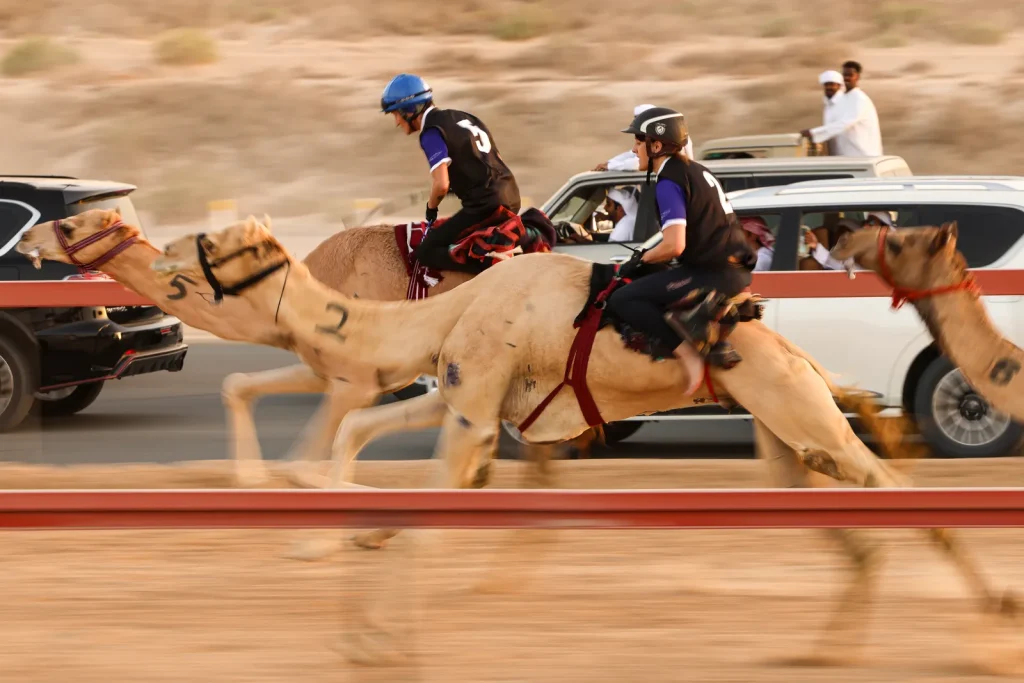
Photo: UAE Heritage at the C1 Championship
Camel racing is one of the oldest sports in the Gulf, and it has become one of the clearest expressions of status among the region’s wealthiest families. What began as a Bedouin tradition tied to weddings and tribal gatherings is now a formalised, technology-driven pursuit closely associated with royalty, established business dynasties, and serious private wealth. For certain names across the UAE, Qatar and Saudi Arabia, camel ownership functions like an extension of family standing.
Origins
Camel racing traces back to Bedouin culture on the Arabian Peninsula, where a fast, well-bred camel signalled a family’s standing at weddings and seasonal gatherings long before oil wealth reshaped the region.
The UAE, Qatar and Saudi Arabia began formalising the sport from the 1980s and 90s onward, building dedicated racetracks, establishing federations, and introducing standardised race categories based on a camel’s age, sex and breed. That formalisation is part of what elevated the sport from folk tradition to something closer to an elite pursuit, with the same structures – registries, bloodline records, sanctioned events – that give thoroughbred racing its prestige.
The festivals as social and cultural events
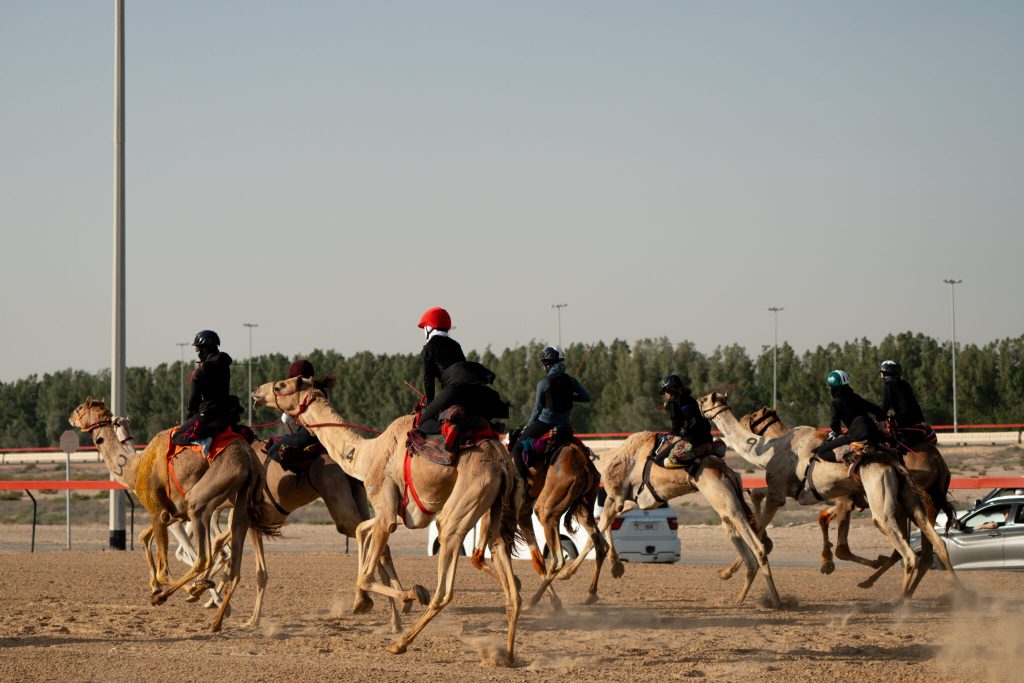
The Gulf’s major camel racing festivals – Dubai’s Crown Prince Camel Racing Festival at Al Marmoom, Abu Dhabi’s Al Wathba festival, and Saudi Arabia’s King Abdulaziz Camel Festival near Riyadh – are as much social occasions as sporting ones. They draw ruling family members, senior business figures and serious collectors from across the region, and function as a setting where relationships are maintained and reputations are reinforced. Attendance and participation are treated with the same seriousness as appearances at major equestrian or motorsport events elsewhere in the world.
The UAE racing season runs from roughly October to April, avoiding the summer heat, while Saudi Arabia’s major festivals run on a separate winter and early-autumn calendar. Across the Gulf, more than a dozen dedicated tracks host racing through the season, each with its own standing within ownership circles.
An ownership culture built on bloodline
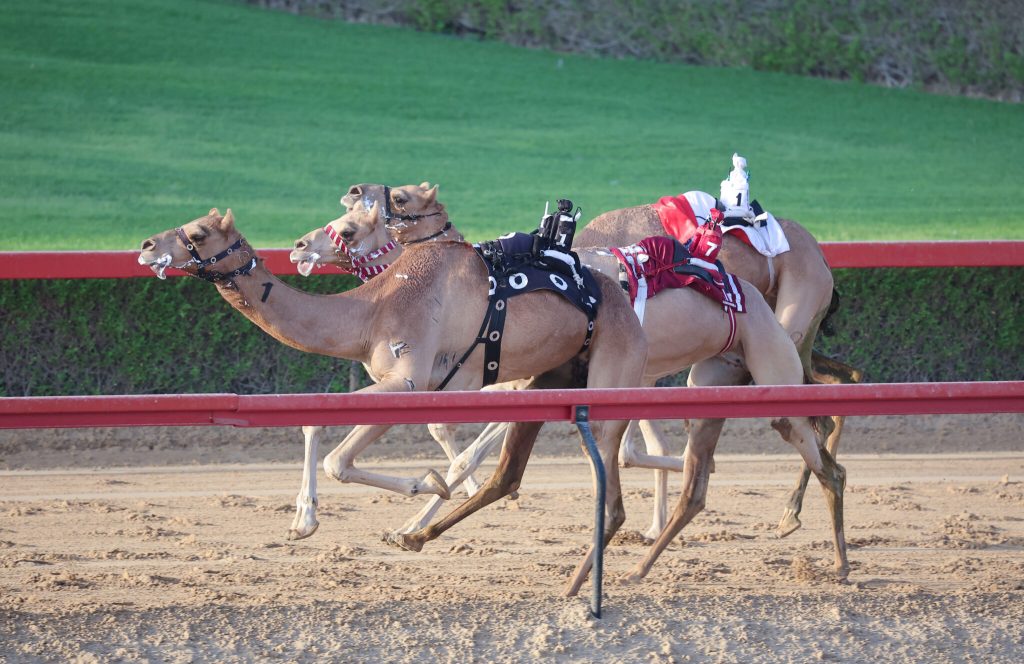
Photo: Al Marmoom Heritage Festival
The sums involved reflect that standing. At Abu Dhabi’s ADIHEX auction, bidding starts around AED 25,000 to 30,000, but camels with strong bloodlines have sold for far more – a record of roughly AED 6 million, and, most notably, AED 5.8 million for the camel Bint Nassi, bought by Dubai’s Crown Prince, Sheikh Hamdan bin Mohammed, in 2008.
Top sales once regularly reached AED 5 million to 10 million; more recently, they’ve settled closer to AED 2 million to 3 million. Prize money runs on a similar scale: Dubai’s Crown Prince Camel Racing Festival awards up to AED 1.5 million to its top winner, Abu Dhabi’s Al Wathba festival has distributed AED 80 million in a single season, and Dubai’s Al Marmoom Heritage Festival hit a reported AED 150 million in 2017 – the largest prize pool for any UAE sporting event at the time. Saudi Arabia’s King Abdulaziz Camel Festival, the largest event of its kind in the world, allocated SAR 300 million across racing and beauty categories in its 2022 edition.
The appeal
For wealthy Gulf families, camel racing offers something that few other pursuits can: a way to signal status that is rooted in regional heritage rather than imported luxury. Unlike yachts, art or classic cars, camel ownership carries specifically local cultural authority – it connects a family to Bedouin heritage while operating within a modern, professionalised sporting structure. It is also a closed world in practice, even if technically open: entry depends on relationships, bloodline knowledge and sustained presence within ownership circles, which naturally limits participation to those with both the means and the standing to be taken seriously.
There is no betting component to the sport in the UAE, which keeps its commercial and social value concentrated entirely in ownership, breeding and festival participation.
Read later
Share