Chess, Life, and the Language We All Speak: An Evening with Alexandra Kosteniuk
 Read later
 Share
Share
Atelier Privé sits down with chess champion Alexandra Kosteniuk at FERZ Chess Club’s night in Dubai.

Chess as a School for Life
Chess, at its core, is an emotional discipline. Before it sharpens the mind, it tests the spirit – and for Kosteniuk, that is precisely where its greatest lesson lies. The ability to manage negative emotions, she believes, is the most transferable quality the game develops, and the one most needed in everyday life. How we respond to difficulty, she argues, is often what separates success from failure.
However, chess also trains something more structural: the habit of thinking ahead. Kosteniuk draws an analogy to driving – you are not simply reacting to what is in front of you, you are constantly anticipating what might happen next. That capacity to calculate a few moves into the future, whether on the board or in life, can make all the difference. Memory, logic, and creativity round out the picture, but she returns most readily to emotional intelligence and forward-thinking as the game’s most enduring gifts.
How we handle those emotions is sometimes a very crucial part of our success or failure.
– Alexandra Kosteniuk

The Opponent She Would Choose
Starting with one of the great interview staples – who would you play, given the chance?
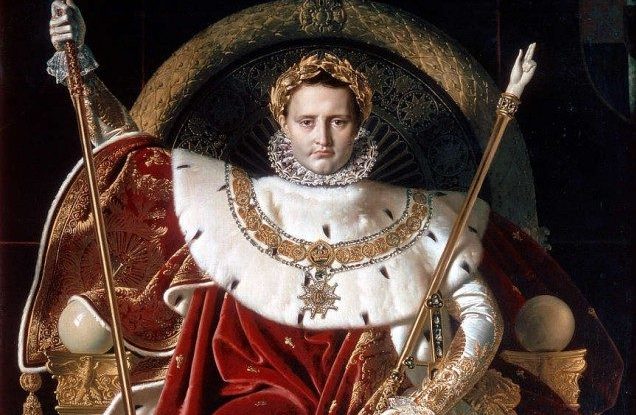
Kosteniuk, who describes herself as a pragmatic person, finds the question somewhat difficult to take seriously. She finally lands on Napoleon Bonaparte – and the reason is wonderfully specific. Open any major chess database, she explains, and among the millions of games recorded from official tournaments and online competitions alike – including, she notes, online events like Title Tuesdays – the very first entry belongs to Bonaparte. The Chess extraordinaire cannot quite recall the name of his opponent, but the curiosity of it stuck with her.
The list grows with Magnus Carlsen, José Raúl Capablanca, and Paul Morphy – figures she would genuinely love to sit across from. The appeal is in the question their game raises: how did the great players of the past actually think, and how does their approach differ from the modern game?
The Most Underrated Player in History
Since the International Chess Federation formalised the World Champion title in 1924, chess history has largely been told through the lens of those who held it. It is understandable – champions are aspirational figures, the names pinned to the walls of chess classrooms around the world. But Kosteniuk points out what that narrative actually isolates.
There have always been players of extraordinary ability who never claimed the title. Paul Morphy, she notes, was ahead of his time entirely. Viktor Korchnoi and David Bronstein competed at the very highest level, contesting multiple World Championship matches. They left a profound mark on the game – but because the title eluded them, they are mentioned far less than they deserve. It is a quiet injustice that Kosteniuk clearly feels.

A Champion’s Perspective
With a career spanning classical, rapid, blitz, and Fischer Random formats, Kosteniuk has accumulated titles that would be remarkable for any player. Every victory, she says, was special in its own way – and when asked to single one out, she finds herself reflecting less on the difficulty of any particular win and more on how strange it is to look back at all. She knows how strong her opponents were at every stage, and yet the distance of time makes those achievements feel almost hard to believe.
The 2021 FIDE Women’s World Cup holds a particular place, as the first edition under that name, though she notes that the format itself was familiar. She had won under the same knockout structure back in 2008, when it was called the knockout World Championship. But even that milestone sits somewhere in the rearview mirror. Kosteniuk is still competing, still chasing, and candid about hoping to add more titles before her career is done. Reflection, she suggests, is something to save for later.
Playing for Her Team – and for the Love of the Game
Since March 2023, Kosteniuk has been representing Switzerland – including, notably, on the men’s national team. Asked whether the two environments feel different, her answer is straightforward: what shapes a team’s atmosphere comes down to the people, the dynamics, the moment. Sometimes it clicks. Sometimes it doesn’t. “But that’s life,” she says, “and that’s what makes it interesting.”
What she does know is that she has always played better with teammates around her. There is something about knowing others are counting on you that sharpens the mind and steadies the nerves. When you are struggling alone in a tournament, it is easy to drift. In a team, that is not an option. With the Chess Olympiad on the horizon, she will be competing again – and that prospect clearly energises her.
We are all chess players, and we all speak the same language – the language of chess. And it’s a wonderful language, because wherever you go, you can find someone who speaks it.
– Alexandra Kosteniuk
Read later
Share