Interview with Francesco Torcasio, Chef at Chic Nonna — fine dining restaurant in Dubai
 Read later
 Share
Share
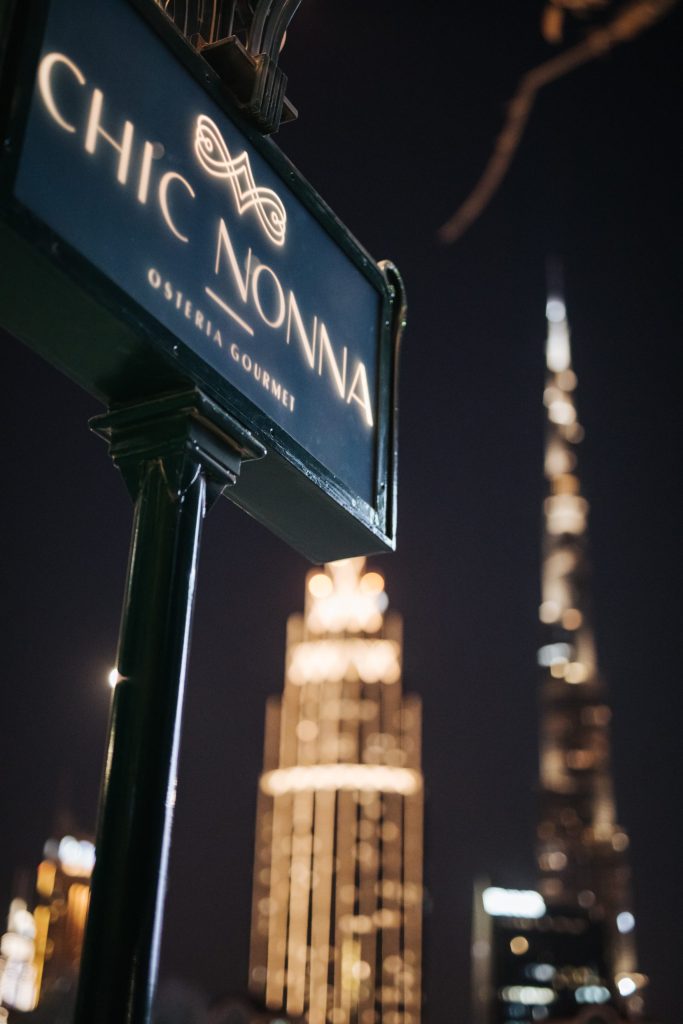
At Atelier Privé, we do not approach restaurants as a list of places worth visiting — the interest lies in how a kitchen is built, what holds it together, and whether it can maintain its standards over time. For that reason, we return to the source — the Сhef, to understand the decisions behind what appears on the plate.
The kitchen at Chic Nonna, in DIFC, does not overcomplicate the food. It works with the fundamentals — product, technique, precision — and stops at the point where the dish is complete.
The chef Francesco Torcasio was raised in Calabria, where cooking formed part of daily life and was learned through repetition rather than instruction. His early work in pastry introduced precision and structure, which continue to define his approach. Experience across Italy, London, and Dubai expanded that foundation without altering it.
Italy gave me roots. London challenged them. Dubai expanded them.
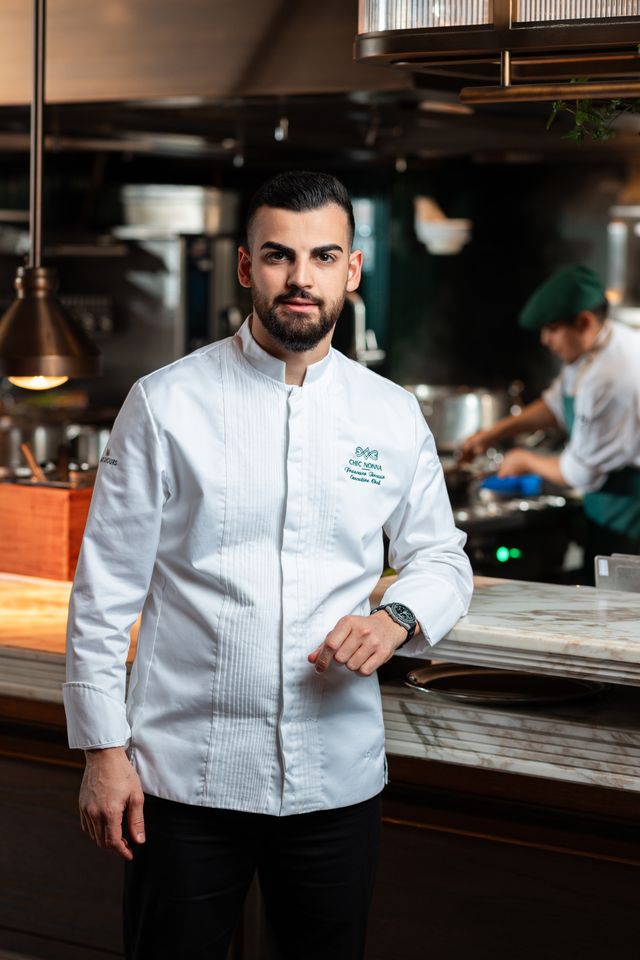
We spoke with the Chef at Chic Nonna Francesco Torcasio about his approach to product, technique, and the discipline that makes the kitchen at Chic Nonna.
You were born in Calabria, a region with a deeply rooted culinary identity. In what ways does your upbringing continue to shape your cooking today, beyond specific recipes?
I often say that I didn’t choose cooking, cooking chose me, somewhere between the first light of day and the scent of tomatoes slowly melting into sauce in my grandmother’s kitchen. Calabria is not just a place; it’s a rhythm, a way of living where food is never separate from emotion, from family, from time itself.
My earliest memories are of my Nonna, already awake before the sun, moving with quiet certainty. There was no rush, no noise, just the soft bubbling of a pot and the understanding that something meaningful was being created. She didn’t teach through instructions, but through presence. Ingredients were not just components; they were stories, each one carrying a region, a season, a memory.
That upbringing shaped not only my palate but my instinct. Today, even beyond recipes, I carry that sense of respect for ingredients, for tradition, and for the invisible thread that connects a dish to the person who receives it.
You began in pastry at a very young age. How did that early discipline influence your precision and approach in savoury cuisine?
Pastry is where I learned humility. It is unforgiving, exact, almost architectural in its precision. At a young age, it taught me that emotion alone is not enough; you must have discipline to give it form.
There is something almost poetic about the balance required in pastry: grams matter, timing is everything, and patience is non-negotiable. That foundation became my compass. When I transitioned into savoury cuisine, I didn’t leave pastry behind; I carried its rigor with me.
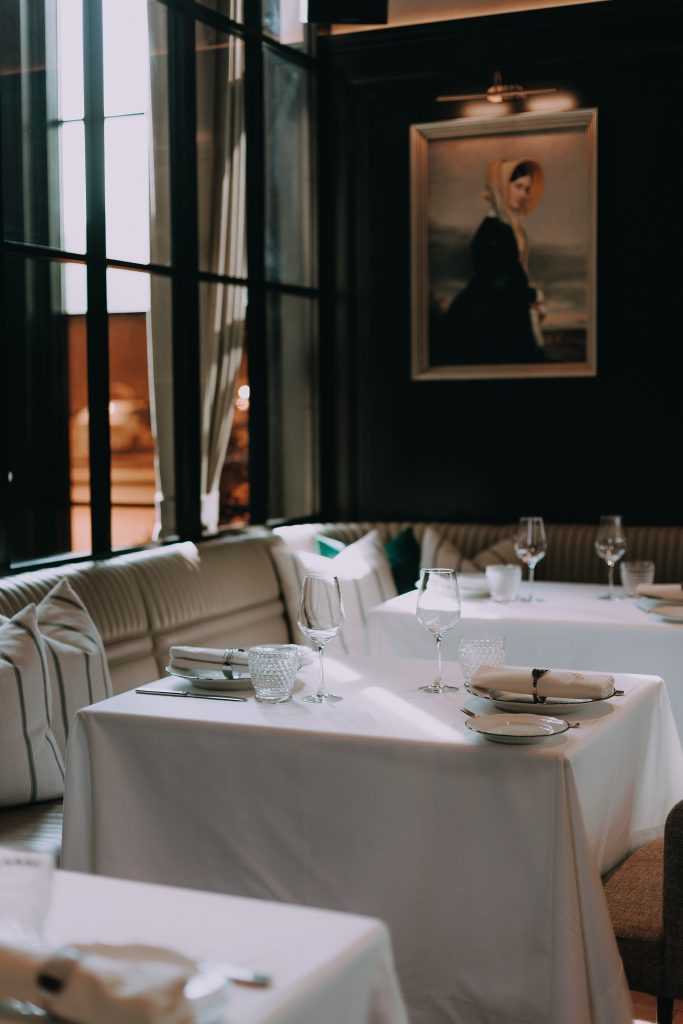
In many ways, my cooking today is a dialogue between those two worlds: the structure of pastry and the freedom of savoury. One gives me control; the other allows me to express.
Your career developed between Italy, London, and Dubai. How have these different culinary cultures refined your perspective on Italian cuisine?
Italy gave me roots. London challenged them. Dubai expanded them.
In Italy, you learn that cuisine is identity, something deeply personal and fiercely protected. London, on the other hand, exposes you to contrast. It teaches you to question, to reinterpret, to see tradition not as something fragile, but as something resilient.
Dubai is where everything converges. It is a city of perspectives, where guests arrive with different expectations, different memories of what “Italian food” means. This forces you to become both storyteller and translator to remain authentic while making your language understood.
These experiences didn’t dilute my Italian identity; they refined it. They taught me that authenticity is not rigidity, it’s clarity.
At Chic Nonna, tradition meets contemporary expression. How do you decide which elements of Italian heritage must remain untouched, and where evolution is necessary?
There is a sacredness to certain things in Italian cuisine, gestures, techniques, and combinations that have survived generations not by chance, but by truth. Those, I believe, should remain untouched.
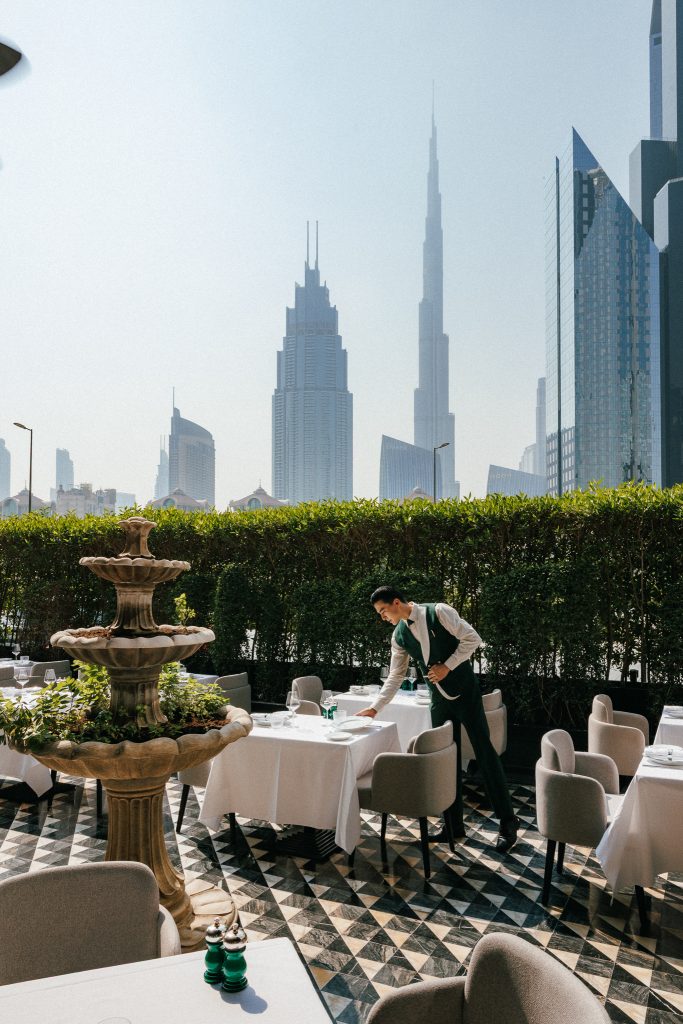
But evolution is not betrayal. It is a continuation. The key is intention. If you understand why something exists, why a sauce is prepared a certain way, and why a dish belongs to a specific season, then you earn the right to reinterpret it. At Chic Nonna, we don’t modernize for the sake of aesthetics; we evolve to deepen the experience, to make it resonate today while still honoring yesterday.
Your cooking is often described as emotional, almost a translation of memory. How do you consciously embed feeling into a dish?
For me, every dish begins like a blank canvas. Not in the sense of emptiness, but of possibility.
You stand in front of it with memories instead of colors, childhood moments, places, scents, emotions you may not even fully understand. The ingredients become your palette, the techniques your brushstrokes. But what truly defines the dish is not what you add, it’s what you choose to express.
Emotion cannot be forced. It reveals itself in the small details: the way a sauce is finished, the balance of a flavor that feels familiar but unexpected, the temperature at which a dish is served.
When a guest tastes something and pauses just for a second, that’s when you know the canvas is no longer yours. It has become theirs.
Italian cuisine is widely known, yet rarely truly understood in its regional depth. How do you educate an international audience without over-explaining the experience?
I believe that the best education is felt, not explained.
When you sit at the table, you should not feel like you are attending a lesson. You should feel like you are discovering something intuitively. The role of the chef is to guide that discovery subtly through balance, through storytelling within the dish itself.
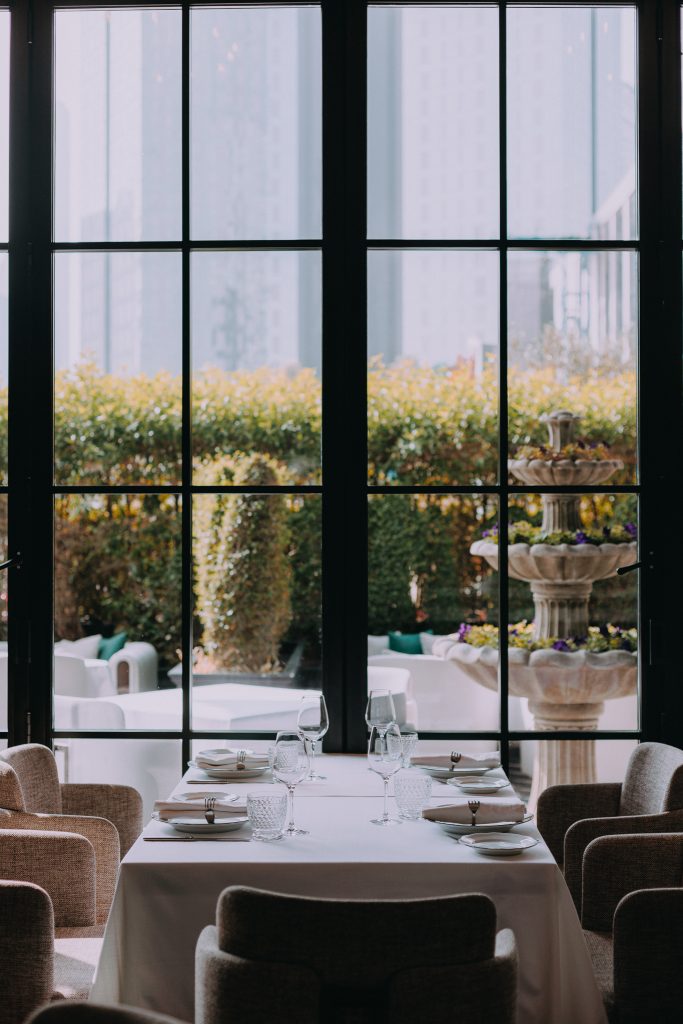
If a guest leaves curious, wanting to know more, then you have succeeded. Because true understanding begins with emotion, not information.
Seasonality plays a central role in your menus. In a city like Dubai, where everything is available year-round, how do you preserve a true sense of season?
Seasonality is not just about availability; it’s about intention.
Even in a city like Dubai, where ingredients can be sourced at any time, I choose to respect their natural rhythm. It’s about knowing when a tomato should be at its peak, when a certain flavor feels right, when a dish resonates with the moment.
We create seasons within the menu, not by limitation, but by choice. Because seasonality is ultimately about honesty.
Chic Nonna is designed as an immersive, almost narrative-driven space. How does the atmosphere influence the way you construct the menu and the pacing of a meal?
At Chic Nonna, the experience doesn’t begin with the first bite; it begins the moment you enter.
The space tells a story, and the menu must follow that narrative. Each dish is like a chapter, carefully placed within the progression of the meal. There is a rhythm to it, a build-up, a moment of surprise, a sense of comfort, and finally, a memory that lingers.
The atmosphere allows us to slow things down, to invite guests into a journey rather than a transaction. And that changes everything from how dishes are conceived to how they are served.
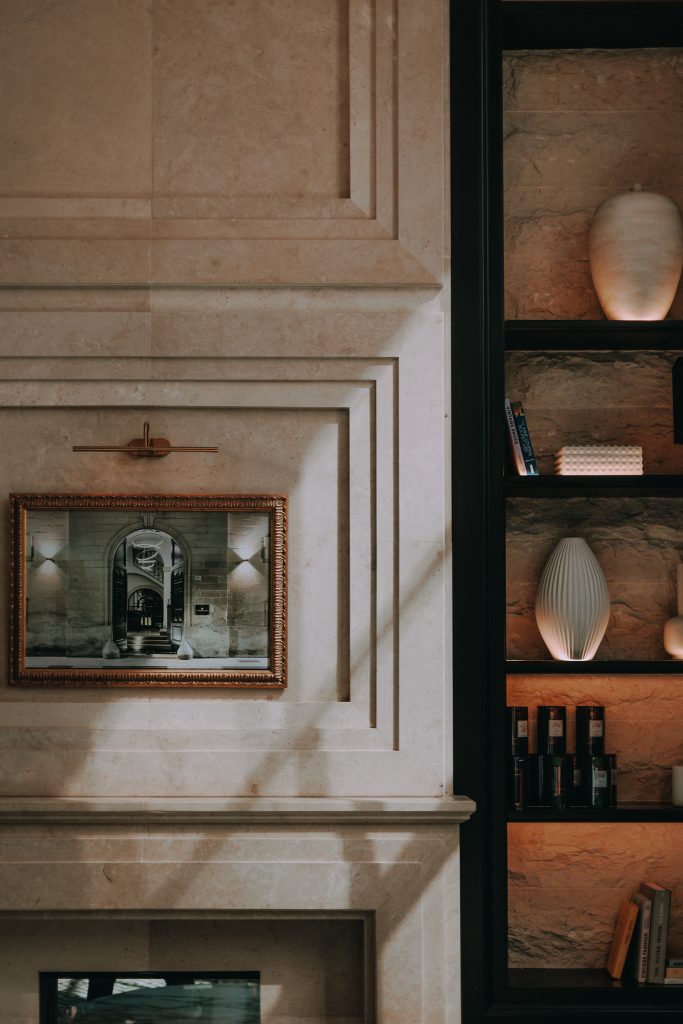
You have quickly moved into leadership roles at a young age. What defines your approach to building and maintaining a high-performing kitchen team?
For me, leadership is not about hierarchy; it’s about energy.
A kitchen is a living organism. It requires trust, communication, and above all, respect. I believe in building a collaborative environment where every individual feels seen, valued, and empowered to grow.
Recognition is just as important as discipline. When people feel appreciated, they don’t just perform; they invest themselves fully. And that is when a team becomes something greater than the sum of its parts.
Your philosophy centres around guest satisfaction and team unity. In practice, how do you balance these two priorities when they come into tension?
The truth is, they are not in opposition; they are deeply connected.
A unified, motivated team naturally creates a better guest experience. And a satisfied guest gives purpose to the team’s work. The balance comes from clarity, ensuring that everyone understands that we are working toward the same goal.
When challenges arise, it’s about communication, about staying grounded in that shared vision.
Fine Italian dining often walks a delicate line between comfort and refinement. How do you ensure your dishes feel both elevated and deeply familiar?
Comfort comes from memory. Refinement comes from technique.
My role is to bridge the two. A dish should feel recognizable at its core; it should evoke something familiar, something emotional. But at the same time, it should surprise you in its execution, in its precision, in the way it unfolds on the palate. That balance is where true elegance exists.

With Chic Nonna expanding internationally, how do you maintain authenticity while adapting to new cultural and geographic contexts?
Authenticity is not about replicating; it’s about preserving essence.
Wherever we go, we carry our identity with us: our philosophy, our respect for ingredients, our storytelling. But we also listen. We observe. We adapt in ways that are meaningful, not superficial.
Each location becomes a dialogue between our heritage and its environment.
Looking ahead, what would define success for you on a global stage: recognition, expansion, or something more intangible?
Recognition and expansion are milestones, but they are not the destination.
For me, success is more intangible. It’s about creating something that endures. A feeling, a memory, a standard that people carry with them long after they leave the table.
If one day, somewhere in the world, someone tastes a dish and feels something real, something they cannot quite explain, that, to me, is success.
In conversation, the chef avoids generalisations and stays close to the practical side of his work. He speaks about product, technique, and the discipline required to recognise when a dish is complete.
At Chic Nonna, this is reflected directly in the food. Nothing is overworked, and nothing is added for effect. The menu holds together because each element is handled with precision and brought to a clear point.
Within Dubai’s dining landscape, this approach sets the restaurant apart — not through contrast, but through consistency, in the way the kitchen operates as a whole, from the product itself to the final dish.
 Read later
Share
Read later
Share