The new cost of everything: what the coming price wave means for the way you live
 Read later
 Share
Share
A business-class ticket from Dubai to London costs more today than it did at the height of post-COVID travel, when airports were overwhelmed, and half the world was desperate to go somewhere. The crowds have thinned since then, but the price has not come down. Jet fuel, ground handling, catering — every layer of the journey got more expensive, and those costs have settled into the fare as if they were always there.
For those accustomed to a certain standard of living, it is worth understanding not just what is happening, but why, and what to do about it.
The supply chain
What’s driving this? Partly geopolitics.
The conflict in the Middle East is reverberating through global supply chains with a force that markets are only beginning to price in.
Energy is at the root. Petrol prices are up 28% year-on-year. But the more consequential story is that inflation is no longer confined to energy: it has spread. Food prices are up 3.2%. Airline fares have jumped more than 20% as jet fuel costs filter through to tickets. Shelter costs are rising. What began as an energy shock is becoming a broad repricing of everyday life.
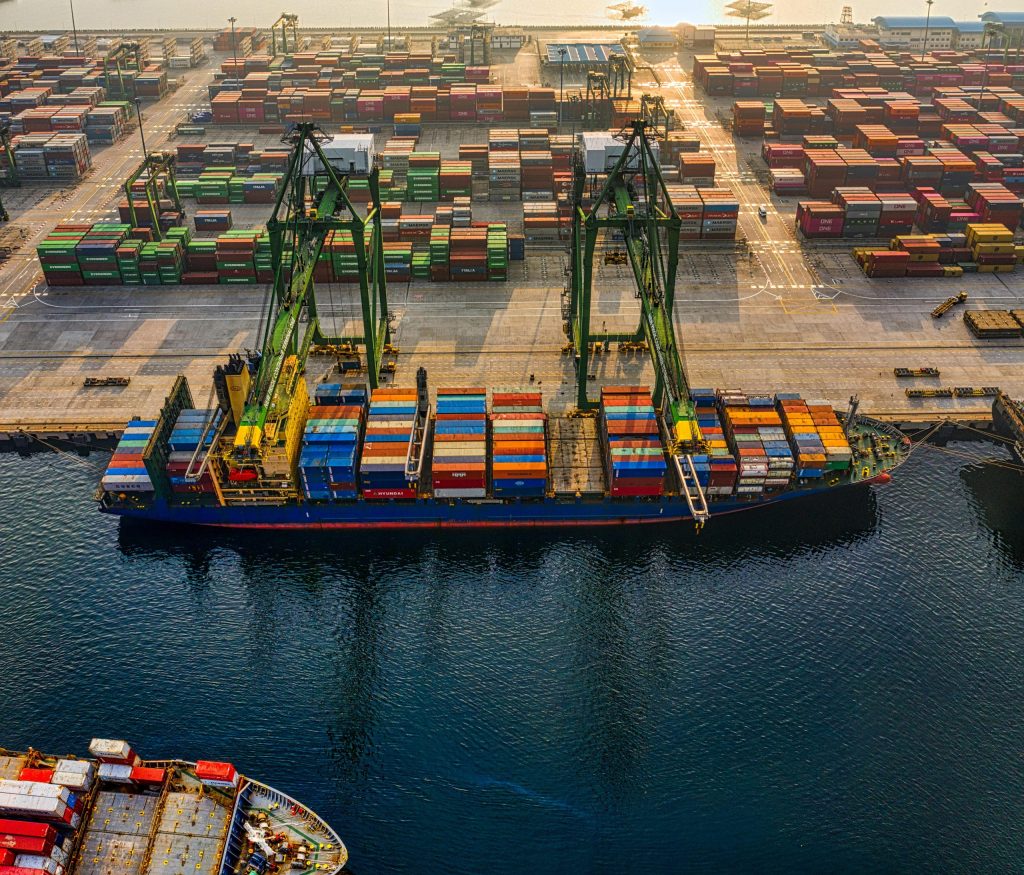
Maersk, the world’s second-largest container shipping company and one of the most reliable barometers of global trade health, has warned that the Iran conflict is adding approximately $500 million in extra monthly costs to its operations alone. Higher freight rates are already moving through the system. But the broader effect — the moment when those costs translate into the prices you see on shelves, menus, and booking platforms — is expected to become fully visible across Q2 and Q3 of this year.
This is how supply chain shocks work. Consumers rarely notice them immediately; the signal travels slowly through layers of logistics, wholesale, and retail before arriving at the point of purchase. And then, almost all at once, prices begin adjusting everywhere.
India illustrates the stakes as clearly as anywhere. The world’s fastest-growing major economy imports nearly 85% of its fuel, and the Gulf supplies roughly half of that. Since the conflict escalated, the currency has weakened, capital has been leaving at a pace not seen before, and the cost of government borrowing has climbed sharply. For a country with India’s growth ambitions, these are not abstract pressures; they translate directly into tighter conditions for business, more expensive imports, and a consumer market that is quietly recalibrating its spending. What is happening there is an early signal of the broader adjustment still working its way through emerging economies.
What happens there is a preview of the pressures building across the emerging world.
What does this mean for your purchasing power?
The financial press often frames inflation as a problem for households on tight budgets. And it is acutely so. But for those with more resources, the implications are different, not absent.
For the first time in three years, inflation is rising faster than wages, meaning that even as incomes increase, purchasing power is eroding. This is felt in the gap between income and lifestyle: in the luxury goods purchase that now requires a second thought, the property acquisition that requires fresh assumptions about capital costs, and the travel itinerary that no longer feels effortless to budget.
The Financial Times has noted a growing interest in what might be called “financial prepping” — not in the survivalist sense, but in the spirit of preparing one’s financial life for a sustained period of elevated prices before the next cost wave fully arrives.
Where the opportunity lives
Rising prices are not uniformly bad news. For private individuals with a long enough horizon, this environment opens doors that tend to stay closed in calmer times. Energy assets, critical minerals such as lithium and cobalt, and the semiconductor industry are all positioned to benefit from precisely the disruptions that are making everything else more expensive — and historically, these are the areas where patient capital compounds rather than erodes. Cash, by contrast, loses ground quietly but reliably during inflationary periods. The investors who come out ahead are rarely those who moved fastest — they are those who moved early enough, and held.
An uncomfortable truth, and a useful une
The era of “cheap everything” — cheap energy, cheap freight, cheap money — is behind us, at least for now.
Dubai, for its part, remains unusually well-positioned. Its energy revenues provide a structural buffer, and its status as a global logistics and investment hub gives residents genuine advantages — access to capital markets, proximity to the Gulf’s energy economy, and a tax environment that makes long-term compounding more effective than almost anywhere else on earth.
The individuals who will navigate this period well are those who understand that the price of things is changing not just at the headline level, but deep in the foundations of global trade — and who are deliberately positioning themselves to benefit from it.
The “wave” is coming. The question is simply whether you are already standing on higher ground.
Irina Distergoft is a Global Sales & Marketing Director specialising in scaling B2B growth strategies across international markets. The above reflects general market observations only and does not constitute financial advice. Investors should consult a qualified adviser before making any investment decisions.
Read later
Share