Why the Gulf invests billions in sport – turning games into geopolitics

Everyone is familiar with the motto “War is the continuation of politics by other means.” But as the drums of war grow louder every day, we tend to forget that politics can continue in many other ways that don’t necessarily involve killing each other.
How a Ping Pong game shook the cold war
The year is 1971. China and the US are not exactly on the best of terms with each other. The Cold War is menacing, and Washington does not even recognize Beijing as a legitimate government. At the time, it so happens that Japan, a US ally, holds the World Table Tennis Championship, and Beijing cannot be absent. The game between Gless Cowan (of the US) and Zhuang Zedong (of the PRC) immediately attracts attention, because by agreeing to it, the US signals that it is ready to recognize Beijing as a legitimate partner. Less than a year later, in early 1972, President Nixon visits Beijing and finally establishes diplomatic relations between the two countries after 23 years of continuous animosity and two wars (Korea, Vietnam) against each other. The occasion became known as “ping pong diplomacy”.
“Make sports, not war”
Fast forward to today. As part of what is known in more general terms as sports diplomacy, Qatar invested 220 billion dollars to host the FIFA World Cup in 2022. Isn’t that a bit exaggerated? Keep in mind that Russia spent just 14 billion for the same event in 2018. And why do the other Gulf States follow, by spending hundreds of billions on sports development since 2021? Israeli bombs are thrown in every direction close by, Iran is in chaos, American weapons are all around, is it really the time to take a break and do some sports?
Luckily, history once more can give us some answers. And let’s begin with the most well-known of examples, the ancient Greek Olympic Games. To understand the importance those events had in the Greek world, the first Olympic Games of 776 BCE were the year One of the Greek calendar. That’s not a coincidence. In the densely populated and highly developed area where the ancient city-states thrived, infighting was the order of the day. Sparta vs Argos, Corinth vs Megara, Athens vs Aegina, Sparta vs Athens, you name it, the Greek city-states were fighting all the time.
But here is the catch: every four years, warring states got one chance for peaceful discussion: the Olympiad. This was because all participants of the Olympics, athletes and spectators, were guaranteed peaceful freedom of movement during the games. This means that the Olympiad could be the first time in four years in which people from enemy states could meet and have fun together. Deal makers from other cities were also there, ready to mediate and resolve the tensions. So, imagine the Olympic Games as a kind of a UN meeting, but with athletes and audience acting as high-level diplomats.
Or let’s take another trip to China at around the same ancient times. Back then, the Chinese were not yet so proficient in ping pong, but they were particularly impressive in another sport: archery. And why was that? You see, if Greek city-states were fighting a lot, the Chinese states had promoted infighting into an art (see Art of War by Sun Tzu). In fact, the period from 475 to 221 BCE has been named the “Warring States period”, with Chinese states being at war for more or less two and a half centuries. Interestingly, however, and quite cleverly, bows were not used only as a means of war; they were also used as a means of peace. How? Through ritual archery, a unique form of sports diplomacy that relied not so much on the shot fired from the bow but on the behavior of the archer before, during, and after the shot. In the words of Confucius, “Before mounting the stairs to the archery hall, gentlemen bow and defer to one another, and after descending they offer toasts to each other. This is how a gentleman ‘competes.’”. And when someone proves to be a gentleman, it signals good intentions; it becomes a sign of trust.
A sports heaven out of nowhere
Back to 2026. Are “fun” and “trust” still relevant? Well, even if they are not, they might finally need to become. And that’s where the GCC comes into the picture. For decades, these countries have been defined by a single word: oil. But while oil brings prosperity, those in power know that this prosperity is fragile. If not invested wisely, a decade of gains can turn into a lifetime of losses.
But where to invest? Security always sounds like a good idea for a state, but its potential is limited. Qatar and the UAE are small countries that are more likely to be threatened than to become threatening themselves. And even Saudi Arabia has reasons to be nervous: regardless of its armament, the region is so unstable that it can find itself surrounded by enemies. What’s worse, its traditional Western allies are not particularly dependable these days. And here the old recipe comes in handy. When there are too many wars around, offer some sports to help everyone relax.
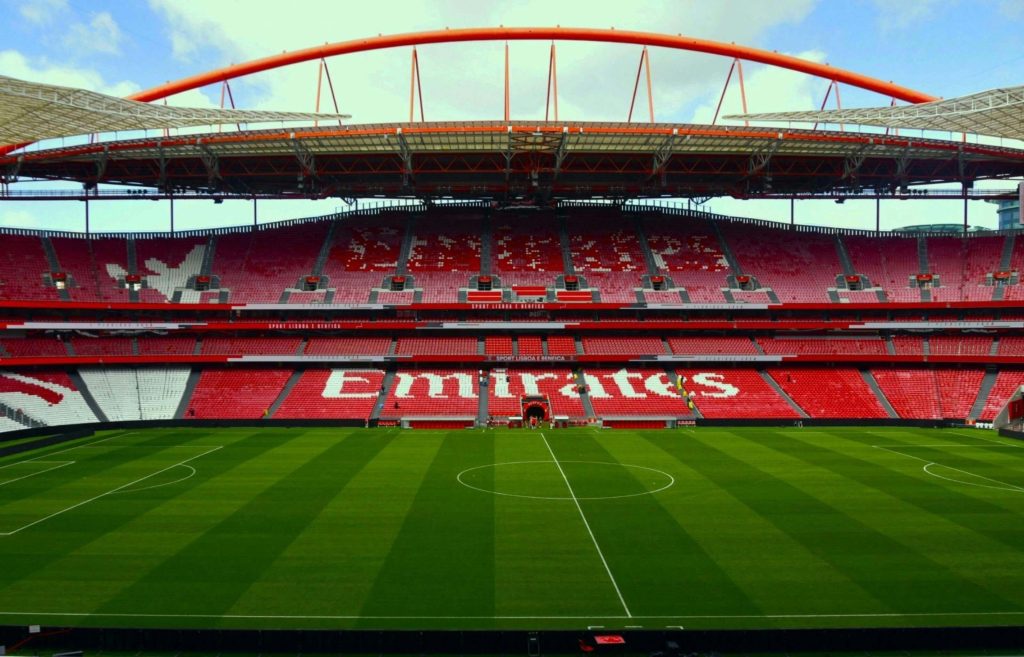
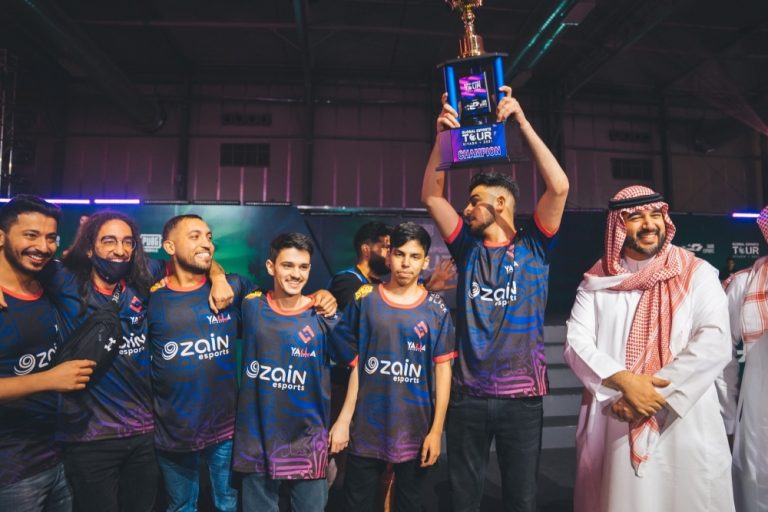
Admittedly, when the first GCC investors began pouring money into football, most of us were intrigued. The Arabic script at the time was still associated with the aftermath of 9/11 in the collective Western unconscious. And suddenly, brand names like Qatar Airways, Etihad, and Emirates began appearing across Premier League and Champions League matches. Of course, these countries had the economy to back up this opening. Doha, Dubai, and Abu Dhabi had already become major transit hubs, with infrastructure and services that often outclassed their Western counterparts. That’s a recipe for success. And they didn’t stop there.
Qatar took on, single-handedly, the responsibility of hosting the 2022 FIFA World Cup, and pulled it off. And not in the friendliest of environments: it did so under a diplomatic and economic blockade imposed by the UAE, Bahrain, Saudi Arabia, and Egypt. And while many observers were still – fairly – complaining about the tournament as being a sportswashing campaign with dubious reliance on cheap migrant labor, in 2023, it was the turn of Saudi Arabia to shock everyone: Al-Nassr signed the absolute football superstar, Cristiano Ronaldo, offering everyone yet another “Wait, what?” moment. Clearly, something was going on here.
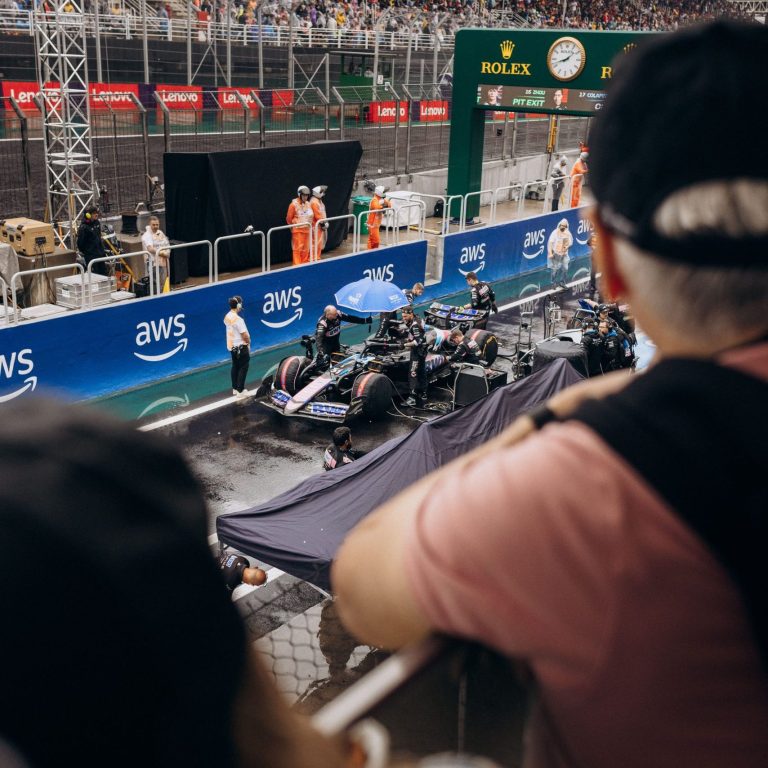
Of course, the signs were there already. The GCC was also never known for its car racing tradition. But since the launch of the F1 Abu Dhabi Grand Prix in 2009, things have changed. As of now, four out of 24 races on the Formula 1 calendar take place in the Gulf, making the region arguably the most car-racing-friendly in the world.

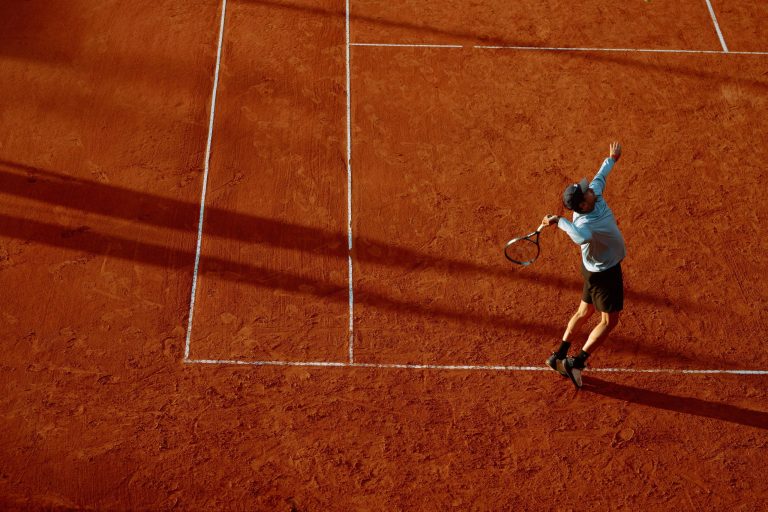
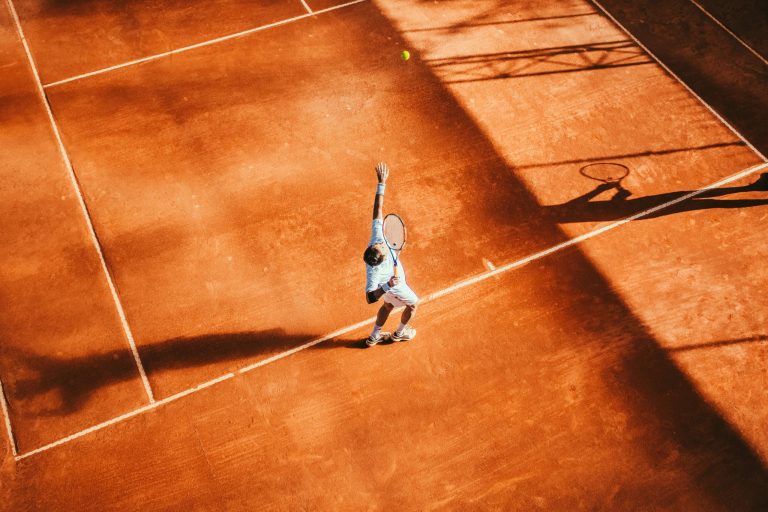
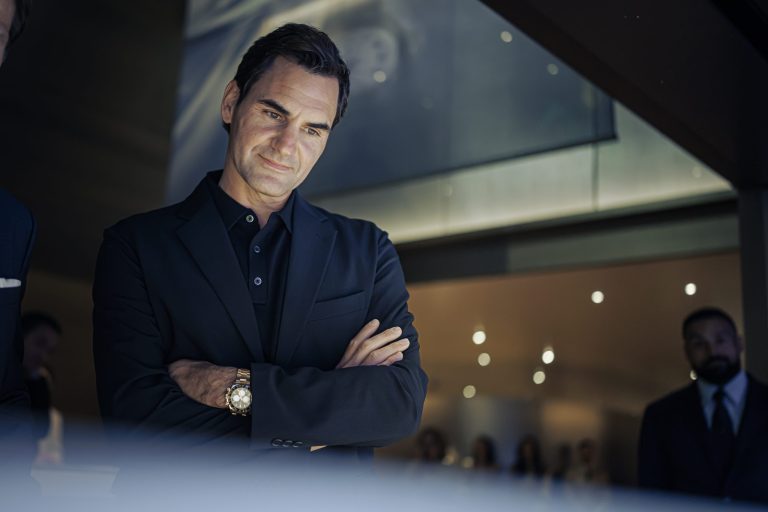
The same applies to other high-end sports, with the UAE, for example, hosting multiple major tennis events. A highlight was the iconic helipad match between two legends, Roger Federer and Andre Agassi, in 2005 in Dubai—an event that once made people wonder, “Is Dubai in the Pacific?” Fast forward twenty years, and that confusion has completely disappeared. Golf is yet another example: Saudi Arabia launched the Saudi International golf tournament in 2019 and, in 2025, plans to invest $100 million to build up to 100 luxury golf resorts.
A glimpse of hope or just another rivalry?
Remembering our historical examples, it’s easy to recognize what’s going on here. These states invest enormous sums in sports to gain glorified exposure. They attract wealthy visitors who might tell their friends or come back themselves, and people around the world stop picturing closed-off oilfields in the middle of the desert. Instead, they see liberal societies where athletes like Ronaldo can go play, and where people can actually have a lot of fun.
This gives the GCC leverage to act as a diplomatic magnet, with high-profile international players taking the opportunity to get to know each other away from the tumultuous fields of diplomacy and into the much friendlier fields of football. Like in the Olympiad, people might be fighting elsewhere, but here is a place for discussion and enjoyment.
And of course, trust is gained too. When a small country can host the most-watched sports event in the world on its own, that already says something. It shows that the state functions well. Like with ritual archery, it’s not the game itself that matters—it’s the before, the during, and the after. It’s a performance for global positioning and legitimation.
Are there issues? Well, of course. Beyond the many accusations of corruption and poor working conditions, sports diplomacy has also triggered rivalries among the Gulf states themselves. It’s an interesting contradiction—and a clear break from ancient forms of sports diplomacy—that the trust gained from faraway global actors may be undermined by growing mistrust among neighbors.
The real question, then, is not whether the GCC’s version of sports diplomacy is effective: it is. But we still don’t know if it will lead more toward international peace or toward regional infighting.