Art Basel Hong Kong 2026: a market in position
 Read later
 Share
Share
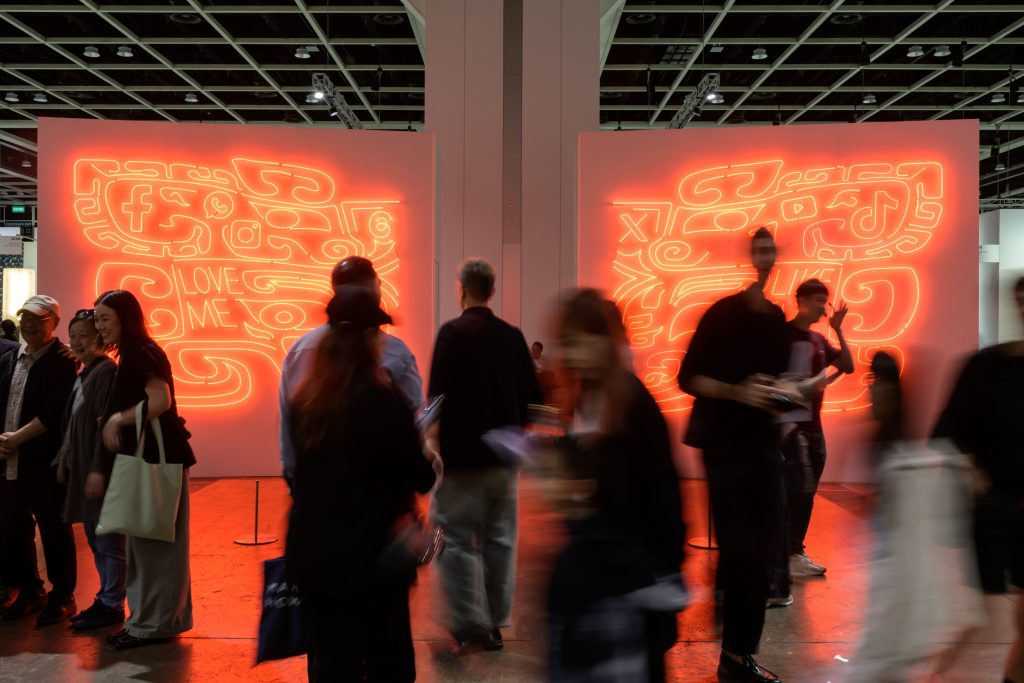
Art Basel Hong Kong 2026 offered a precise reading of the market — where it stands today and how it is evolving.
Held at the Hong Kong Convention and Exhibition Centre from March 27 to 29, with Preview Days on March 25 and 26, the fair brought together 91,500 visitors, with collectors, institutions, and advisors strongly represented.
Market activity and buyer behavior
Throughout the week, galleries reported sustained sales across all segments of the market, with activity continuing well beyond the VIP opening days. Buying extended across levels rather than concentrating within a narrow tier of top collectors.
Demand was particularly strong for artists from the Asia-Pacific region, across both established and emerging positions. At the same time, international artists continued to place works into major collections across the region. What shifted was not preference, but behavior: collectors were acquiring across geographies, generations, and categories. This is a more flexible acquisition model — less anchored to привычные каноны, more responsive to context and timing.
Several galleries pointed to a parallel development: a visible increase in first-time buyers and younger collectors entering the market. Competition for primary works is intensifying, particularly in the Asia-Pacific, where new capital continues to enter the market at speed.
Sales and placements
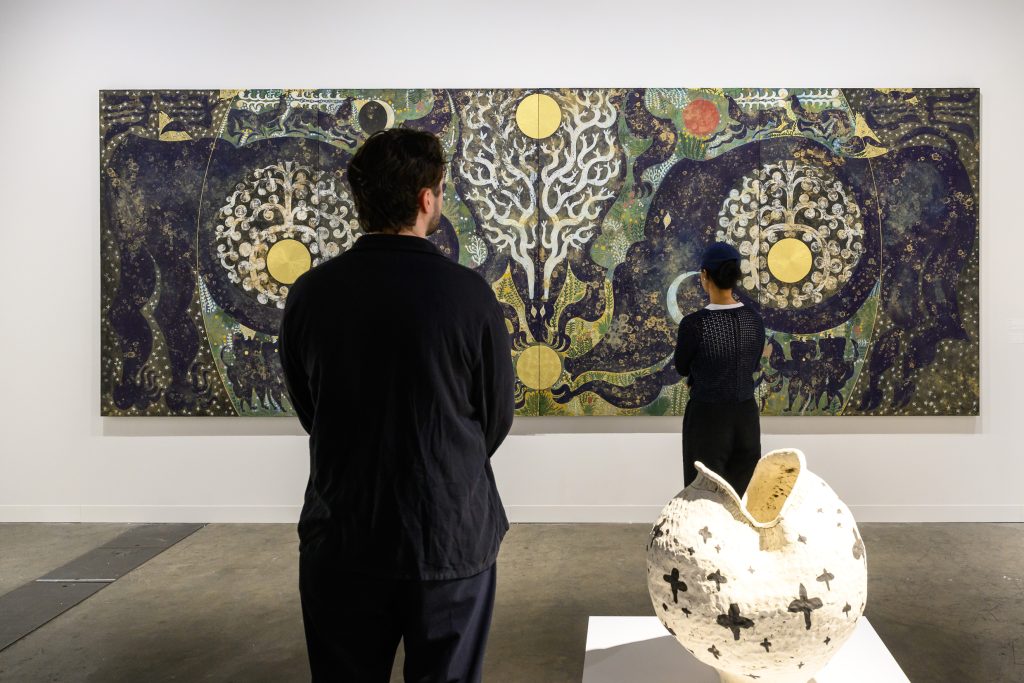
The quality of engagement during the week reinforces this reading. Major galleries — including David Zwirner, Gagosian, Hauser & Wirth, and White Cube — reported strong opening-day sales alongside a high number of new relationships formed. Hauser & Wirth, for instance, placed works by Louise Bourgeois, George Condo, Rashid Johnson, Lee Bul, Cindy Sherman, Avery Singer, Qiu Xiaofei, and Flora Yukhnovich with established collections and institutions across Asia and beyond. White Cube reported approximately £5 million in sales, including works by Antony Gormley and Tracey Emin, alongside acquisitions of Etel Adnan, Mona Hatoum, Howardena Pindell, and Shao Fan.
Institutional presence
The results point to a market where blue-chip artists continue to perform, while collectors expand into new names and categories. Institutional presence remains one of the clearest indicators of the fair’s weight. More than 170 museums and foundations from 27 countries were represented, including Centre Pompidou, Fondation Beyeler, M+, Tate, The Metropolitan Museum of Art, and the Solomon R. Guggenheim Museum.
This level of attendance matters for two reasons. First, it reinforces Hong Kong’s role as a site where acquisitions are validated within institutional frameworks. Second, it compresses timelines: works presented in the fair context can move rapidly into museum narratives, accelerating both visibility and value.
The launch of Friends of Art Basel Hong Kong — developed with institutions such as He Art Museum and Rockbund Art Museum — extends this dynamic. It formalizes relationships that were previously informal, aligning the fair more directly with institutional agendas across Asia.
Shifts in format and collecting logic
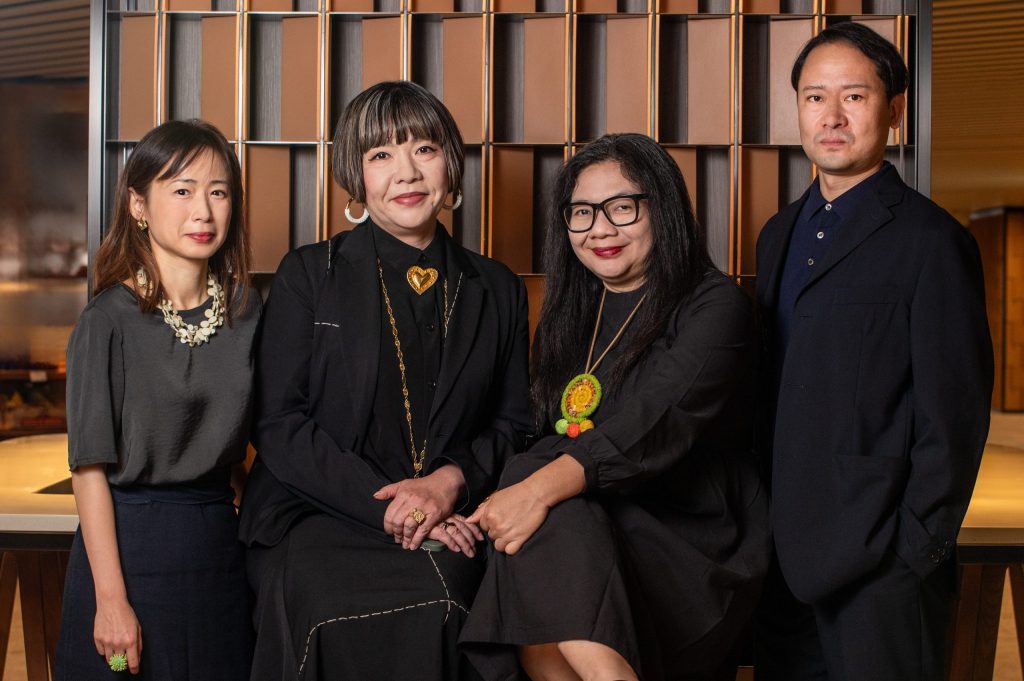
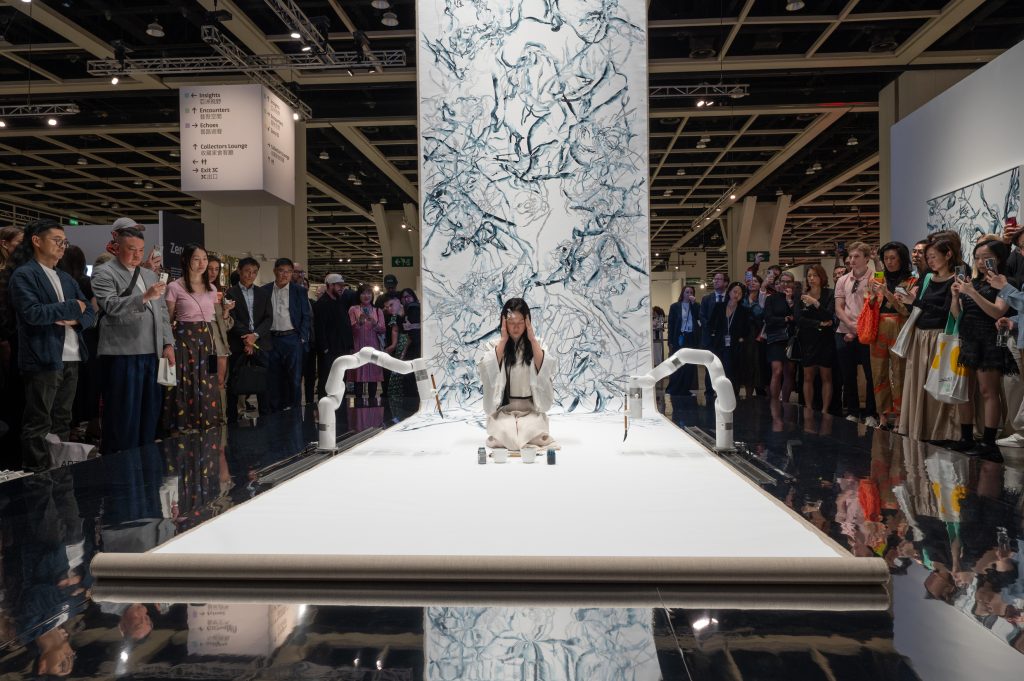
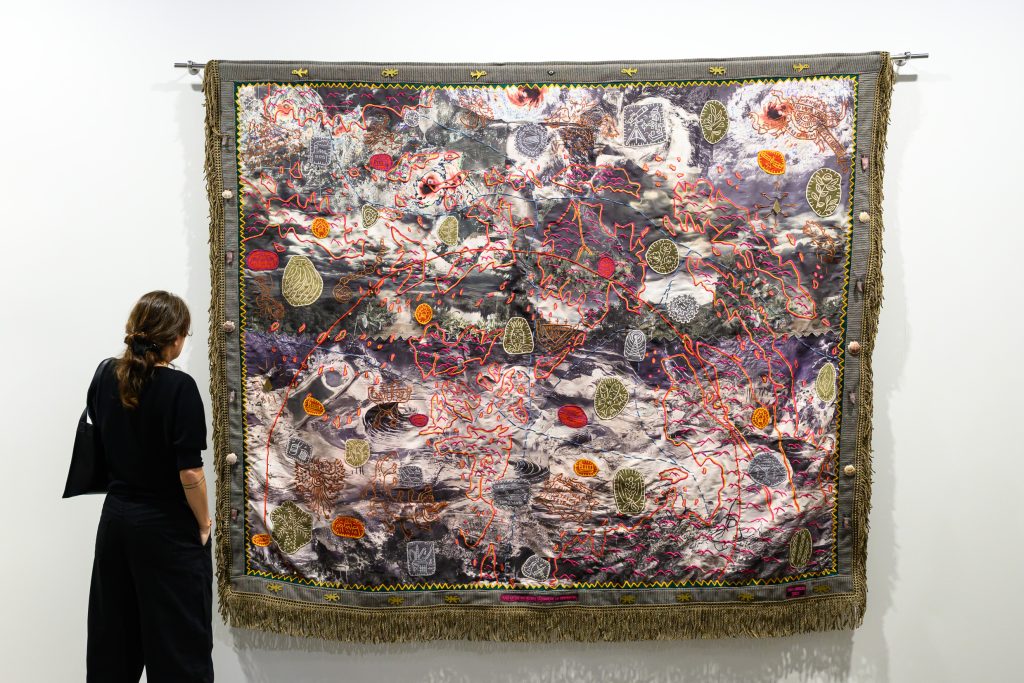
At the level of format, the fair continued to adjust to how collectors are now buying. Encounters, under the direction of Mami Kataoka, Isabella Tam, Alia Swastika, and Hirokazu Tokuyama, presented large-scale, site-responsive works that increasingly mirror museum conditions rather than gallery ones. This shift reduces the gap between private acquisition and institutional relevance. Zero 10, curated by Eli Scheinman, marked its Asia debut following its introduction in Miami Beach in 2025. Digital and technologically engaged practices were presented within the main structure of the fair, with galleries actively placing these works with collectors and institutions.
The introduction of Echoes added another layer. Designed as a sector for tightly curated presentations of recent work, it responded to a clear demand: collectors are prioritizing clarity over volume. Smaller, more focused presentations allow for faster, more confident decisions — particularly in a market where attention is increasingly fragmented.
Hong Kong as a cultural field
Beyond the fair itself, Hong Kong operated as a coordinated cultural field. Major institutions — including M+, Tai Kwun, Para Site, the Hong Kong Museum of Art, and Videotage — presented exhibitions and programs throughout the week, aligning with the fair’s timeline and audience.
Public programming reinforced this integration. The Film, Conversations, and Exchange Circle programs brought together artists, curators, and cultural figures in a format that extended beyond presentation into discourse. Conversations expanded to four days, addressing institutional development, collector behavior, and the intersection of art and technology, including a keynote dialogue between Doryun Chong and Shahzia Sikander.
Cross-disciplinary collaboration also became more visible. A new partnership with Hong Kong Ballet introduced performance into the fair environment, while citywide projects — including the M+ Facade commission by Shahzia Sikander and the offsite Encounters installation by Christine Sun Kim — extended the fair into the urban landscape.
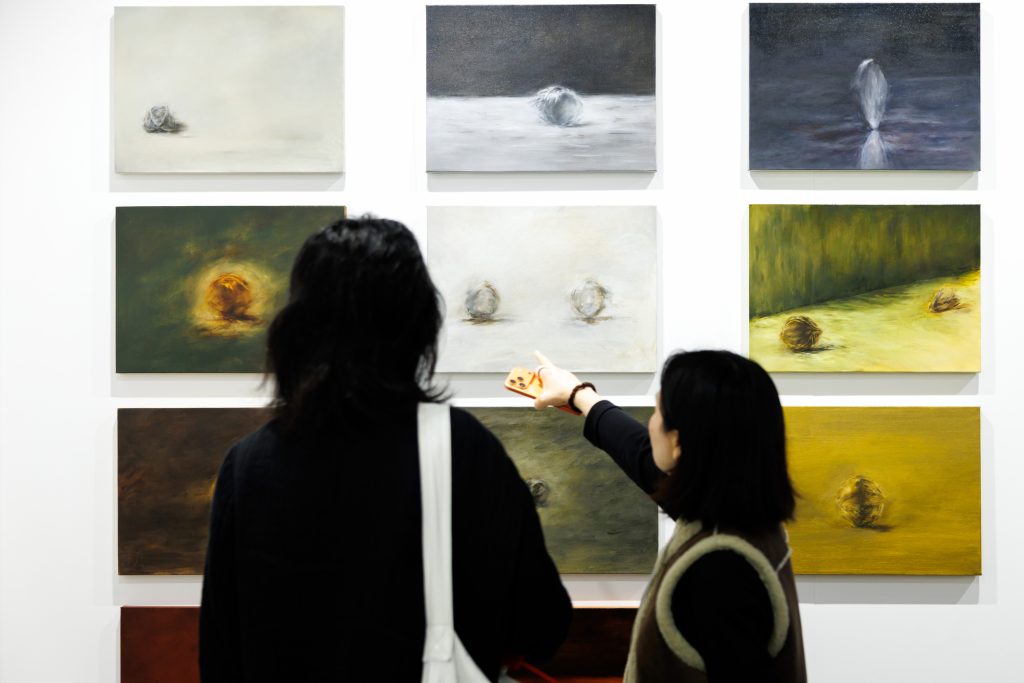
Liquidity is now distributed across the market, extending beyond a narrow tier of buyers. Competition is intensifying, shaped in part by a younger generation of collectors entering with speed, confidence, and fewer conventional constraints.
Institutional presence continues to compress the timeline between acquisition and recognition, particularly for artists working within or in dialogue with Asia. The distance between private collections and public visibility is becoming increasingly short. The integration of digital practices into the fair’s core structure reflects a more mature framework for this category. At the same time, it demands selectivity. Only a limited number of works within this field will sustain long-term relevance. The growing attention to tightly curated formats, such as Echoes, indicates a shift in collector behavior. Precision, clarity, and curatorial intent are taking precedence over scale.
The next edition of Art Basel Hong Kong will take place from March 25 to 27, 2027.
Read later
Share