Polo: The Sport That Runs Dubai’s Winter Season
 Read later
 Share
Share
Polo is the Gulf’s oldest team sport. It is also one of its most effective rooms. A guide to the scene — what it costs, how to get in, and why it matters.
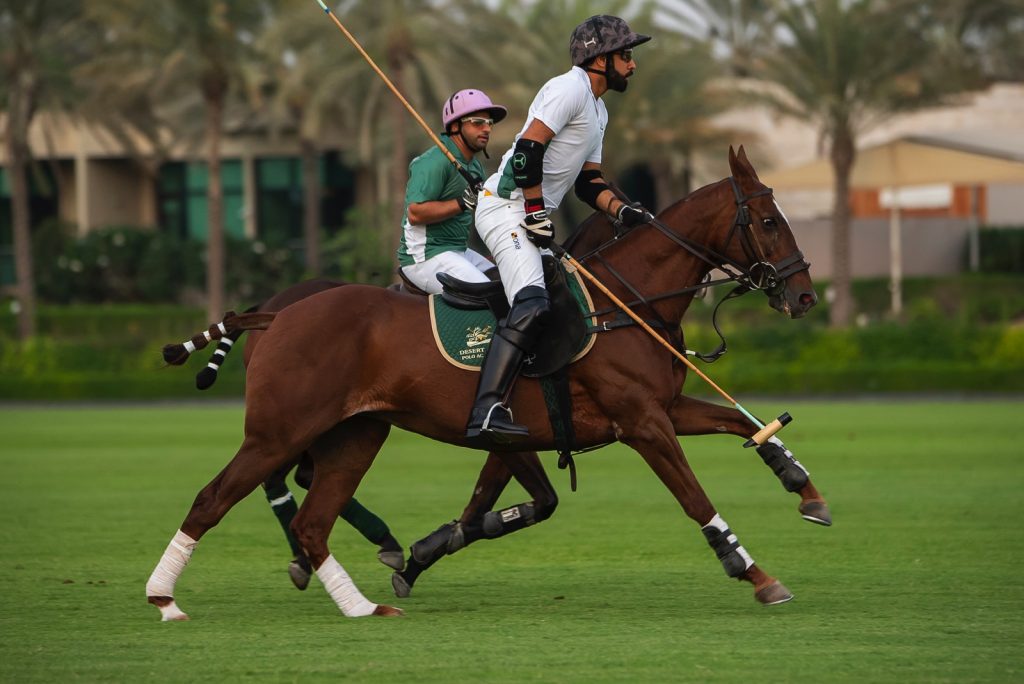
There is a moment at every polo match in Dubai when the game becomes secondary. It arrives somewhere around the third chukka, when the dust has settled into the afternoon light over the Dubailand grounds, and the crowd at Al Habtoor has arranged itself into something resembling a cabinet meeting, lined with couture in attendance.
This is Polo in Dubai: one of the world’s most demanding sports and one of its most reliable social structures, running in the same breath.
How the Scene Was Built
The Arab relationship with horses runs centuries deep, and Sheikh Mohammed bin Rashid Al Maktoum, the Ruler of Dubai, is among the most serious equestrian patrons in the world — he owns one of the largest Thoroughbred breeding operations on the planet and is a competitive endurance rider. But polo as an organised sport in the UAE is a more recent story, and its rise was rapid even by Dubai’s standards.
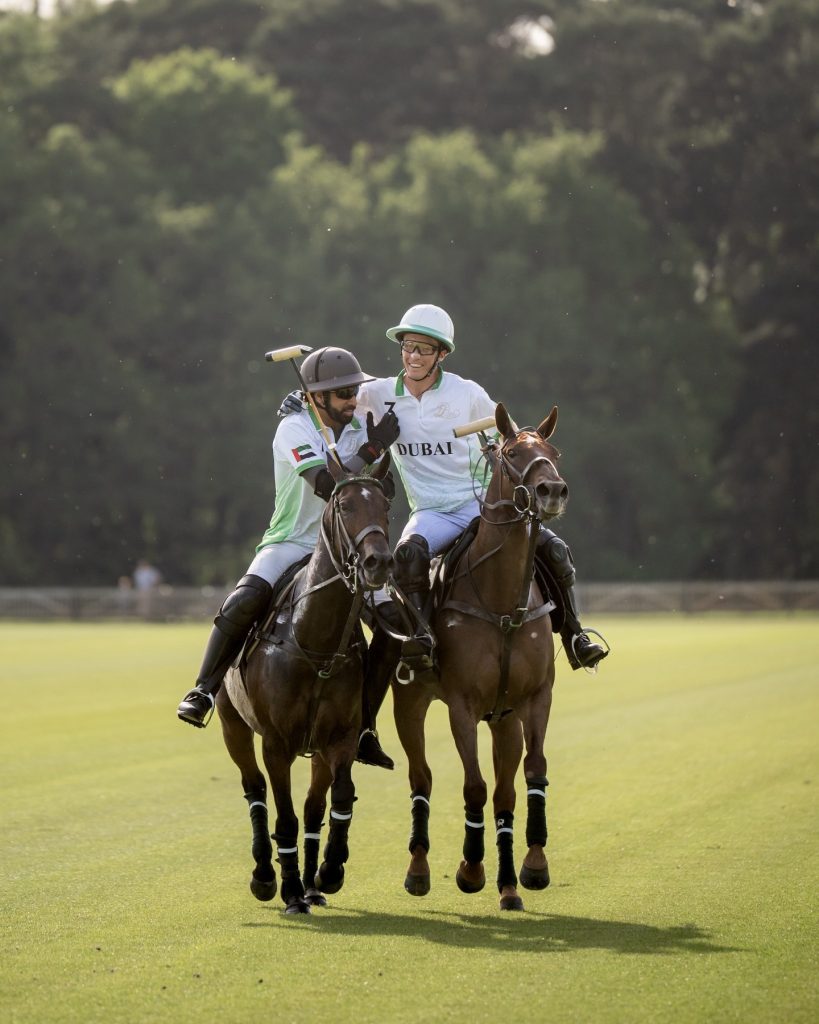
The foundation was laid in the early 1990s by Ali Albwardy, who secured land from Sheikh Mohammed to build Dubai’s first proper polo facility. The Dubai Polo Team was established in 1993. What followed was a compressed evolution that the polo establishments in England and Argentina watched with considerable interest.
Today, the UAE has four active polo clubs, all playing from October through April — the window before summer makes grass polo impossible. Two anchor the Dubai scene.
Al Habtoor Polo Resort & Club in Dubailand is the largest and most developed polo facility in the Middle East: four playing fields, over 500 stables, two competition arenas, villas for lease, branded residences and a five-star hotel at its centre.
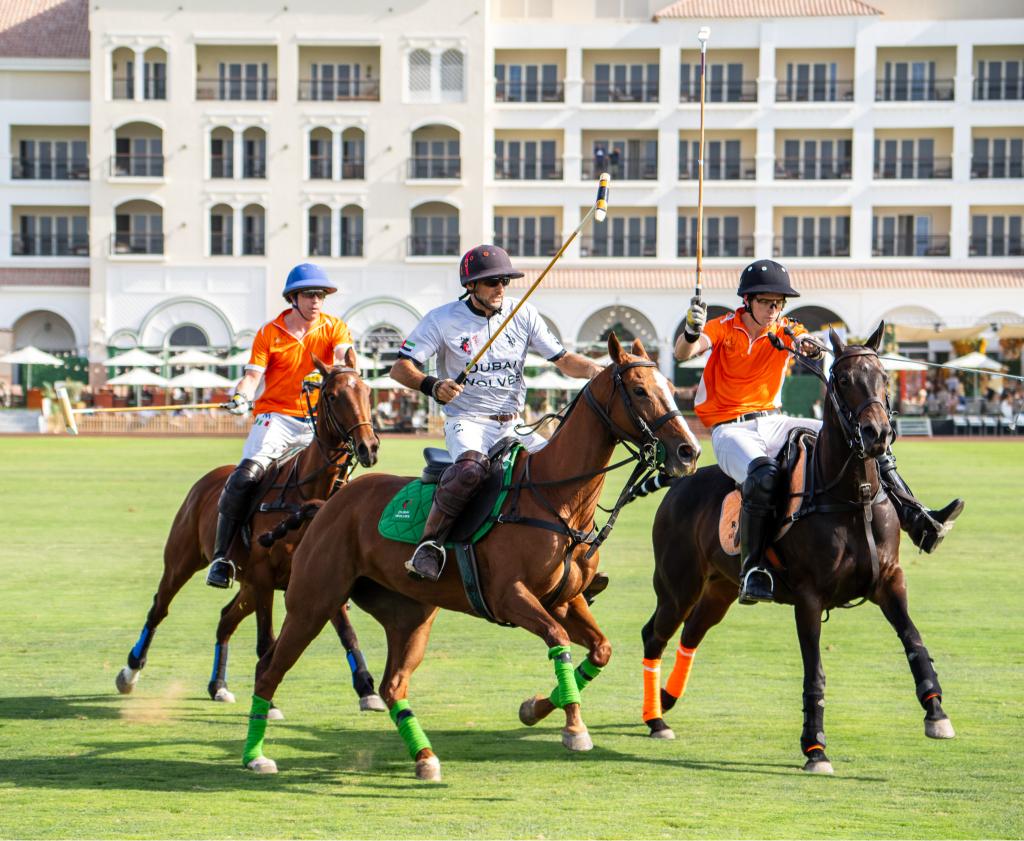
It is home to the Dubai Polo Gold Cup Series, which began in 2009 as a single event and has grown into one of the leading polo series in the world — five tournaments running January through April, with the Gold Cup itself one of only four tournaments worldwide in the World Polo Tour Championship Cup category, alongside events in Argentina, Spain and the UK.
To learn more, click here.
Desert Palm, established by the Albwardy family and set on a 150-acre private polo estate, is the other pillar of the scene — more boutique in character, home to the Dubai Polo Team, and host to the Cartier International Dubai Polo Challenge.
To learn more, click here.
Between Dubai and Abu Dhabi sits a third institution of a different register: Ghantoot Racing & Polo Club, founded in 1994 by the late President Sheikh Zayed bin Sultan Al Nahyan. It is the only Royal polo facility in the UAE — 300 hectares of grassland, eight international-standard fields, stabling for over 300 polo ponies, a royal grandstand with a helicopter landing platform and a VIP entrance.
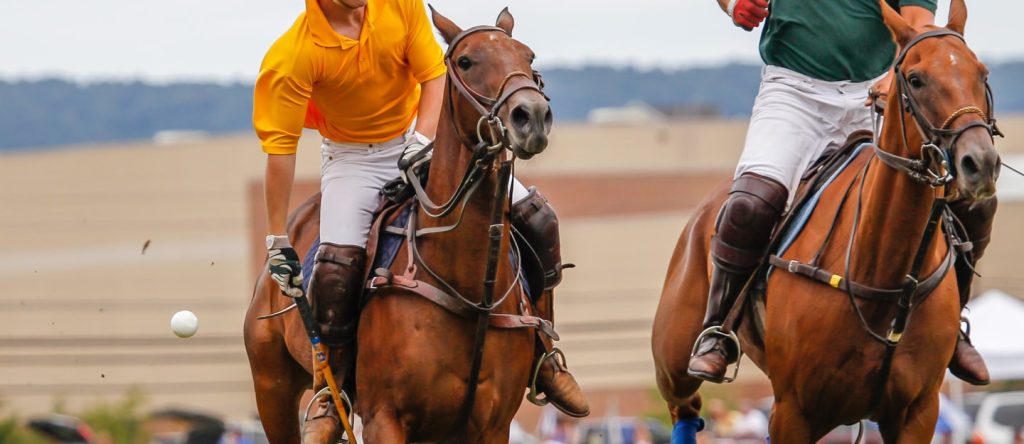
Ghantoot has hosted heads of state, royal families from multiple countries and a long succession of global business leaders. It is not primarily a place you go to watch sport.
To learn more, click here.
The Gold Cup and Where Dubai Sits Globally
The Dubai Polo Gold Cup is a 20-goal tournament — the highest level of competitive club polo — and the calibre of play has risen to match the infrastructure. The 2026 season brought players of genuine international standing: Gonzalo Pieres and Antonio Heguy with the Jehangiri team, Lukin Monteverde with the UAE team, and multiple members of Argentina’s most established polo families competing across the series. The Dubai Polo Team won the Cowdray Gold Cup in England in 2024 – one of the most prestigious tournaments in the British season. Ghantoot teams have won in St. Moritz and Sotogrande.
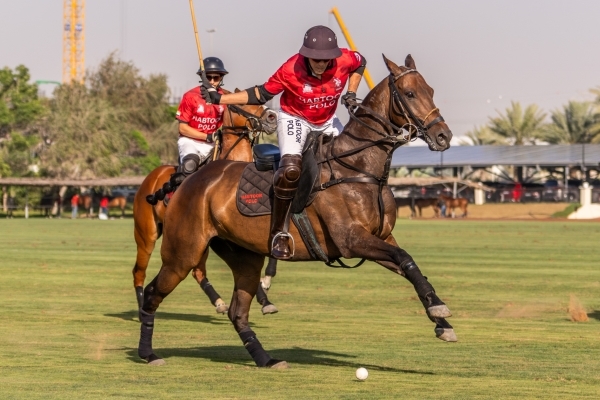
The gap between watching a top-tier match in Dubai and watching the Argentine Open in Buenos Aires is one of history and scale. In terms of what happens on the field, it has closed considerably.
To learn more, click here.
What It Costs
The sport has three distinct entry points, and the costs at each bear little resemblance to the ones above it.
For the curious newcomer, both the Al Habtoor Polo Academy and the Dubai Polo & Equestrian Club near Arabian Ranches offer lessons, corporate packages and introductory programmes. No long-term commitment is required; the costs sit comfortably within serious leisure territory.
Full polo membership — fields, stabling, social calendar – runs around AED 53,000 per year at Al Habtoor. Ghantoot, the royal club, starts at AED 100,000 for a team membership.
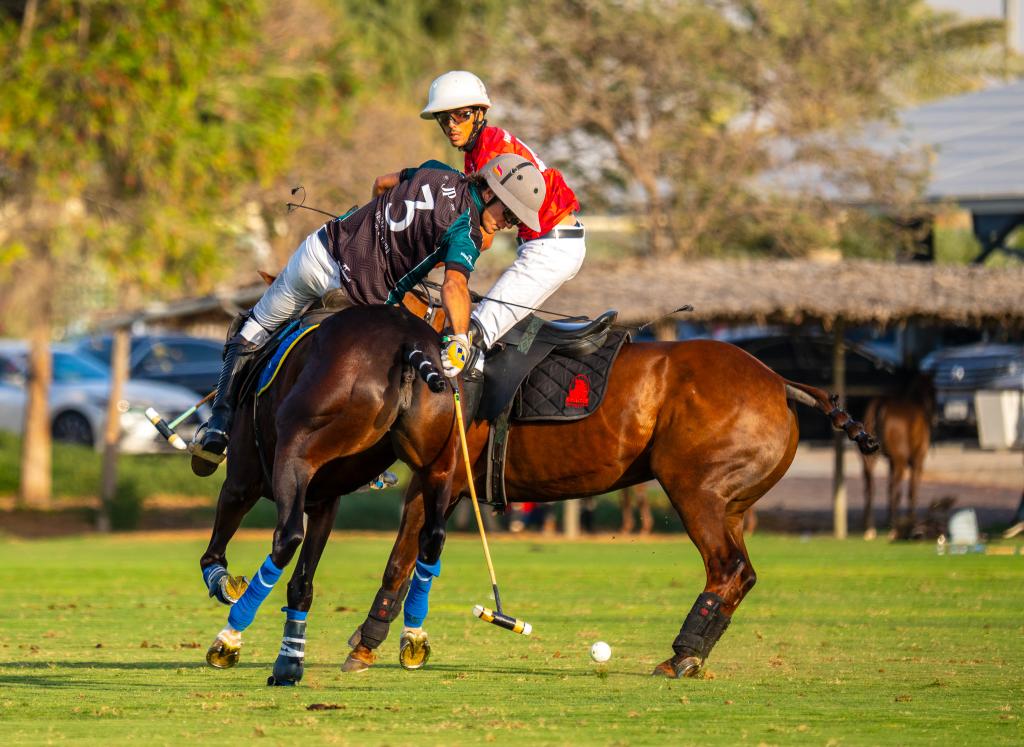
Then there is the patron level, where the economics are a different conversation entirely. The best polo ponies come from Argentina, cost anywhere from a few thousand to $200,000 each, and run up to $14,000 to transport to the UAE. A competitive team needs a minimum of eight for a single match; serious patrons keep twenty or more. According to sources, Mohammed Al Habtoor spends close to a million dollars a year on ponies alone, before professional player salaries, which can reach seven figures for the best Argentine and British players.
What the Room Actually Offers
The most valuable professional connections rarely form in rooms built for that purpose. Conferences and summits have their place, but the relationships that actually compound — the ones that turn into co-investments, introductions, long-term trust – tend to form through sustained shared experience. Proximity that recurs, in a context where nobody is performing.
A polo season provides exactly that. Players and patrons spend months together in an environment that demands genuine mutual reliance — on the field and off it. The crowd at the Gold Cup draws European industrialists, Indian business families, Gulf royals, Latin American ranching dynasties and international family office principals. The British Polo Day, which started in Dubai in 2009 before expanding to Morocco, the USA and India, was built around this logic — its co-founder Tom Hudson noted that each edition attracts CEOs and chairmen, with figures like Sir Richard Branson and Elon Musk appearing at various stops on the circuit.
The sponsorship roster makes the same point more bluntly. Al Habtoor has turned away sponsors for the Gold Cup. Those who compete for the association – McLaren, Bentley, Julius Baer — are paying for access to a specific kind of person in a specific state of trust. Ghantoot describes itself simply as “an unparalleled hospitality venue for entertaining clients, friends and family.” Sport, heritage, open air, royalty in the next box. Business gets done because nobody arrived to do business.
The Global Circuit
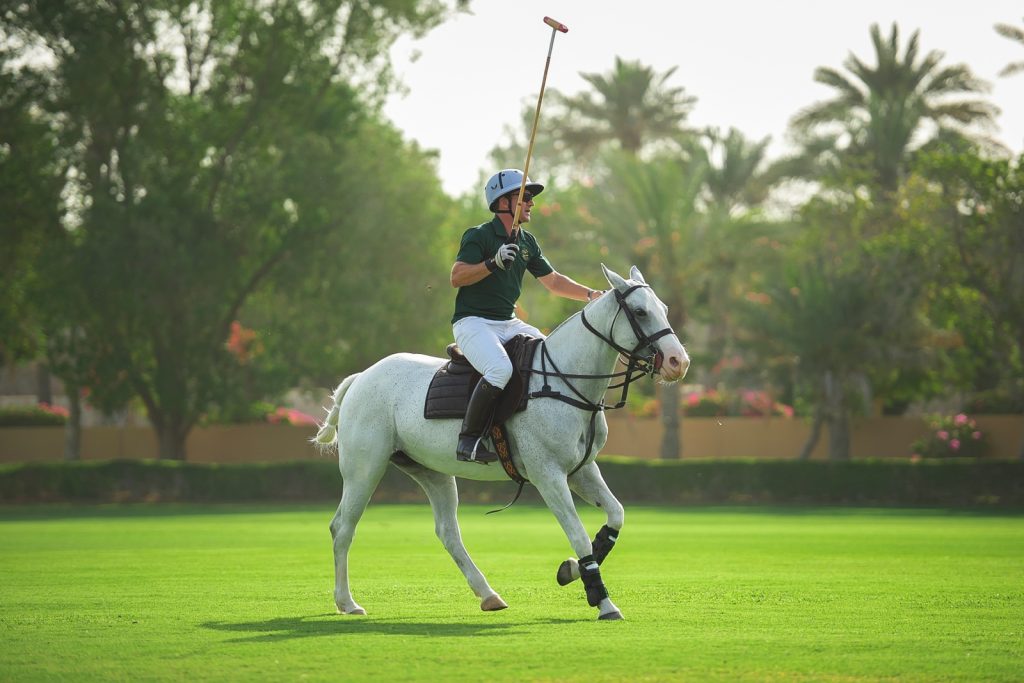
Dubai is rarely anyone’s only season. The polo calendar runs continuously: the UAE from October to April, then England and Spain through the summer — Guards, Cowdray, Sotogrande — before Argentina in the final months, culminating in the Argentine Open in Buenos Aires, the closest the sport has to a Grand Slam final.
For those who move through it, the circuit becomes a social infrastructure that travels with them. The same faces at Al Habtoor in February turn up at Guards in June and Palermo in November. The world is small, it reassembles on a schedule, and the relationships it produces have a continuity that most other contexts cannot offer.
Getting In
The easiest start is simply attending. Matches at Al Habtoor are open to spectators during the Gold Cup series, and watching a 20-goal game tells you more about the scene than any description of it.
Learning to play is a longer commitment. Both Al Habtoor and the Dubai Polo & Equestrian Club run beginner programmes. Still, Polo requires solid riding before it can be played — most newcomers spend a full season in lessons before they’re anywhere near competitive.
For those who want the room without the riding, social membership at either club gives access to the events, the calendar and the crowd, without the overhead of owning animals.
With that being said, come for the sport. The rest has a way of following.
Read later
Share