Guest Essay: Angelina Brewers on Etiquette or How to Show Status Without Showing Off
 Read later
 Share
Share
In a world where wealth can be increasingly visible, true sophistication is often communicated through what remains unseen: how we enter a room, how we speak, how we listen and how we make others feel.
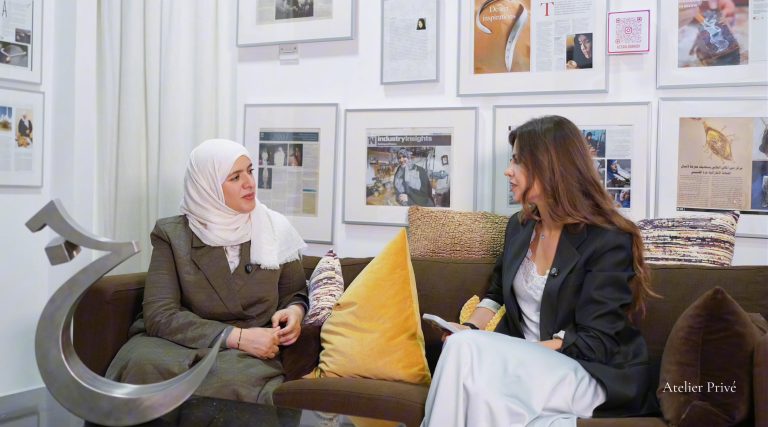
We spoke with Angelina Brewers etiquette expert and founder of The Grace Society, about the evolving language of status, cultural intelligence and the subtle codes of modern social life.
1. Etiquette is often associated with rules, formality and old-world traditions. How would you define etiquette for the modern world?
Etiquette as elegance is timeless. Wherever there are people, there is interaction between them, and where there is interaction, there is etiquette. Platforms change, but modern etiquette still answers the same two questions: What impression do I make? How do people feel next to me?
It works everywhere: in a theatre, a supermarket, a boardroom and online. It is a language of respect and, at the same time, a marker of class.
Genuine interest in the person beside you, high standards and good manners will never go out of style, and in a world of AI and automation, real human connection will become a real luxury.
2. In your experience, what distinguishes genuine elegance from simply looking expensive?
Inner state. It is reflected in your presence and your manners, and it is the one thing you cannot fake.
You can buy the most expensive car, watch or suit, but your body language and the small details will reveal what is missing. Elegance cannot be bought. It can only be learned and practised until you become it. It is a deep transformation, not an expensive costume.
3. Can etiquette actually change the way a person is perceived — in a business meeting, at a private dinner or in a high-level social circle? If so, what are the subtle signals people tend to notice first?
Absolutely. Manners are a filter: “one of us or not.” They show where we come from, which circle we belong to, and if someone doesn’t fit, it is much harder for them to earn trust.
According to Albert Mehrabian’s research, when our words and our signals don’t match, people believe the signals: about 55% of the impression comes from how we look, 38% from how we sound, and only 7% from what we say.
Imagine someone telling you how confident he is and how easily he works with high-level people, while his body language is insecure and his grooming careless. We simply won’t believe him.
The first things people notice are posture, eye contact, the handshake, grooming, the pace of speech and how you treat the people around you. If we pay more attention to this, we gain tools for being more successful in our business meetings, or in any meeting.
4. What are some behaviours that immediately reveal a lack of social awareness, even when someone is otherwise highly successful or sophisticated?
There are many, but it all starts with respect. How does this person treat the people around him?
It is easy to be respectful to someone above you. Being kind to those who currently stand below you is the real test. If you treat people as though they owe you something, you are silently agreeing to be treated the same way by those above you.
So if you claim to be successful and sophisticated, and you are rude to the people who serve you, for example, then you are neither.
5. Today, people move constantly between cultures — Dubai, London, Paris, Milan, New York. How important is cultural intelligence when it comes to etiquette? And what mistakes do internationally mobile people most often make?
Love this question. We all understand that respect builds trust, but what is respectful in one culture may not be in another.
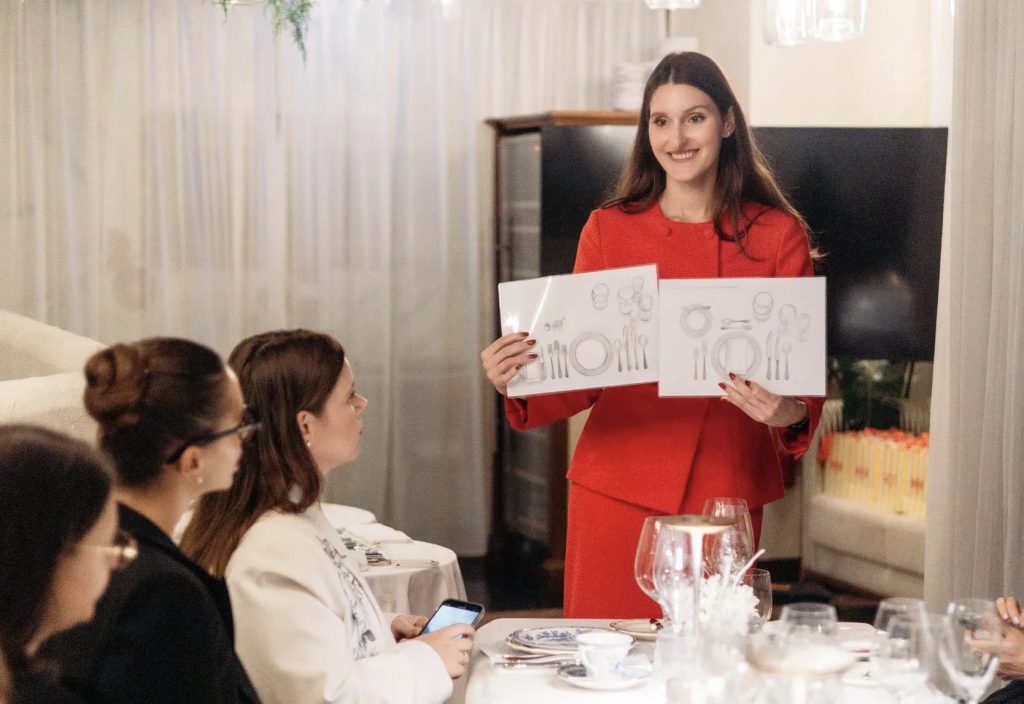
Take greetings. In many southern countries a greeting is warm, with hugs and touch. In others, people prefer a handshake. In some Muslim cultures, a handshake between a man and a woman who are not relatives may not be appropriate, so a hand on the heart and a slight nod is a graceful alternative. In Asia it may be a bow, with different depths for different positions.
So many nuances and that is only the greeting. My universal advice is to learn about the culture in advance. It helps you avoid faux pas, and it’s a wonderful topic for small talk.
6. Has social media changed the meaning of status and etiquette? Are there behaviours that may look impressive online but have the opposite effect in real life?
Of course. It shapes how we perceive status, and it is developing its own etiquette. The main issue is that everyone shows a better version of themselves: fake it till you make it. The more you show, the more successful you seem.
But real status is not about demonstrating, and I believe we are gradually getting there.
At the US Open, a match was once stopped because of an influencer’s camera flashes. Those photos may look impressive online, but in reality it was disrespect toward the game and the players.
7. What role does self-presentation play in etiquette — from the way we dress and enter a room to the way we speak, introduce ourselves and leave a conversation?
A huge one. You never get a second chance to make a first impression. How you dress, enter a room, introduce yourself and leave a conversation can cost you a deal or a meaningful relationship, personal or professional.
Only a small part of the impression comes from your words. The rest comes from presence: how you look, move and sound, and how you make others feel.
8. If you could give one principle of etiquette to someone entering a room of highly influential people, what would it be?
Stay calm and graceful. Easier said than done, but true.
Powerful people do not rush. Start with your body: confident posture, shoulders back and relaxed, chin parallel to the floor, calm movements. Even if you don’t feel it yet, practise until you become it.
9. What is one etiquette rule you believe is timeless — and one traditional rule you think we should finally let go of?
Timeless: respect. The forms of showing it change, but respect itself never goes out of style.
To let go: using etiquette to judge or correct others. Etiquette was never meant to be a weapon. Publicly pointing out someone’s “wrong fork” is bad manners in itself. Real etiquette makes people feel at ease. Snobbery is not refinement, and it’s a tradition we can finally retire.
 Read later
Share
Read later
Share