Vacheron Constantin Explores New Horizons: The Watch Exhibition Arrives in Dubai
 Read later
 Share
Share
Historical watches, new creations and an Emirati artist’s vision come together in the Maison’s 2026 exhibition.
An Invitation to Explore
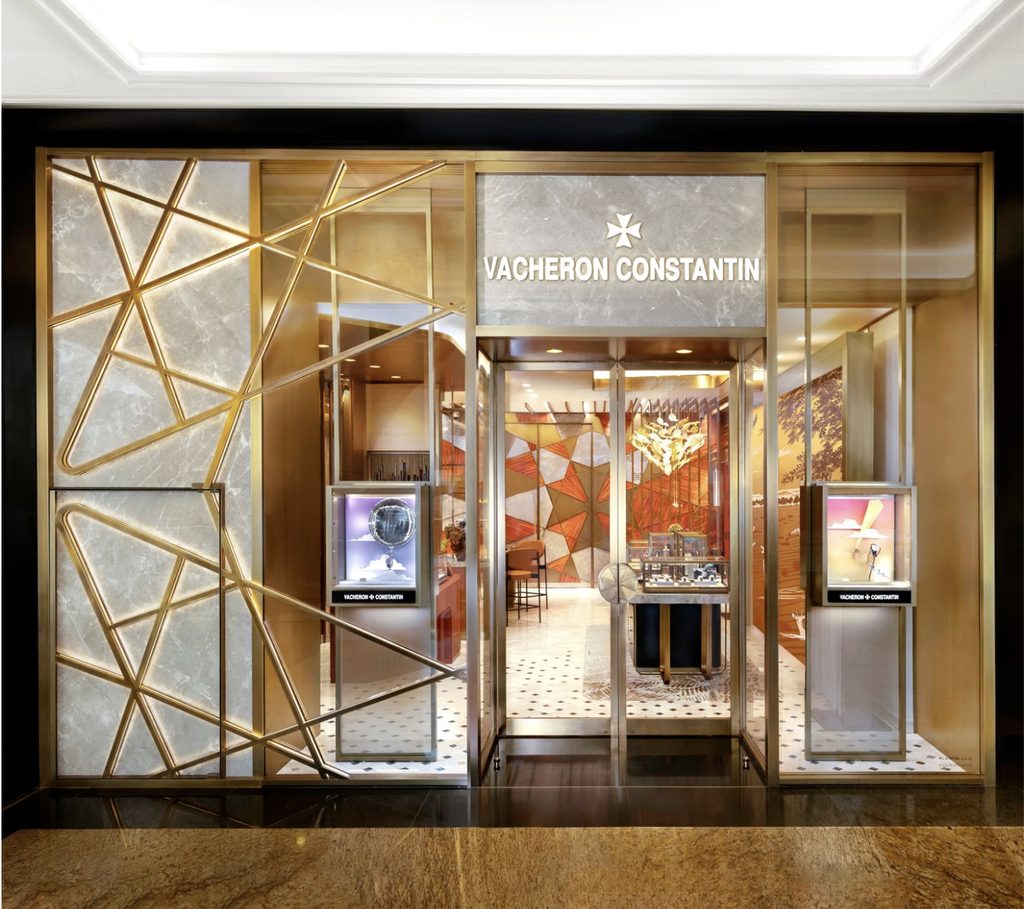
Vacheron Constantin brings Explore All Ways Possible, its annual theme for 2026, to Dubai in September, before the exhibition travels to Saudi Arabia in December. It gathers historical watches and recent creations under one idea and, for the Middle East, adds an installation by Emirati illustrator Mariam Abbas. The theme takes its cue from the motto that originates in the writings of François Constantin in 1819, “Do better if possible, and that is always possible“, which the Maison reads as an invitation to push the boundaries of excellence and creativity wherever they may lead.
Founded in Geneva in 1755, Vacheron Constantin describes exploration as a source of wonder, innovation, and knowledge that has run through its history. In the Maison’s own account, opening itself to the world turned the measurement of time into a vast field of research and discovery, spanning technical, historical, and cultural ground.
Four Directions
The exhibition is structured around the four cardinal directions, each reflecting the Maison’s own history, representing a distinct universe and watchmaking language. We can see that Vacheron Constantin expanded commercially from the outset, first to neighbouring countries and then on journeys to each of the four directions, with each destination corresponding to a particular kind of watch. The North focuses on movement, water and navigation, represented by pieces including the Overseas collection. The South explores heritage and civilisation through artistic traditions and historical craftsmanship, while the East examines challenge and resilience through decorative influences from distant cultures. The West addresses vision and modernity, including the Historiques American 1921.
Those encounters with other cultures, architectural styles and artistic sensibilities shaped an aesthetic of the Maison’s own. Vacheron Constantin was among the first to unveil tonneau and cushion-shaped watches, followed by Art Deco cases, and its Métiers d’Art collections later opened to influences from distant horizons, from the power of masks as symbols of primal art to the maki-e technique, the pinnacle of traditional Japanese lacquerware.
The Fifth World
For the Middle East, the four directions are joined by a fifth universe created specifically for Dubai and Saudi Arabia in collaboration with Mariam Abbas, an Emirati illustrator and visual designer. Her illustration combines Arabian flora, dunes, a date palm, a hoopoe, wind towers and contemporary skyscrapers, bringing together references to regional heritage, nature and the future. The landscape opens through a mosque arch, with teela marbles floating overhead and fish swimming through the sky.
Tasmeem Tashkeel translated the artwork into a physical installation through its in-house art, design and production teams, extending Abbas’s world into the exhibition space.
The Watches
The contemporary pieces on display show how the same spirit of exploration continues in the workshop. The Overseas Self-Winding Ultra-Thin, the first Overseas crafted entirely in platinum, carries a salmon dial and the new Calibre 2550, an ultra-thin movement only 2.4mm thick with an 80-hour power reserve, in an edition limited to 255 pieces.
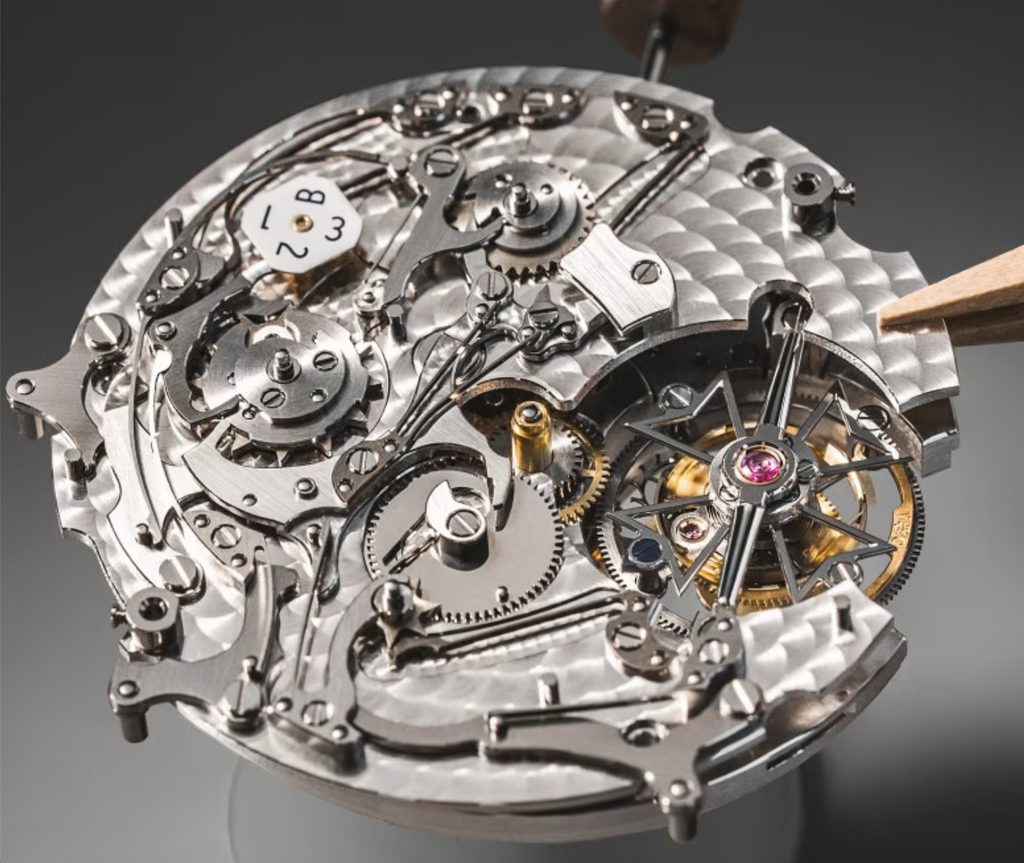
The Égérie Moon Phase “Spring Blossom” offers a more decorative interpretation, with a pink mother-of-pearl dial and a hand-painted calfskin strap adorned with floral motifs, a first for the Maison, produced in an edition of 100 pieces. Alongside it, the Les Cabinotiers Minute Repeater Tourbillon Skeleton, a unique creation, reveals the complexity of its openworked movement.
The Overseas Dual Time “Cardinal Points” brings the exhibition’s theme directly onto the wrist, with four titanium references, each dial colour embodying one of the four cardinal points, developed in collaboration with photographer and explorer Cory Richards.
Craft Within Reach
The exhibition also traces the Maison’s technical development, including its work in chronometry, miniaturisation and mechanical innovation. Historical examples include the Jalousie watches of the 1930s, pocket watches with shutters designed for travel and the Chronomètre Royal, introduced in 1907.
It is designed as a multi-sensory experience that brings together encounters, curated environments and digital interactions, placing the Maison’s latest creations alongside historical pieces.
After more than 270 years of looking outward, Vacheron Constantin adds a chapter drawn from the region itself.
Read later
Share