A world-renowned Italian architect in the Middle East — a journey through design, identity, and meaning
 Read later
 Share
Share
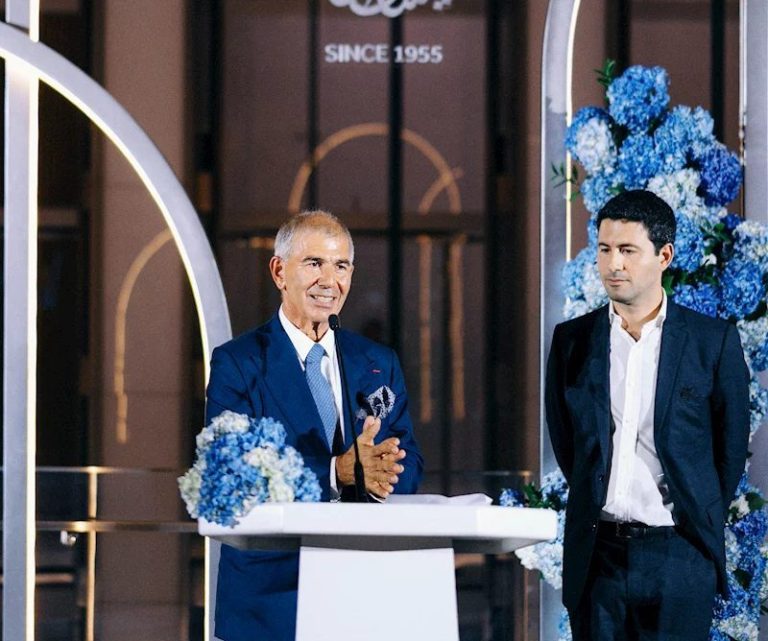
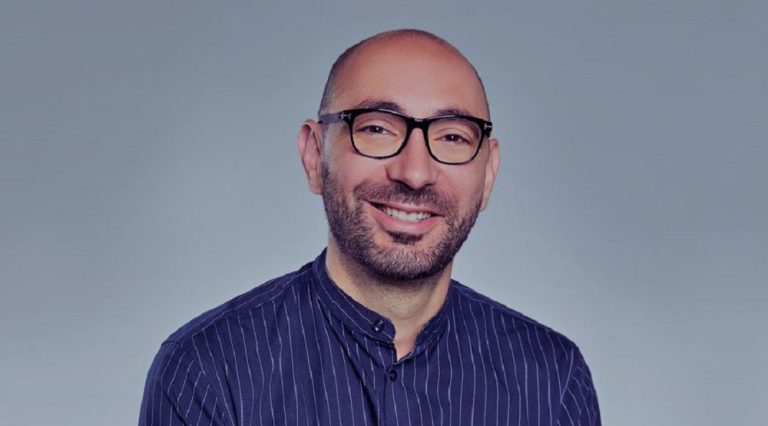
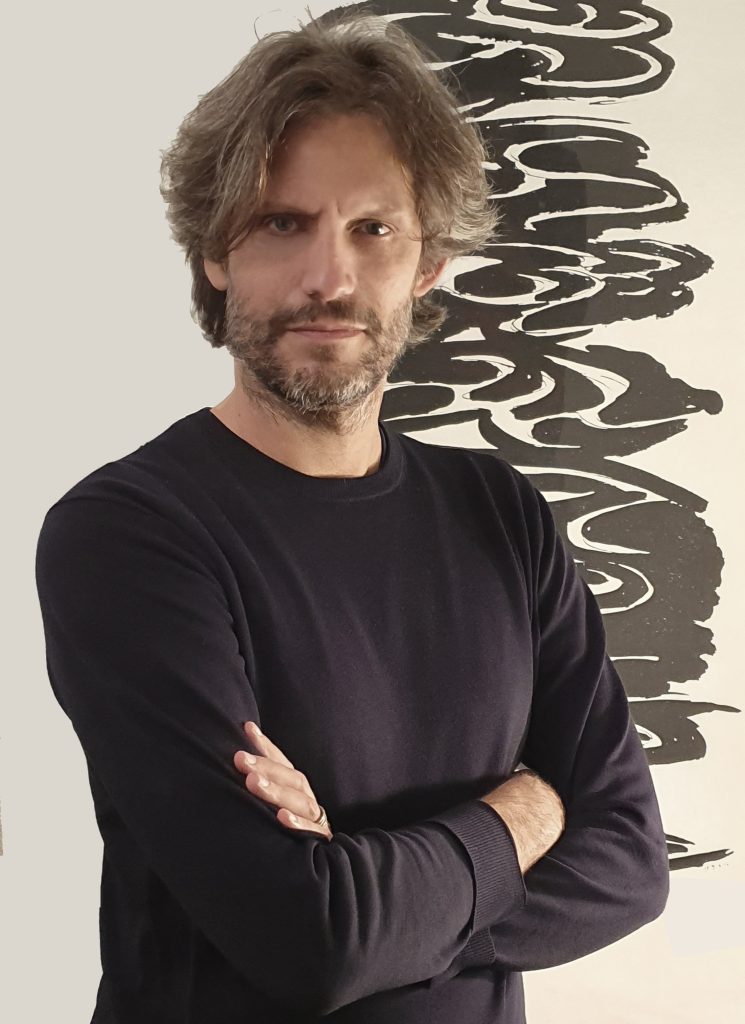
In a region where the desert meets glass, and tradition mirrors innovation, few architects have managed to capture the subtle equilibrium between grandeur and intimacy. Davide Edoardo Ortelli, a partner at Ortelli Architetti — an Italian firm with over three decades of international experience — belongs to that rare category.
Known for creating refined spaces for some of the world’s most prestigious luxury maisons, Ortelli has left his mark across Europe and the Middle East, from high-fashion boutiques to private residences. His work reflects an enduring fascination with light, craftsmanship, and the dialogue between culture and material.
Atelier Privé sat down with Davide to explore his philosophy of space, his years in the Gulf, and the evolving conversation between Italian sensibility and Middle Eastern opulence.
What first brought you to the Middle East, and what kind of projects did you work on here?
I arrived in the Middle East in the early 2000s. My work was almost entirely focused on luxury retail design, mainly high-fashion boutiques for Italian and European brands inside the new and grand shopping malls in the United Arab Emirates, Qatar, Saudi Arabia, and Bahrain, including also Turkey, which in many ways is the bridge between the Middle East and Europe.
At that time, the interest of major fashion houses in the region was growing exponentially, in step with the rising demand and offer of luxury among Middle Eastern countries. Many of the most prestigious malls were still under construction and represented symbols of ambition and a desire for international recognition. The boutiques we designed often opened simultaneously with the malls that hosted them.
In what ways did this region feel different from Europe — not only in style, but also in the way people think about space, home, and the idea of comfort?
In luxury retail, the concept of comfort is always intertwined with that of experience.
In the Middle East, even more than in Europe, there was a pursuit of a much more spectacular and symbolic vision of space. While in Europe elegance was often sought through sobriety, sophistication, and minimalism, in the Middle East comfort was associated with grandeur and opulence — an immersive experience through the use of precious materials, light, and scenographic elements.
But the most distinctive aspect, in my view, was the idea of hospitality in all its nuances. For the Middle Eastern client — highly demanding — space must seduce and surprise but also convey warmth and welcome. In the public spaces of large malls or the lobbies of international luxury hotels, this is expressed through the display of wealth and grandeur; in the more intimate setting of boutiques, it takes on a reserved, exclusive form. This connects to the private sphere of the home and the deep-rooted cultural value of hospitality, which translates into spaces — both indoor and outdoor — dedicated to social interaction.
Over the past ten years, however, there has been a kind of osmosis between the Middle East and Europe. Design in the Middle East has become more refined, while in Europe — especially in flagship stores — there is now greater emphasis on visual and scenographic impact, combined with highly personalized and hospitality-oriented service.
What stood out to you in the way clients here approached design — were there any requests or expectations that felt especially interesting or unexpected?
All over the world, boutiques must express elegance, exclusivity, and attention to detail, always with strong consistency with the brand’s image. Each project must therefore interpret the brand’s spirit within very specific architectural and cultural contexts, respecting local regulations, aesthetic sensitivities, and consumer habits that differ from European ones.
In terms of space organization and usability, there is a particular focus on privacy in the Middle East: separate pathways, lounge areas, waiting zones for family members. It is common to design boutiques with completely private areas where clients can enjoy the shopping experience in total discretion.
From an aesthetic point of view, there can also be requests to reinterpret certain elements in a local key, without compromising the brand’s identity and design. This leads to a very stimulating creative tension: on one side, the discipline and global image of the maison; on the other, the search for a visual and sensory impact connected to the place. This can be expressed through the use of precious and unique materials, the introduction of decorative elements inspired by local craftsmanship, or geometric details referencing Arab culture. The challenge is to create a common language, a coherent synthesis rich in suggestions, that makes the boutique experience truly unique.
During your work in the Middle East, what discoveries did you make — whether in materials, craftsmanship, architecture, or even in the lifestyle?
Coming from Italy, where craftsmanship has a millennia-old tradition and plays such an important role in our history and culture, I couldn’t help but be fascinated by the value attributed in the Middle East to decorative detail and the extraordinary skill in working with materials. It’s a kind of design deeply rooted in craftsmanship and materiality. Materials act as cultural codes, loaded with meaning and always telling a story. Marble, onyx, metals, dark woods, carved surfaces, embroidered fabrics… each choice carries symbolic value. This symbolism also extends to the perception of time. Designing for clients who experience time in a more fluid, less linear, almost ceremonial way, taught me to think of spaces as stages along a narrative path. Interpreting space as a kind of “script” suits me perfectly and stems, alongside my work as an architect and designer, from many years of experience in theater.
How do you personally find balance between local identity and an international aesthetic?
For me, balance is achieved when local identity is integrated naturally, without falling into cliché. It’s not about adding local decorative elements to an already finished project, but about understanding the culture of the place and reinterpreting it through the brand’s design language. For example, using more generous proportions, tactile textures, light effects inspired by the desert or calligraphy, all while maintaining coherence with the maison’s visual universe. The layout, lighting, materials and even the rhythm of movement through the space should reflect how people in that context live and interpret the idea of luxury, there and at that moment in time.
What inspires you most about projects in the Middle East? Are there specific images, details, stories or places that stayed with you?
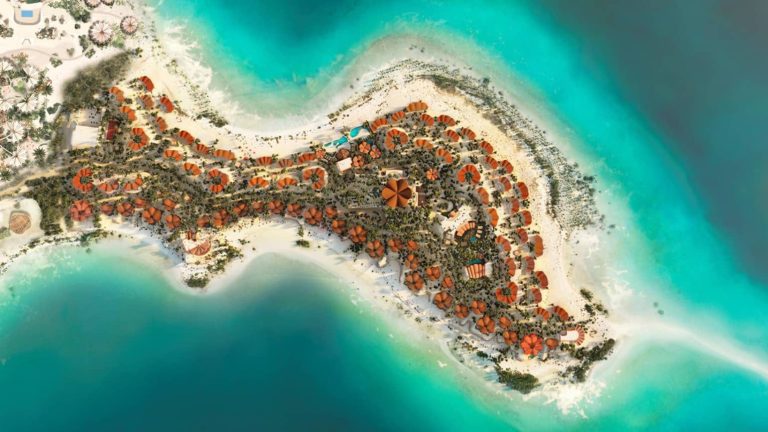
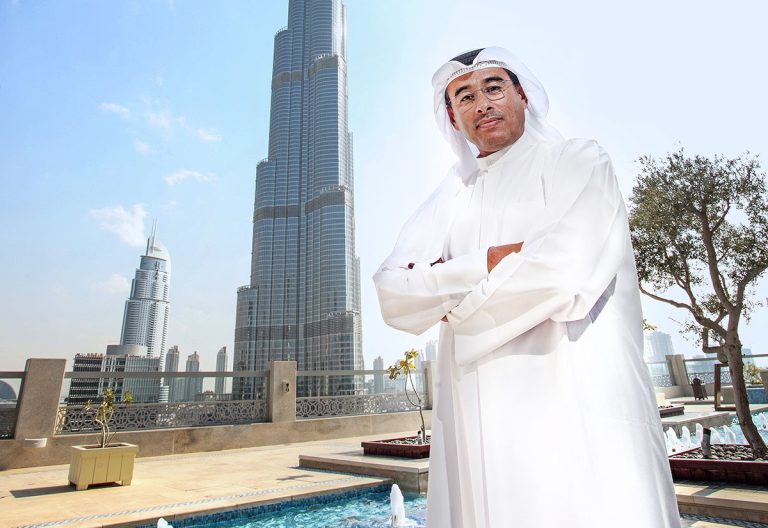
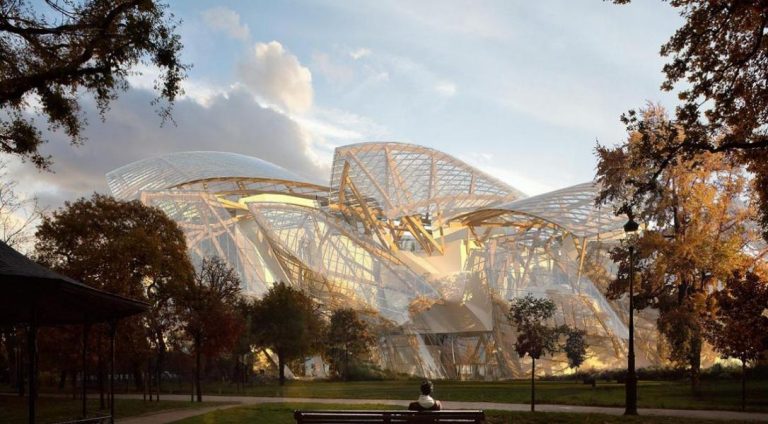
It’s difficult to choose just one. On one hand, I’m fascinated by the contrast between futuristic architecture and the desert, or the sea, which is in itself a kind of desert made of water rather than sand. It’s a true philosophical, technological, and aesthetic challenge between the artificial and the natural. It’s not only about the desire to dominate through majestic buildings like the Burj Khalifa, but also about the ambition to completely redesign the topography of vast desert areas or coastlines, creating entire artificial islands from nothing. Architecture doesn’t merely rise within the desert or on the sea, it reshapes their boundaries to create a completely new environment.
Equally fascinating is the opposite approach: mimicry. The Maraya Concert Hall in AlUla struck me profoundly, with its mirror-clad walls reflecting the surrounding rocky landscape and geological formations, making it appear to vanish. The contrast lies in the geometric perfection and sheen in which the irregularity and roughness of the desert are reflected. It’s an architectural “mirage.”
In your view, what is the future of Middle Eastern design — will it integrate more into global trends, or develop its own unique school?
I’m not sure how to answer that. Do global trends truly exist? And if so, what are they? In such an interconnected world, does cross-pollination lead to unification or diversification? Given its unique environmental context and futuristic architectural vision, the Middle East could indeed have great potential to create its own school and perhaps even become the pioneer of third-millennium design. But for that to happen, the real challenge is finding balance between technology and environment, between future and tradition.
The buildings constructed so far mostly use materials typical of Western modernity. Glass and steel, by their nature, don’t belong to the desert, which favors materials suited to wide temperature variations. These skyscrapers and museums, therefore, are technologically Westernized and require enormous energy consumption to maintain an artificial indoor climate, an oasis of comfort, in an environment entirely unlike the West.
In traditional Arab culture, the Bedouins adapted to the life and climate of the desert, not the other way around. From that culture comes the Majlis, a social space that remains fundamental not only in traditional homes but also in modern contexts like hotels and gathering places. Similarly, from the need to ventilate and cool houses while protecting private areas from view, came the Mashrabiyya, one of the most distinctive and decorative elements of local architectural language.
I’m not suggesting we should go back to building palaces out of sun-dried mud, but rather that construction technology should seek modern yet contextually coherent solutions. Only then can a truly original and distinctive design language emerge.
More broadly speaking — for you, is design primarily about aesthetics, or is it more about a philosophy of life?
For me, design is the way I imagine and shape experiences that others will live. It’s a form of relationship with people, with context, with time, with tradition, with expectations. It’s a philosophy that guides how I observe things, solve problems, and create spaces that make sense. Spaces that have both practical and emotional meaning.
Aesthetics is language, style, a trait d’union, but the true meaning lies in the intention behind every choice.
Do you see yourself returning to work in the region? What would you like to create there if another opportunity arose?
Certainly. In fact, we are part of a network of architecture firms specializing in retail, private residences, and hospitality. The network was created with the specific goal of working on interior design projects and promoting Italian design companies, both large and small, always with great attention to aesthetic, construction, and material quality. One of our missions is also to create synergy between these companies and local artisanal businesses, because we believe that from this exchange of techniques and traditions something truly interesting can emerge.
 Read later
Share
Read later
Share