The End of the Old Venture Model: Why Capital Is Losing Its Advantage
 Read later
 Share
Share
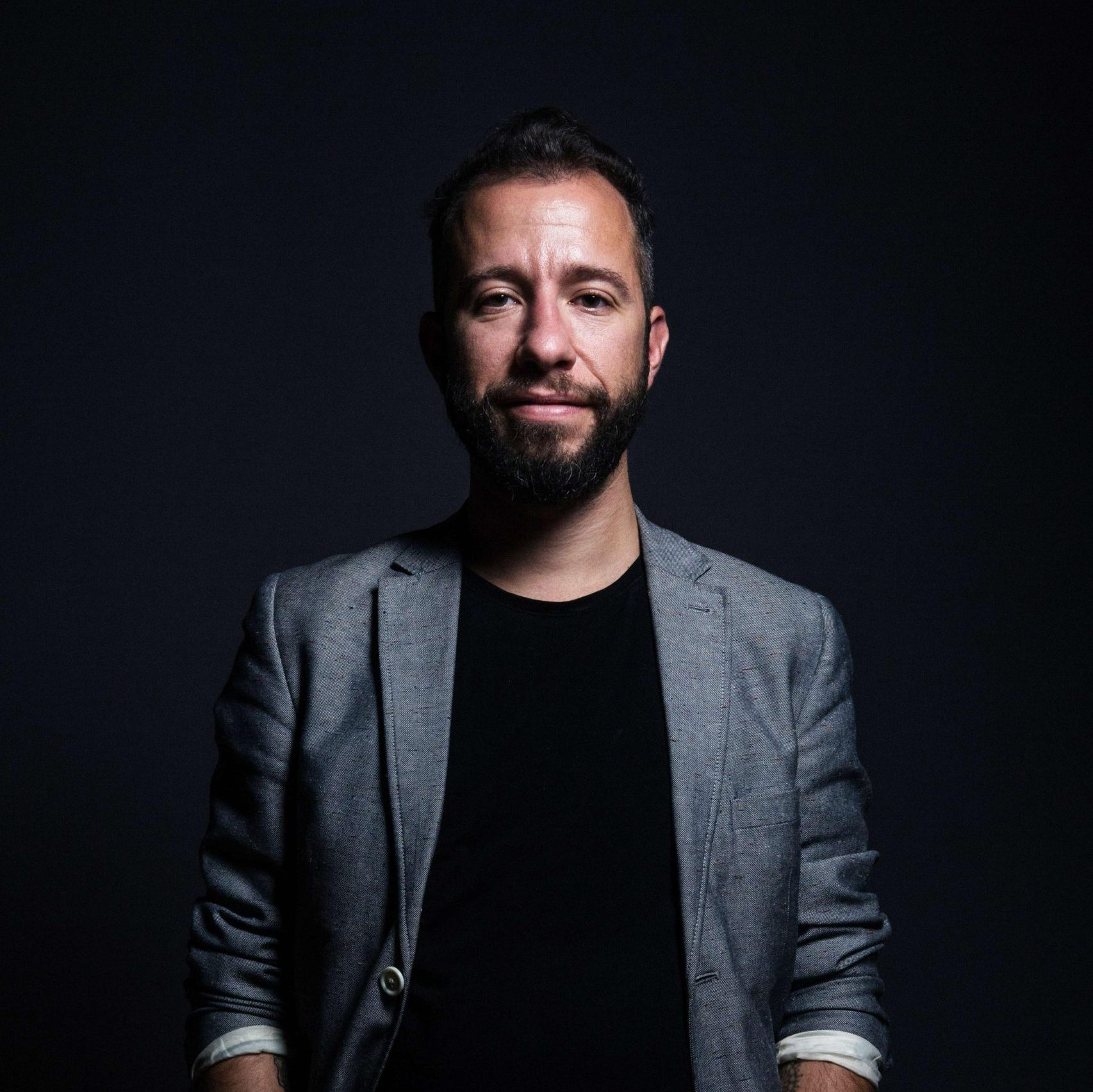
Guest Editor: Marcello Mari
Marcello Mari explores the changing relationship between founders, venture capital, and technology from firsthand experience. Having worked at the intersection of AI, blockchain and robotics since 2016, he was employee number one at SingularityNET and later founded SingularityDAO, building and raising capital in some of technology’s fastest-moving sectors. In this essay, he examines why the traditional venture model is being challenged by a new era of entrepreneurial independence.
The subtle reordering of who matters in venture, and why
A friend of mine, a venture capitalist of the unflinching, well-read kind, said something at dinner recently that I haven’t been able to shake. He’d been discussing a company that reached a few million in revenue with two people and no outside money. “The frustrating thing,” he said, “is that I would have been useless to them. They didn’t need me a year ago, and now I can’t get in.”
A week later, at the AI Salon in Dubai, Lee Kasler — an investor at the Dubai Future District Fund — made a similar point in a more measured tone. The old model, taking a twelve-year illiquid bet on a thesis written at the seed stage, was starting to look like an artifact of a different decade.
Both remarks describe the same shift from opposite ends of the capital stack: the economics of building software have collapsed. The economics of funding it have not caught up.
The Old Deal
For most of the last twenty years, venture capital made sense because building software was expensive. Servers, engineers, design, infrastructure — all of which required runway, and runway required capital. Investors paid a premium for distribution access and pattern recognition; the ten-year lockup matched the eight years a company needed to compound. The deal worked for everyone.
The New Deal
That deal is dissolving. A founder today, using tools like Cursor, Lovable, Bolt or Replit‘s coding agents, can build a functional, deployable product in a weekend. Last year, Israeli developer Maor Shlomo sold his AI app-building company, Base44, to Wix for a reported eighty million dollars — built largely alone. Lovable, a Swedish AI app-builder, reportedly reached eight-figure annual recurring revenue within months of launch, with a team that a decade ago would have counted as a single product squad. Bolt, from StackBlitz, has reported similar growth on a similar timeline. These aren’t the brick-by-brick unicorns of the 2010s. Their first serious capital event arrived after product-market fit, not before.
This changes the founder’s relationship with capital. A serious entrepreneur doesn’t need money to build — she needs money to scale. By the time she raises, she has the leverage; the investor doesn’t. The conversation shifts from “convince me you can do this” to “convince me you can help.”

A Structural Mismatch
For venture capital, this is more than only rhetorical inconvenience — it’s structural. A traditional fund — committed, illiquid, ten-year — was built to absorb the duration of a company that needed a long compounding period. That asset has changed shape. Technology cycles, especially in AI, now turn over in eighteen months, and winners are decided on shorter timescales. The illiquidity premium that once justified the long lockup now looks like a mismatch: you’re asking a pension fund or sovereign-wealth allocator to wait a decade for a liquidity event in an industry that may not recognise itself by then.
This is the real story behind “VC in crisis.” Venture capitalists haven’t lost their nerve — the vehicle they sit in has become the wrong shape for the asset it holds. The symptoms are visible: the rise of secondaries, experiments with evergreen vehicles, solo capitalists acting more like operators than fund managers, and a growing role for strategic capital from corporate balance sheets and state-backed funds with longer, stranger time horizons.
From Capital to Taste
There’s a further consequence. When the cost of production collapses, the scarce input shifts.
In luxury, once craftsmanship became replicable, brand and provenance became the moat. In music, once distribution went digital, taste-making became the asset. The same logic is arriving in technology. When anyone can build anything, the rare thing is no longer the building — it’s the judgment to choose what to build, the taste to know when it’s finished, and the access to distribute it through networks that can’t be bought.
This isn’t a victory for romance over rigour — the student-in-a-bedroom narrative is largely a myth; most of these founders have serious credentials and networks. But the centre of gravity has moved. What’s rewarded now isn’t raw engineering effort but sensibility: the editorial instinct to know what to include and what to cut. Capital can’t manufacture this; it can only follow it.
The New Geography
The next generation of important companies is less likely to come from one postcode. It’s being written by a small team in Bengaluru, a founder in Lagos, a pair of friends in Brooklyn, an engineer in Abu Dhabi. Capital will still concentrate — it always does — but the source code won’t. This is a consequential redistribution of where serious commercial creativity is permitted to happen.
The Prediction
Venture capital won’t die. But within five years, the median seed round will be smaller, the median Series B larger, and the median fund duration shorter than today. The two-and-twenty, ten-year fund will look, in retrospect, like the long-only mutual fund of the late 1990s — a once-dominant vehicle that didn’t quite fit what came next.
The investor of the next decade won’t be the one with the deepest pocket. She’ll be the one who, walking into a room of founders who don’t need her capital, has something else to offer — judgment, access, taste and knows how to make it count.
Read later
Share