Dubai real estate 2026: overheated or selectively mature?
 Read later
 Share
Share

Dubai’s real estate market has entered one of the most intense development cycles in its history. In 2023, around 300 projects were launched, followed by approximately 450 in 2024. In 2025 alone, over 650 projects were announced, comprising more than 170,000 units. By comparison, the launches in 2025 exceeded the total number of units delivered in the two previous years combined, clearly illustrating the scale and pace of the market’s expansion.
This surge in development, together with population growth, rising capital inflows, and evolving household structures, is reshaping demand dynamics and investment strategies across the emirate. With such rapid activity, investors and market observers alike are asking: is Dubai’s real estate market overheating, or is it simply moving into a more mature and selective phase?
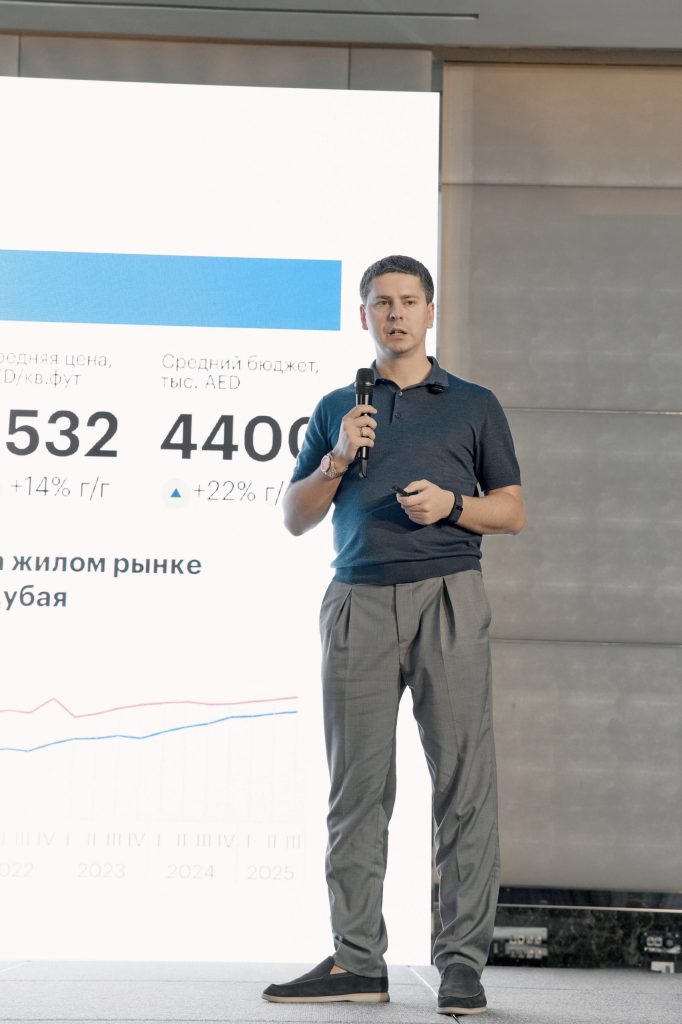
To examine these questions, we spoke with Valeriy Tumin, Owner of private multi-family office, with Dubai-based portfolio averaging 34% annual returns, and Partner at fämProperties, the largest real estate brokerage in Dubai, with 26 offices and over 850 agents. Tumin provides both macro-level insight and hands-on expertise, offering a unique perspective on the emirate’s evolving property landscape.
How would you describe the current phase of Dubai’s real estate market? There is a narrative that the market is “overcrowded.” What does that mean — and what is your view?
I would describe the current phase as a transition from hypergrowth to maturity and moderation. The market is becoming more selective — and in my view, that’s a good sign. When they say the market is ‘oversaturated,’ they are usually referring to the flow of announcements and launches rather than actual completions. In 2025, indeed a very large number of new projects were launched — according to our data, over 650 projects with 170,000 units. Developers are banking on project fragmentation, multi-phase launches, and flexible payment plans. A significant portion of new projects are essentially a configuration of individual phases, whose specific characteristics can be finely tuned to meet audience demands. Historically, Dubai delivers significantly less than it announces, in 2026, handovers will not exceed 65,000–70,000 units.
Plus, there’s an important factor that many underestimate: population growth and changing structure of households — more families, a smaller average household size, which means a greater capacity for the market to absorb housing. As a result, I don’t see total oversaturation just yet, but a soft correction in specific complexes is a very realistic scenario.
Do you believe Dubai remains one of the most attractive real estate investment destinations globally?
Yes, absolutely, and the reason lies in its strong foundation. In interviews, I always explain this with three simple arguments: predictable rules, a transparent tax and currency regime (including the currency peg to the US dollar), and a strong business community that attracts capital and talent.
Furthermore, Dubai is methodically strengthening its position as a safe haven for wealthy individuals and businesses — and that is precisely why the luxury segment remains resilient even when the mass market begins to cool down.
A more mature market, while reducing the appeal of the simplest speculative investments, fosters the development of more advanced investment instruments: from long-term leasing of commercial spaces with yields starting from 7% per annum with minimal risk, to achieving 30% per annum in partnership with a local developer when implementing a joint project under a JV structure. This is an opportunity to capitalize on land value through a development model with minimal risks.
How does a typical real estate investor’s portfolio in Dubai look? What new instruments are they considering?
When it comes to an investor’s portfolio in Dubai, it heavily depends on the ticket size, investment horizon, and chosen strategy — some build a portfolio for passive cash flow, others for capital preservation, while some are willing to take on higher risk and consequently consider instruments with high returns.
For a small to medium budget, the portfolio usually starts with a clear foundation — liquid apartments for rent. This provides a transparent logic for entry and management. Classic speculation is gradually fading into the background, as making a profit from reselling standard apartments is now significantly harder than during periods of frenzy. Therefore, more and more investors are starting to shift into more substantial assets and strategies.
When we talk about a solid cheque, the portfolio more often looks like a mix of assets: part in liquid, stable instruments (ready properties with understandable operation and predictable demand), part in more capital-intensive instruments (e.g., villa communities, commercial property, and the actively developing Joint Venture (JV) with developers). This is a form of collaboration where the landowner (investor) and the developer join forces to implement a development project. The developer takes on design, permits, construction, marketing, and sales, while the investor retains ownership of the land during the implementation period and receives an agreed-upon share of the profits upon completion. The mechanics are as follows: the investor purchases the land and registers the title in its name. Then, two documents are signed — a commercial agreement (Joint Development Agreement or JDA) and a standard project development contract, which is required for registration with RERA. The project is registered as an off-plan development, an escrow account is opened, into which the developer deposits at least 30% of the construction cost, and where buyers’ payments are held. In a JV, each party has a rational motivation: the investor monetizes the land as a development asset, and the developer expands the business without excessive strain on capital.
Why are developers willing to share profit? Why involve investors?
Firstly, the institution of project financing is rather underdeveloped in Dubai. Bringing in an investor helps the developer share the costs. To launch a project, developers need to reserve substantial amounts and meet construction financing requirements — and a JV allows them to avoid freezing capital in land, as these expenses are borne by the investor. Thus, partnership capital enables them to:
• launch a project earlier,
• maintain a comfortable level of debt burden,
• scale the portfolio faster,
• implement several projects simultaneously.
What type of property makes the most sense for capital preservation rather than short-term speculation?
When it comes to capital preservation, I would look at assets that benefit from two factors: scarcity/limited supply and predictable demand.
• Firstly, this means villas and housing in select strong locations where there remains a shortage of quality properties — meaning such assets typically hold their value better over the long term.
• Secondly, this means quality ready properties with understandable operation and management, where you are buying a functioning product.
• And the third direction that many previously ignored: prime offices as a tool for preserving and growing capital through stable cash flow. We are observing a growing interest in offices from both private and institutional capital. The advantages of this segment are long-term leases and major, reliable tenants.
Furthermore, I would, of course, emphasize once again the various options for collaborating with developers. At the current stage of market development, this opens up great opportunities; moreover, developers provide various guarantees — from penalties stipulated in contracts to post-dated cheques. The additional control by the government — all contracts are mandatory registered with RERA — reinforces this effect. Thus, investors‘ funds are reliably protected.
Which areas can be described as not only elite but also truly “smart” purchases — combining prestige and practicality?
In Dubai, a hidden gem is almost never some secret neighbourhood, but rather a combination of factors: the right micro-location and the right product within it. Even in the most famous places, the market is very heterogeneous: one building is an excellent asset, while the neighboring one is already a compromise in terms of appearance, amenities, and services. If we are to talk about areas specifically, the following could be of interest: Jumeirah First / Jumeirah Second — these are premium areas with limited new supply. Al Jadaf and Zaabeel can also be considered undervalued destinations; the limited volume of new supply allows us to expect an increased premium for shortages in the future.
What do UHNW buyers prioritize today?
At the ultra-premium level, the deciding factors are usually the environment and lifestyle scenario: gated communities, security, privacy, neighborhood quality, access to schools and club infrastructure, predictability. At the same time, brands and waterfront locations are significant “enhancers” of status and comfort. This is also what we see in the deals being concluded. UHNW buyers primarily focus on the lifestyle ecosystem and privacy as basic criteria. At the same time, a brand is perceived as a marker of a certain level of product and service, while a waterfront location is seen more as a premium that enhances the emotional value of ownership and supports liquidity in the top segment.
Where do experienced investors most often make mistakes?
If an investor is truly experienced (and not just someone with a large volume of capital invested in real estate with unknown results), they are unlikely to make many mistakes. Sometimes, such investors may overestimate a developer’s brand. They may overestimate the liquidity of non-unique luxury properties, whereas for the Dubai market, exclusivity is an important parameter that determines liquidity. As a result, two neighboring towers, seemingly with similar characteristics, can in reality differ significantly in details, interior amenities, and the partners brought into the project, which ultimately results in different price dynamics.
What changes should international investors prepare for in the next 3–5 years?
I would highlight 3 key areas:
- The risk of a local correction and oversupply in 2027–2028. Against the backdrop of mass housing handovers, a local oversupply and price correction are possible — this will be particularly painful for short-term speculative strategies.
- Dubai is strengthening its status as a safe haven and a global hub for wealthy individuals, which will support the luxury segment (including ultra-premium villas and residences).
- The emergence/growth of new asset classes: student campuses, medical clusters, senior living; plus the gradual adoption of “green” building standards and the development of tokenization as an infrastructural trend.
How important are off-market deals?
Off-market and private networks are especially important in the trophy asset segment, where they often serve as the primary access channel. This is due both to the limited pool of potential buyers and to the fact that many owners prefer to avoid public exposure.
Are there differences between local Arab families and foreign buyers?
Arab families more often choose historic premium areas, privacy, and family-oriented infrastructure — that is, villas in central locations and on the islands. In contrast, foreigners tend to gravitate towards more “international” locations with clear liquidity and a cosmopolitan environment.
What are the top five mistakes beginner investors make?
I would say that most beginner mistakes stem from a lack of deep analysis — both of the market as a whole and the specific property being acquired.
Buying “promises”. Beginners choose a trendy area or a big brand name, but they don’t look at the micro-location, view characteristics, quality of the building, or the actual competition nearby.
Lack of diversification — the second typical mistake: beginners put almost their entire budget into a single property or segment, without distributing risk across products/horizons/locations.
Not calculating the transaction economics properly. Often, buyers do not fully account for all associated costs. They see the price in the advertisement and the estimated rent — and build their expectations on that. But the real picture consists of DLD fees, broker commission, registration fees, and then — service charges, vacancy periods, and other operational expenses. Related to this is that many do not immediately think through an exit strategy for the asset.
Over-reliance on a broker and marketing. A broker is a channel for access and negotiations, but it does not replace verifying the developer, the terms of the SPA, the liquidity of comparable properties, the quality of the product, and the exit scenario. In a mature approach, a decision is made after detailed due diligence, conducted independently or with the help of professionals.
Not understanding the mechanics of an off-plan property purchase and the legal nuances of the transaction. People often enter off-plan deals without understanding the timelines, assignment conditions, penalties, payment schedules, and the realism of the handover dates. As a result, a “profitable payment plan” turns into a risk in terms of timing and conditions.
Photography courtesy of Valeriy Tumin.
The article will be updated as further information emerges.
Read later
Share