Why the Gulf invests billions in sport – turning games into geopolitics
 Read later
 Share
Share
Everyone is familiar with the motto “War is the continuation of politics by other means.” But as the drums of war grow louder every day, we tend to forget that politics can continue in many other ways that don’t necessarily involve killing each other.
How a Ping Pong game shook the cold war
The year is 1971. China and the US are not exactly on the best of terms with each other. The Cold War is menacing, and Washington does not even recognize Beijing as a legitimate government. At the time, it so happens that Japan, a US ally, holds the World Table Tennis Championship, and Beijing cannot be absent. The game between Gless Cowan (of the US) and Zhuang Zedong (of the PRC) immediately attracts attention, because by agreeing to it, the US signals that it is ready to recognize Beijing as a legitimate partner. Less than a year later, in early 1972, President Nixon visits Beijing and finally establishes diplomatic relations between the two countries after 23 years of continuous animosity and two wars (Korea, Vietnam) against each other. The occasion became known as “ping pong diplomacy”.
“Make sports, not war”
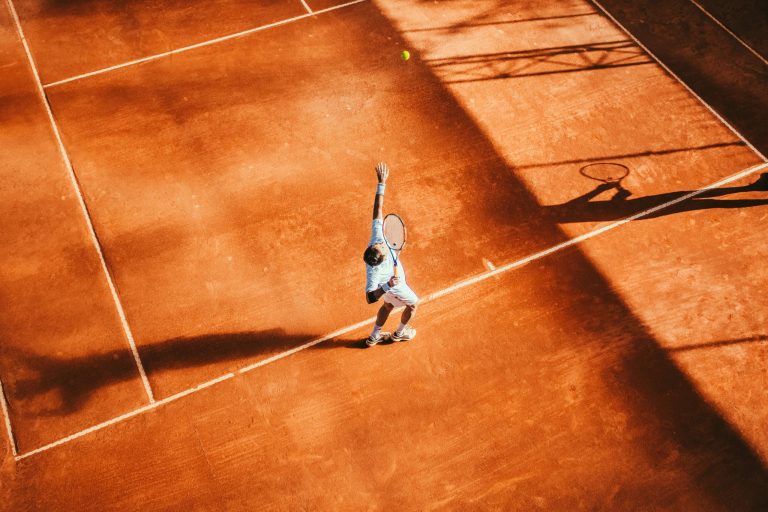
Fast forward to today. As part of what is known in more general terms as sports diplomacy, Qatar invested 220 billion dollars to host the FIFA World Cup in 2022. Isn’t that a bit exaggerated? Keep in mind that Russia spent just 14 billion for the same event in 2018. And why do the other Gulf States follow, by spending hundreds of billions on sports development since 2021? Israeli bombs are thrown in every direction close by, Iran is in chaos, American weapons are all around, is it really the time to take a break and do some sports?
Luckily, history once more can give us some answers. And let’s begin with the most well-known of examples, the ancient Greek Olympic Games. To understand the importance those events had in the Greek world, the first Olympic Games of 776 BCE were the year One of the Greek calendar. That’s not a coincidence. In the densely populated and highly developed area where the ancient city-states thrived, infighting was the order of the day. Sparta vs Argos, Corinth vs Megara, Athens vs Aegina, Sparta vs Athens, you name it, the Greek city-states were fighting all the time.
But here is the catch: every four years, warring states got one chance for peaceful discussion: the Olympiad. This was because all participants of the Olympics, athletes and spectators, were guaranteed peaceful freedom of movement during the games. This means that the Olympiad could be the first time in four years in which people from enemy states could meet and have fun together. Deal makers from other cities were also there, ready to mediate and resolve the tensions. So, imagine the Olympic Games as a kind of a UN meeting, but with athletes and audience acting as high-level diplomats.
Already a subscriber? Sign in
Enjoy unlimited access for $10/month.
Subscribe to Atelier Privé to get full access to every story, in-depth analysis and original research, community membership, invitations to exclusive partner, cultural and business events, and the annual print edition of Atelier Privé.
Subscribe Read later
Share
Read later
Share