Abdul Raheem Salem: learning to Read contemporary art
 Read later
 Share
Share
For me, there were two directions:
First, to show people what I think.
Second, to be different from other artists.
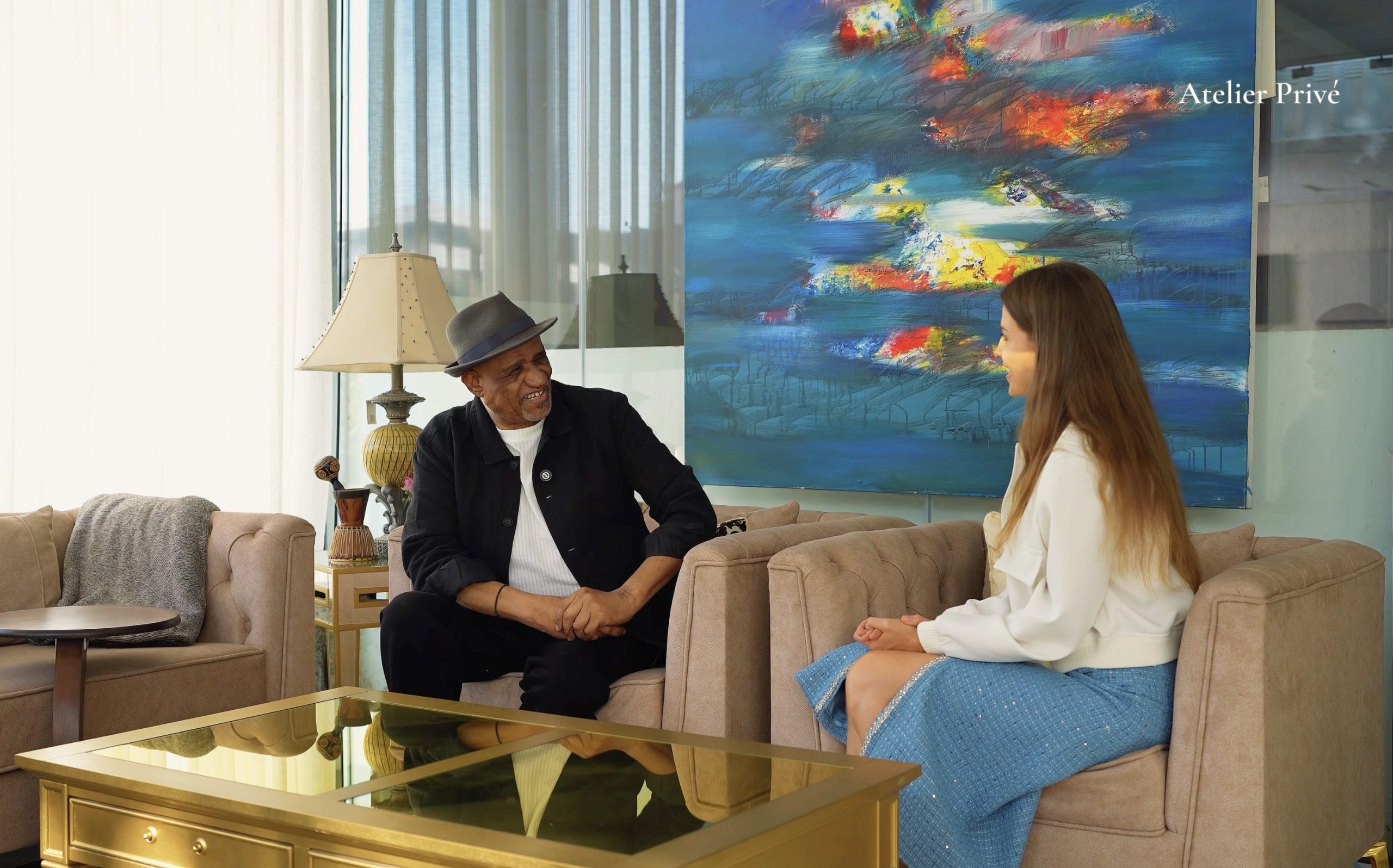
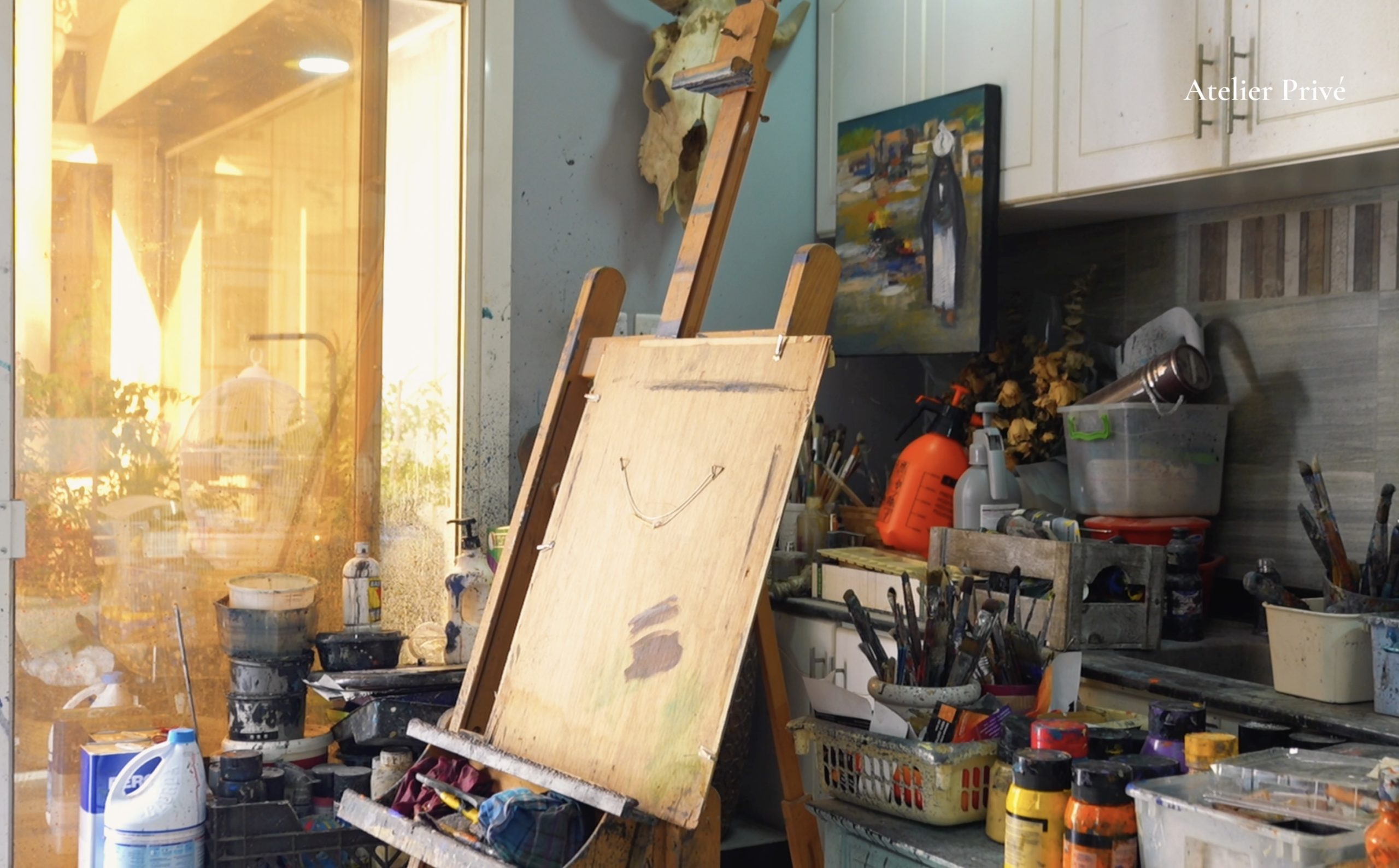
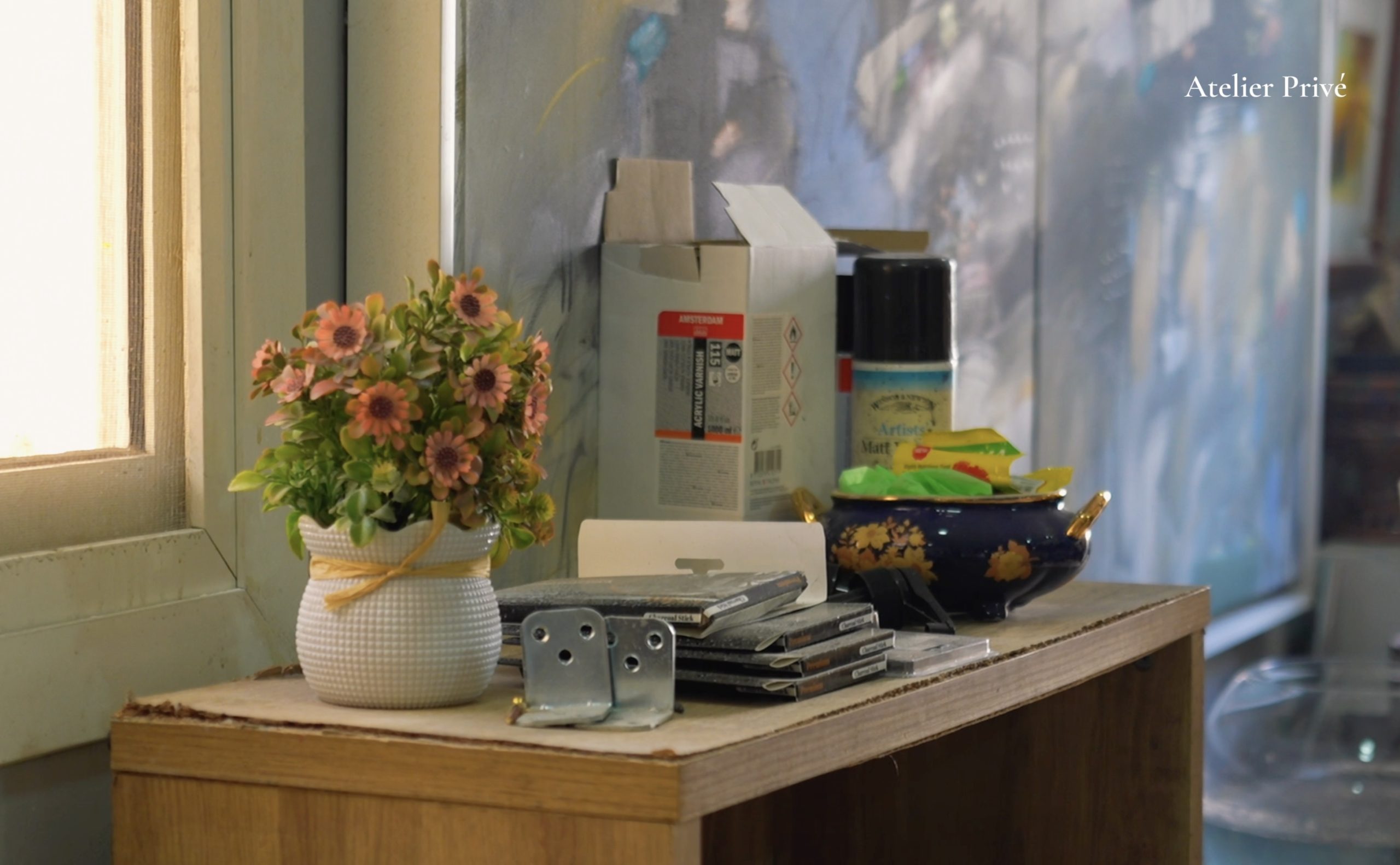
On a quiet afternoon, we arrived at Abdul Raheem Salem’s villa. Inside, his studio opened as a large, light-filled space where paintings stood not as finished statements, but as ongoing conversations.
A widely recognised figure in the formation of contemporary art in the United Arab Emirates, Abdul Raheem Salem was among the founding members of the Emirates Fine Arts Society — part of the generation that helped build the country’s first structured art movement, long before galleries, biennales, and institutions became part of everyday cultural life.
Over decades, his contribution has extended beyond his own practice: through exhibitions, cultural work, and sustained dialogue with the public, he helped shape not only the visual language of Emirati contemporary art, but also the conditions in which it could be understood. His works are held in major public and private collections across the UAE.
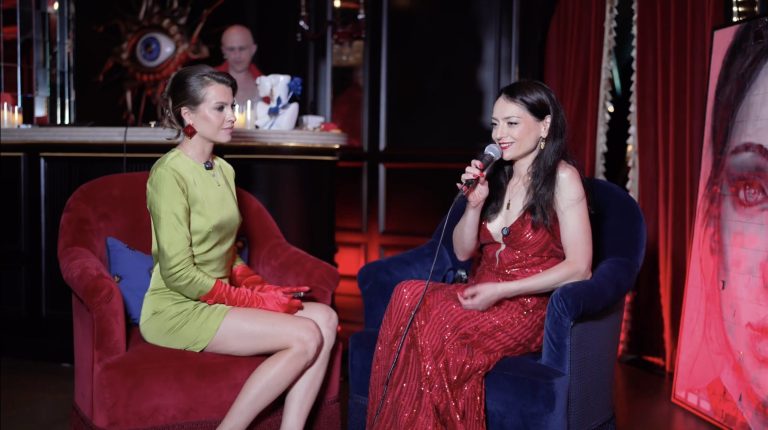
This meeting became a third part of our special project ‘Why Contemporary Art is the New Code of Luxury‘ as a conversation about time, memory, education, and the responsibility of seeing.
During our talk, Salem returned again and again to the early years of the UAE art scene, to the long process of building understanding, and to a personal story that has accompanied him throughout his life — a woman named Mohera, whose presence in his work became a symbol.
For those who wish to experience the conversation in its original rhythm and atmosphere, the full video interview is available on the Atelier Privé Experience YouTube channel.
Who he is as an artist
Arina: Good afternoon, Abdul Raheem. Thank you for welcoming us into your studio and your home. It’s a real honor. From what we know, you’re among the first and most influential artists in the UAE, and one of the key figures in the early formation of the modern art movement here. When you introduce yourself, what do you usually mention first?
Abdul Raheem: It’s not an easy question, but I’ll try to make it simple. I am an artist. I studied in Egypt for five years — my main focus there was sculpture. But when I came back to the UAE, I started painting. Many people were surprised and thought it would be difficult to change my direction like that.
When I speak about my story, I often speak about destiny — about how things happen in life, and how art also grows through time. Art in the UAE today is much stronger than before. I returned in 1980, after living abroad, and I started painting and working seriously. Around that time, a group of artists came together and formed an art society. That society still exists, and I’m the president today. From the beginning, our focus wasn’t selling art. Our focus was people — helping society love art and understand art. Because if people don’t understand art, it becomes very difficult for art to live.
So we worked on education and awareness: we created an art magazine to inform people, we organized conferences and talks, we invited people in, showed them artworks, and explained why art matters in their lives. That was the beginning.
Being an artist “back then”
Arina: You witnessed the birth of the art scene in the region. What was it like to be an artist back then — when you were just starting? Because it wasn’t common to say, “I’m an artist.”
Abdul Raheem: In the beginning, people didn’t understand what art really means — painting, expression, the purpose behind it. That was The hard time.
And I want to share a story that stayed with me. It’s a true story from Sharjah — about a woman. People said she became “crazy” because of magic. My mother and grandmother told me about her. They said she was beautiful, a slave working in a big house, and sometimes she would go to the market. One man tried to approach her in a bad way, and she rejected him. Later, people said he used magic against her, and after that she lost her mind. This story shocked me. If you love someone, you cannot treat them like that. And in the 1950s and 1960s, men controlled everything. Women could not easily say “no.” If a woman refused something, she could be punished.
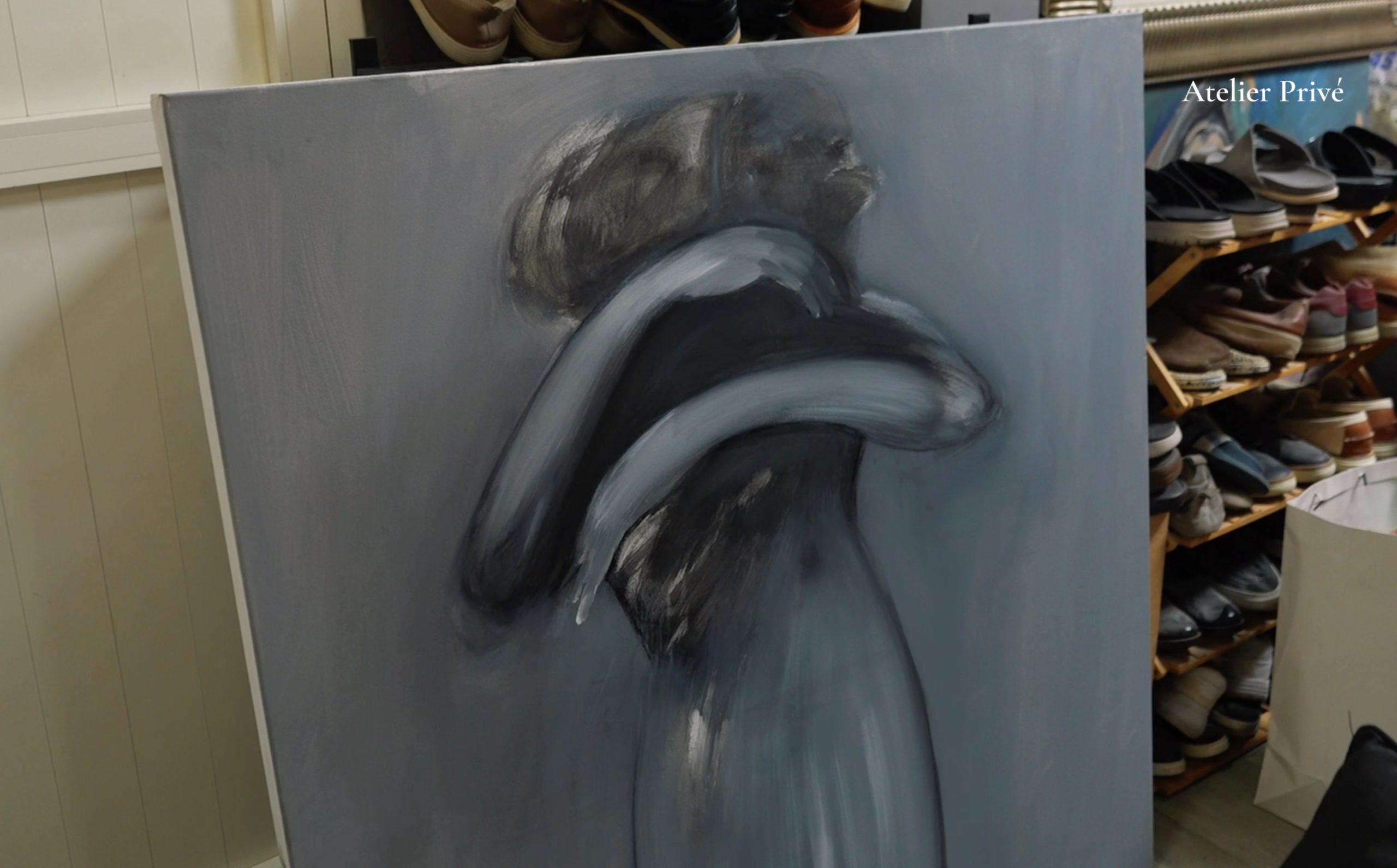
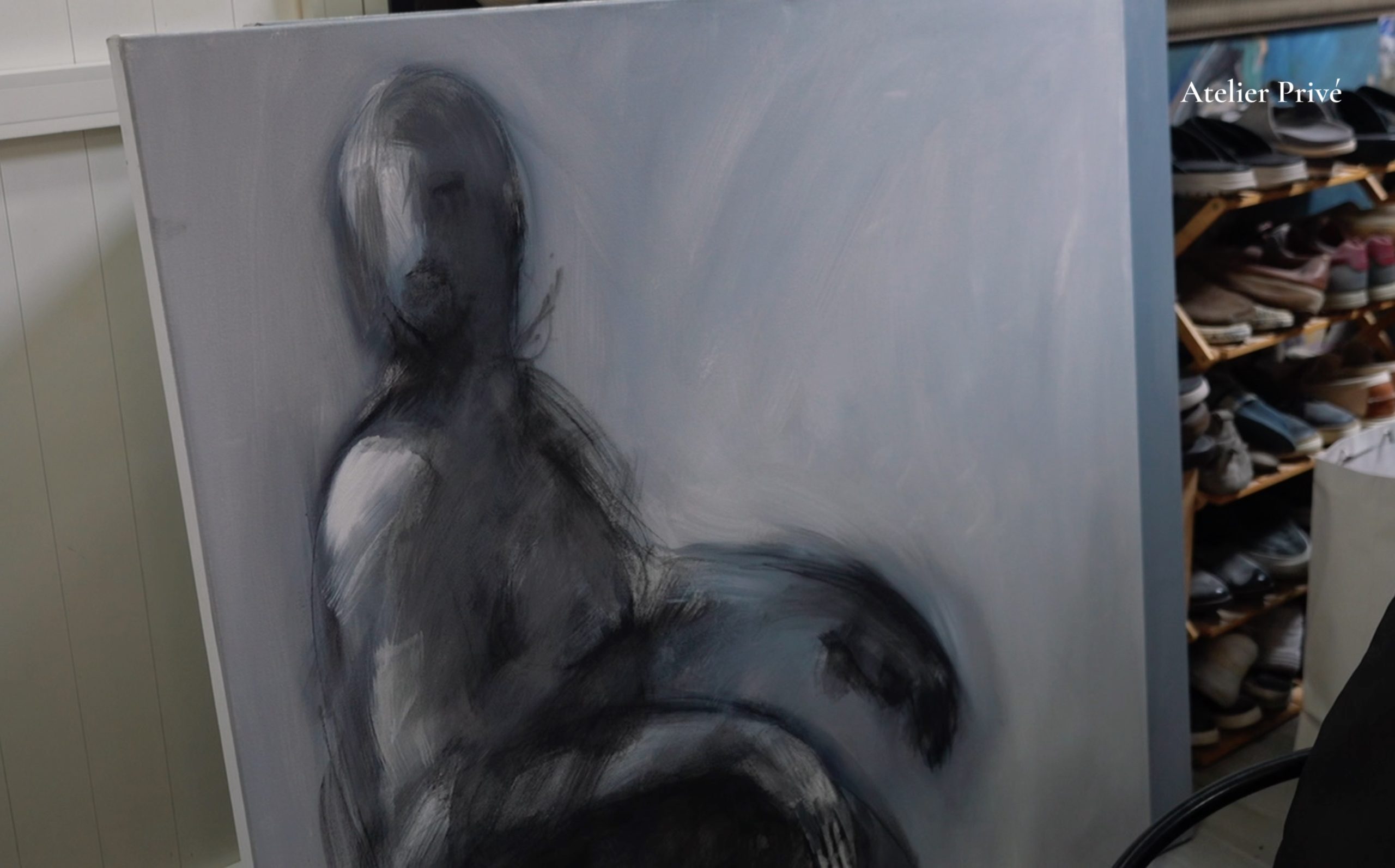
So I started painting this woman. I still paint her. My first exhibition was in 1993. I made it with pencil drawings — different situations of her life: in the house, with family, at the market, walking. People accepted it strongly. Later in that same period, I began to change how I represented her. I stopped drawing her body directly. I began using a simple triangular form — something symbolic. Over time, that symbol became like a moon in my paintings.
That story stayed with me. I still love to paint her.
Was she a real muse?
Arina: Did she know she was a muse?
Abdul Raheem: I never met her. I never saw her.
Arina: You never saw her?
Abdul Raheem: No. I only know her through my mother and grandmother. But I was always interested in one question: why people believe in magic, and why they use it. This woman became a kind of “test” for me, emotionally and artistically. I put her into my work because I want to take material from my culture, from my life.I don’t want to bring something that does not belong to my own cultural and personal experience. For an artist, it is better to begin from deep inside — to search for what is genuinely rooted in one’s country and society.
Arina: If you want to understand the culture and the people, you need to understand the art of the region. Art says a lot about the society.
Abdul Raheem: Absolutely.
The early ecosystem: proving art, educating society
Arina: As part of the first generation of artists in the country — what was the most challenging: the lack of an ecosystem, or society not understanding? You mentioned that at first you focused on society and education.
Abdul Raheem: The first exhibition we did in the UAE, with the art society, was in 1981. We had certificates from our colleges, and we needed those certificates to prove to people: “We are artists. We are painters.” So in the beginning we made very classical work — figures, houses, traditional subjects — because we wanted to prove our skill. People needed to see: “Yes, they can paint.” At that time, people didn’t understand the value of painting. I remember strange things — someone would even put a steakon a painting. It sounds unbelievable, but it happened. They didn’t understand. We also didn’t have proper galleries. We exhibited in reception halls — places used for gatherings. We hung artworks there.
At the same time, we invited artists to join the society, so we could grow together. We also taught beginners — students and hobbyists who had no background. We helped them learn. Then we were lucky: Sheikh Sultan, the ruler of Sharjah, was very interested in culture. He supported us — provided spaces, funding, opportunities. Later the government cultural institutions also supported exhibitions.
And step by step, things changed: Dubai art exhibitions, Abu Dhabi Fine Arts exhibitions, Sharjah Biennale — many opportunities appeared. Before, it was very hard. Even the market changed. Back then, if you asked how much we could sell a work for — it might be around $1,000, even for strong artists. Today it’s completely different, because people understand more.
The hardest part in the early days was explaining art to society. I remember going with Hassan Sharif (may he rest in peace) to public places — clubs where people gathered — to explain: abstract art is not “child’s play.” People thought abstract meant a child drawing randomly. I would say: no. Abstract can be thought, politics, emotion, experience. It’s not only color and lines. It’s the artist’s life — love, struggle, everything — coming through the work. It’s not random.
That period was difficult. But today, I’m happy. The environment is much better.
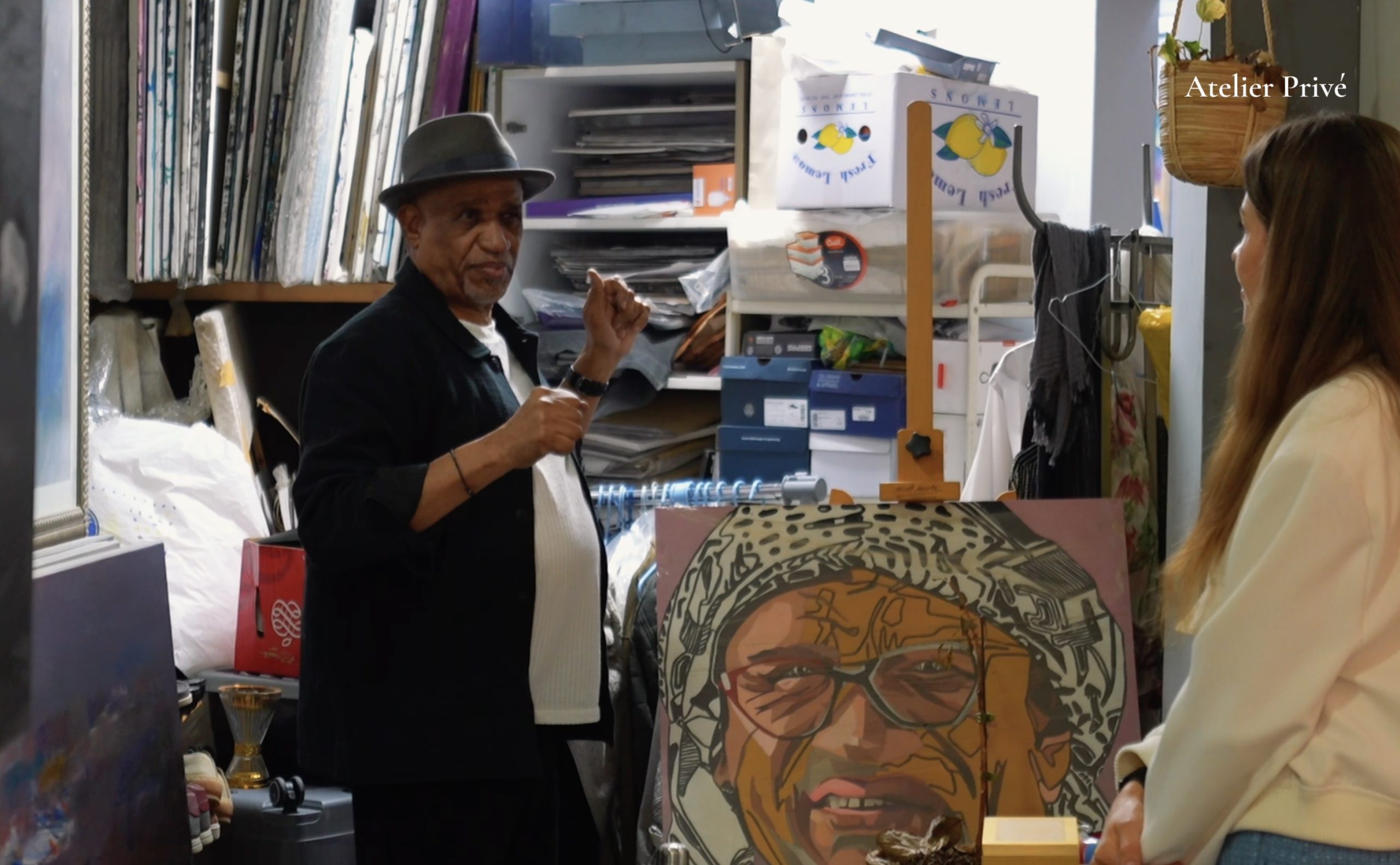
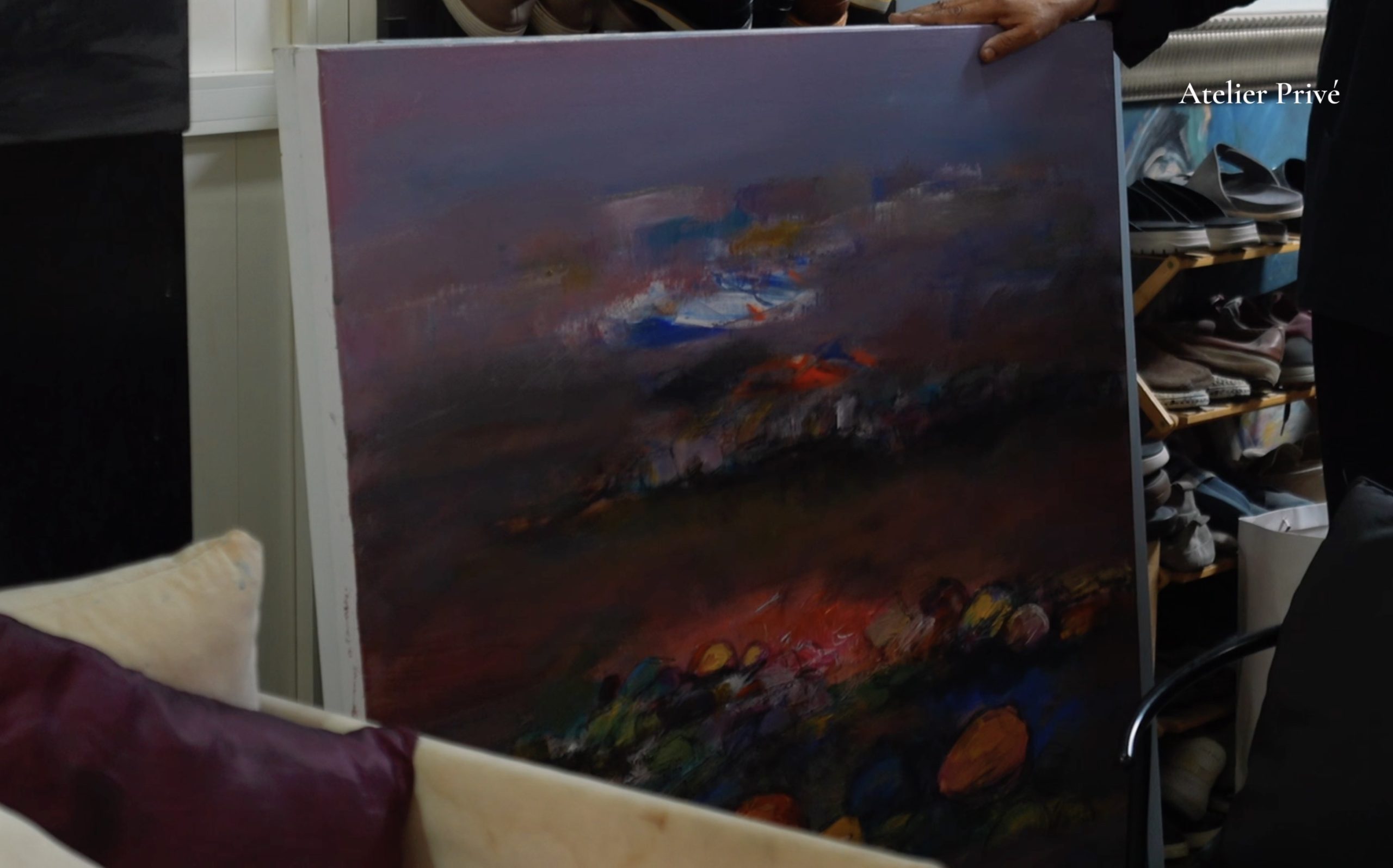
Contemporary art isn’t “lack of skill”
Arina: I think many people still look at contemporary art and assume artists do it because they can’t paint “properly.” But most contemporary artists actually have a strong foundation and could paint portraits and classical work if they wanted.
Abdul Raheem: Yes. When I teach, I tell students: people judge only what they see, not what they feel. I give them a simple example. Imagine a man waiting for someone he loves on the beach. She is late. He draws a line in the sand while waiting. When she arrives, he erases the line. If another person comes and sees that line, they don’t understand what it meant. But we understand: that line is waiting, emotion, time, longing. That’s the difference between a normal viewer and someone who understands art.
When you look at Picasso or Van Gogh, you see the final image, but you don’t see the life behind it — the patience, the struggle, even suffering. People think: “I can put color randomly.” No. You cannot.
Egypt, studying abroad, and finding his language
Arina: You started abroad, in Cairo. Your work today looks very different from what you began with. What experiments helped you find your style?
Abdul Raheem: When I went to Egypt, I already had some ability — charcoal, pencil, drawing. But in Egypt, I learned the meaning of art more deeply. We studied many things: the human body, painting, museums, figure studies, clothing, sculpture. And I didn’t only stay in class — I went to exhibitions, met people, spoke with different types of people. That is also education: understanding how people live and think. In Egypt, they also push you: you must learn from history. You must observe your environment. I focused on something not many noticed at the time: doors. In museums I saw the doors of wealthy homes and the doors of poor homes. Poor doors were simple, but beautiful. Rich doors were made with leather and decoration. But both are art. Both show a society.
Studying abroad is not a holiday. It becomes part of your life. Five years gave me real experience — and a different view of people and art together.
The moment he recognized “this is my style”
Arina: When did you realize: “This is my style”?
Abdul Raheem: When I made the exhibition about that woman — her name was Mohera. The name relates to “horse” (like “small horse”). That exhibition in 1993 was a turning point. It felt like light for me. After that, I began receiving recognition: I won a prize at the Sharjah Biennale, I won a prize in the Bangladesh Biennale, and I received a jury prize in the Cairo Biennale. That period confirmed to me that the work was speaking to people.
At the same time, I began protecting Mohera as something personal. I didn’t want to show her directly anymore. I started to transform her into a symbol: sometimes a triangle, sometimes a square, sometimes a simple shape. In my paintings, that shape is Mohera. After around 1998, I changed again. Because life changes you — your story, what happens in the world. I began to speak more about my own life, and about global events.
Mohera stayed in the work, but she was no longer the main subject. She became a symbol — present, but not dominating the painting. I began speaking about what happens in the world: politics, human life, the environment, the air, smoke, and how the world feels now. When something touches me, I draw it. I make work from it.
Being different
Arina: When you find your style, you allow yourself to express what you want — without trying to satisfy what others expect.
Abdul Raheem: Many artists experiment for years. They try something here and there, and after five or ten years, they say: “This is my way.”
For me, there were two directions:
First, to show people what I think.
Second, to be different from other artists.
That’s why I returned to my culture. The story of Mohera and my interest in magic pushed me to ask deeper questions. In the 1930s and 1940s people believed strongly in magic. When something happened, they thought someone “did something” to them. I read about different types: what people call “black magic,” and religious healing practices — through the Quran, or church traditions. People try to explain illness, fear, love, control. But when I took Mohera into my world, she became the moon in the painting — she is there, but she is not the whole subject. She is part of the world.
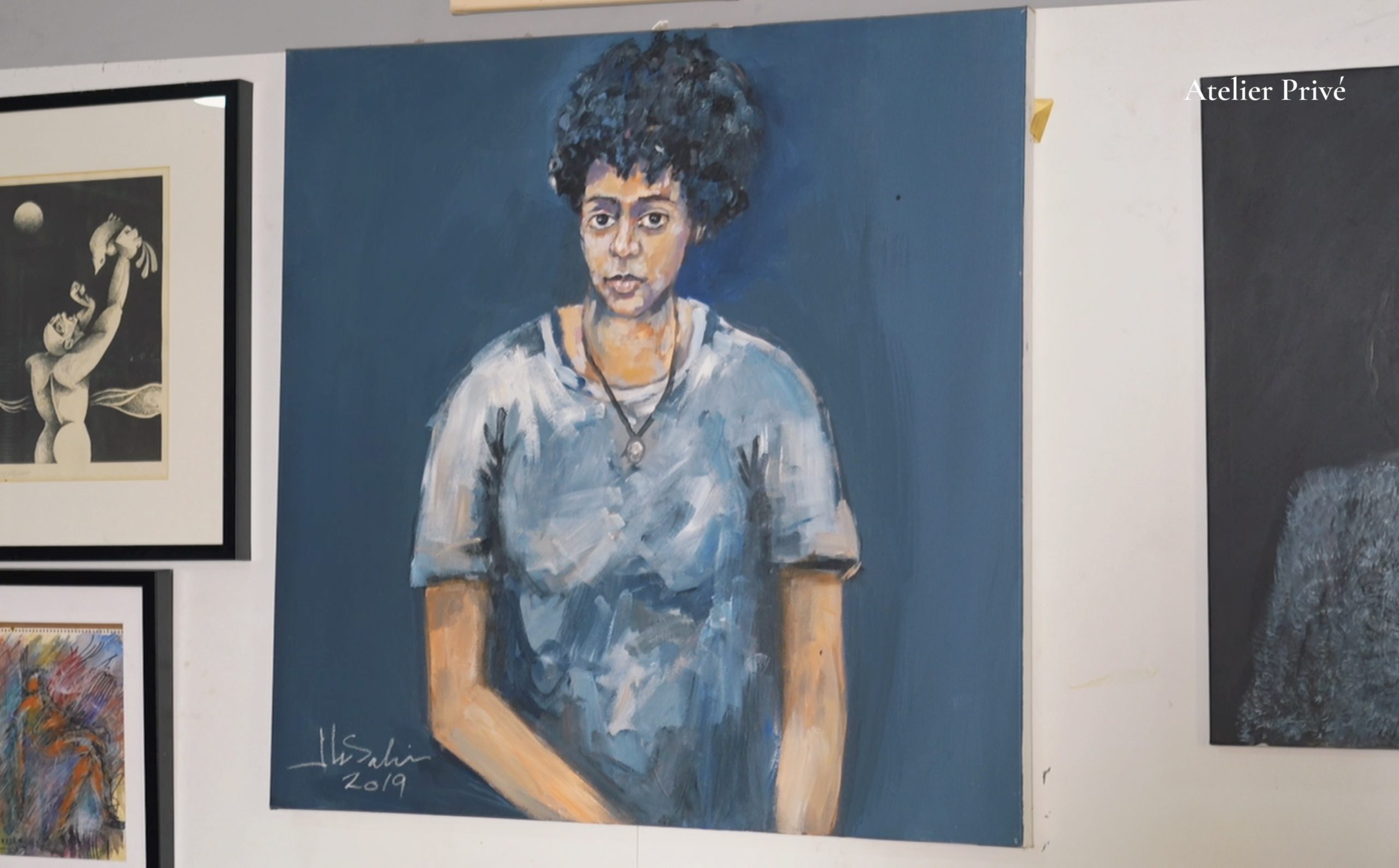
Mohera as a symbol
Arina: So she became a symbol?
Abdul Raheem: Yesб she is a symbol. I still have love for her. She is like my lady. And her ending was tragic. My mother told me she lived alone, with many dogs. She made things — necklaces from cigarette paper and gold foil, small objects. She had a strange kind of life. In winter, living in old houses, she made a fire, and her clothes caught fire. She died. If that man had not harmed her — if she had not been attacked with that “magic” — maybe she would have lived a normal life, had a family, children.
Art as giving someone another life
Arina: Do you think your artworks gave her another life?
Abdul Raheem: Yes, correct.
Arina: Because she was seen only as a “crazy woman.”
Abdul Raheem: Exactly. I want to bring her back into our life — not as a crazy woman, but as someone who belongs to society. She matters because she said “no” to a man, and she paid for it. When I think of her, I see my mother, my sister, women in my family. It’s not only a story.
Arina: And not only your family — many women.
Abdul Raheem: Yes. For our society, women like her represent what women faced in that time.
Women today
Arina: Even today — not only in this region — the rights of men and women can still be unequal. What do you think?
Abdul Raheem: Life is different now. Women are leaders. It’s not like before. Today a woman can be a minister, a manager — anything. We should deal with humans, not only “man” and “woman.” And I don’t believe in “women’s art” versus “men’s art.” Art is art. A woman can do it. A man can do it.
In the past, many men didn’t want their daughters to go to school. They thought a woman should stay at home, marry, and that’s it. But after the 1960s things began to change in the UAE — more in the 1970s, more open in the 1980s, with more communication with the world. And the UAE was built by many people coming from outside and inside. It was never only one group.
The UAE ecosystem: where it’s going
Arina: The UAE art ecosystem is growing. Abu Dhabi has so many exhibitions, and Sharjah Biennale is one of the biggest platforms. How do you see this ecosystem developing? Can it become world-leading?
Abdul Raheem: Dubai and the UAE now also see art as part of the economy. They want to attract strong artists, build galleries, and make art visible everywhere. They want people to be happy with art first — then the business can follow. Also, cultural departments — especially many Emirati women working in culture — are focused on supporting artists. If you have an idea, a project, you can speak to them and get support. Before, this support did not exist like today. Now it is easier. You can go to the ministry and say: “We have a project, we need support.” And they can help.
Where to see his work / his contribution to art education
Arina: Where can people find your artworks—where can they see them?
Abdul Raheem: My work is in Sharjah museums. It’s also in collections connected to Abu Dhabi museums, and the Ministry of Culture in Abu Dhabi has my work as well. There are also private collections — high-profile people in the region. And one important thing: when I came back from abroad, I worked in the Ministry of Education. I taught children for about three or four years. That experience was very important for me. I learned how to work with children through art. Later, I began working on a special book for children — because at that time, children did not have an art book. They had books for Arabic, English, math—but not art.
Teachers would tell children: “Draw a desert,” but they didn’t teach them how — no understanding of color, line, meaning. So we created lessons: color, line, what a line can mean, and we introduced local artists so children could connect art to their own environment.
And I always say: when a child loves art, don’t only give materials — give love. Encourage them. My grandmother could not read or write. But when I showed her my drawings, she always said, “It’s good.” That simple encouragement made me happy and gave me energy.
Children are the freest artists in the world.
I remember when I was teaching: sometimes two students would cry when I gave them paper and colors. I realized they were afraid to be alone — afraid to “fail.” So I put five students on one large sheet and told them: “Draw together.” Step by step, I helped them become comfortable until they could draw alone. Sometimes the fear is not about art — it’s about confidence.
Why luxury brands integrate artists
Arina: Many brands — fashion, cars, watches — try to collaborate with artists. Why?
Abdul Raheem: Art is part of human life from the beginning. Even in the time of cave people — people painted what they feared and what they loved. That is the beginning of art. If you follow history from that time until now, you’ll see: art always comes first as an idea. Sometimes an artist imagines something before society reaches it. Even the idea of going to the moon — first it exists in imagination, in stories, then people begin to think: “Why not?”
Design is also art: cars, furniture, clothing, architecture. The designer is often the mind of the company — because they shape the story, the form, the future. Artists and designers see beyond the normal person. They consider people, materials, shape, function, emotion. Artists can give light — help us see the future.Let me share a story about a local artist named Abdullah. He showed work in Germany at an expo. His work looked like a necklace, but it was made from simple wire and objects — small items like stone, wood, metal. He called it “A Message from My Mother.” He lived in Khor Fakkan, and his mother lived elsewhere. When she came to visit and he wasn’t home, she would place small objects at his doorstep — so he would know: “I came. He took that gesture and transformed it into art. I’m proud of him because it shows something important: art is not only what you see. It’s what you feel. What you see can be illusion. But what you feel is the truth. That is art.
How to begin understanding art
Arina: To finish, what advice would you give to someone who wants to understand art — especially if they feel lost in galleries?
Abdul Raheem: Life is not always easy to understand. But with time, people learn.
Here, the history of the modern art scene is short — especially compared to sports. In the UAE it really began around 1980–1982 with the first exhibitions. That is a short time for society to fully understand. So understanding art must become part of education, culture, and media.
I remember at the first Sharjah Biennale, Japanese school children came to visit. They sat, chose paintings, tried to copy, and the teacher spoke with them. That is how humans begin: you bring children to museums, to art spaces. You explain. Families should also do this. They take children to malls and teach them how to spend money — so why not also take them to museums, cinemas, theatre, music, exhibitions? We should go upward, not downward. If you want to go upward, you need understanding. And it doesn’t matter if you are a doctor, an engineer — art belongs to everyone. Music belongs to everyone. Nothing is separate now. Everything is connected to build a good human life. Artists and designers work together to create a better life for people — to feel, to be healthy, to enjoy life. Be happy. Be happy. (laughs)
Arina: Thank you so much for inviting us, and for sharing part of your life, your vision, and your thoughts. It was a truly deep conversation, and I enjoyed it very much.
Abdul Raheem: I enjoyed it too. And anytime — this is your place. If you want to visit again, or speak more about art, I would be delighted to share anything I can.
When the conversation ended, nothing in the studio had changed — and yet the way we perceived it had. Abdul Raheem’s stories remained with us: the years when art had to justify its existence, the patience required to teach abstraction, and the conviction that education must always come before commerce.
We did not leave with answers. We left with a slower rhythm of attention — a different way of standing in front of a canvas, of allowing a work to unfold rather than be decoded.
Contemporary art, in this sense, is not an object to be understood immediately. It is a space in which understanding is allowed to arrive gradually.
And perhaps this is where its connection to luxury truly begins — not in rarity or price, but in the discipline of looking without haste.
Read later
Share