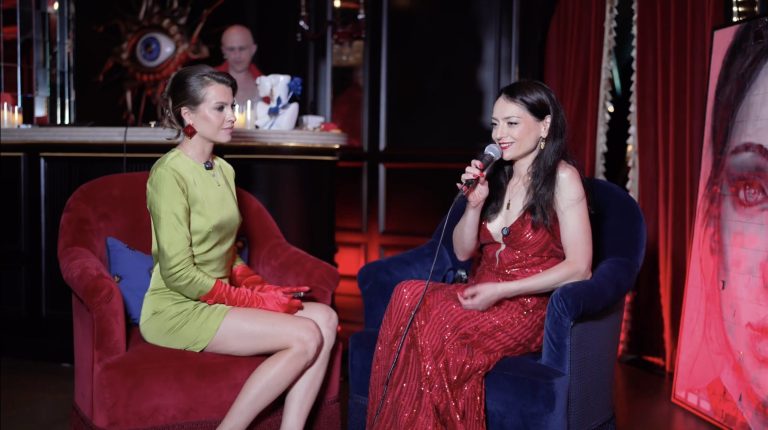
Qigong in Dubai: Interview with Master Can — Shaolin Warrior Monk
 Read later
 Share
Share
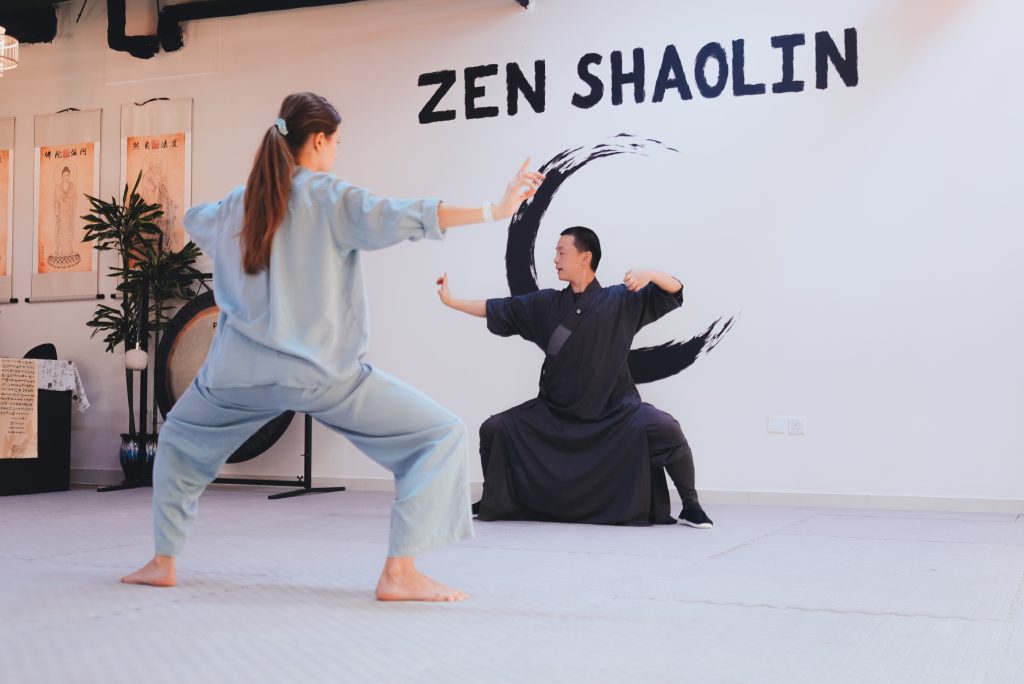
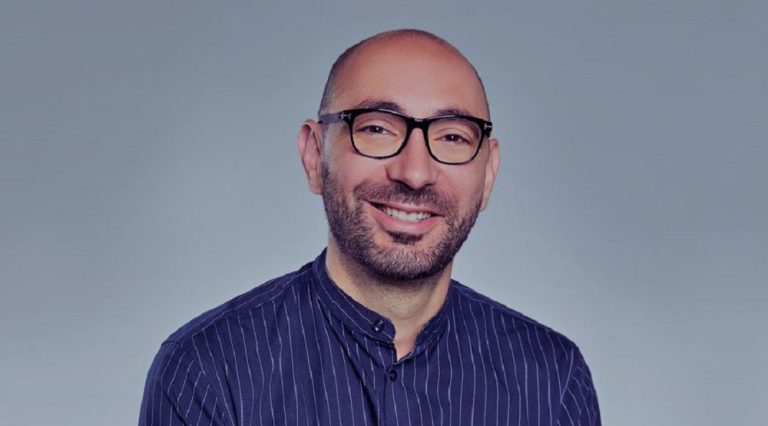
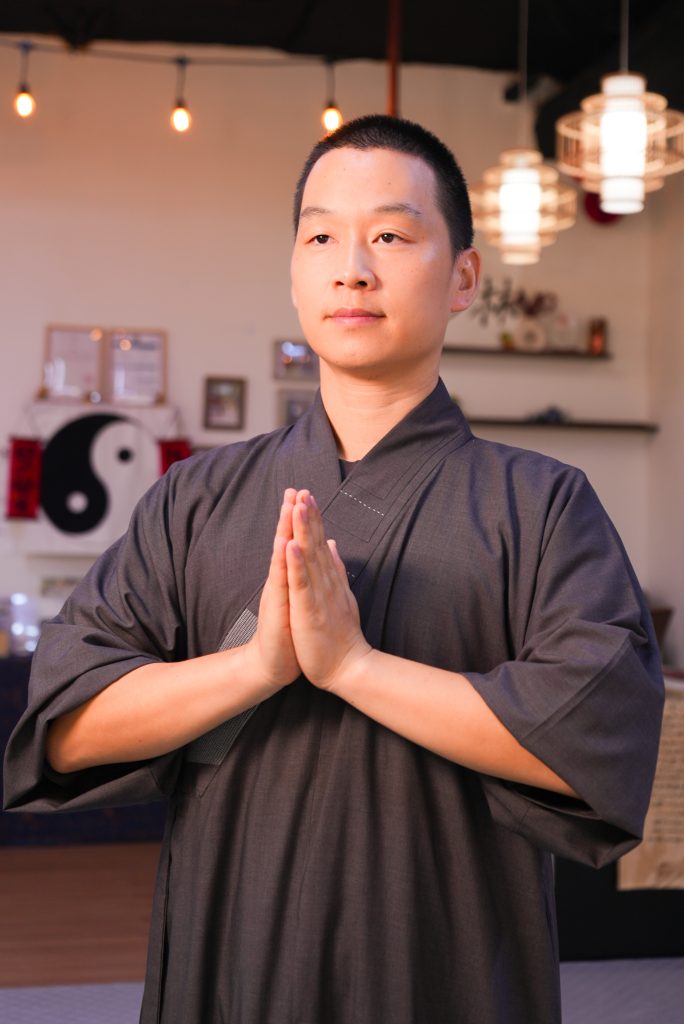
We visited Zen Shaolin on a calm morning, unsure what to expect. The moment we stepped into the studio, time itself seemed to slow. We joined Master Can’s class — a session of Qigong that unfolded in silence, breath, and subtle energy. Movements that first seemed simple revealed themselves as something profound: a dialogue between body and spirit. By the end, our minds were quiet, our bodies grounded. Afterwards, we sat down with Master Can — a Shaolin Warrior Monk who began his training at the Temple in Henan at the age of seven — to speak about discipline, energy, and the art of inner balance.
Atelier Privé: Thank you so much for the practice. It was my first time, and I could really feel the difference — before and after. At first, I was nervous, but later I felt grounded and peaceful.
Master Can: Thank you for coming. I’m glad you felt that.
Atelier Privé: I learned that you began your training at the Shaolin Temple when you were seven. What was the greatest life lesson you took from those years?
Master Can: I stayed at the Shaolin Temple in China for eight years as a warrior monk. My main learning there was kung fu, of course, but the real lessons were discipline and compassion. Every day we woke up before sunrise — mantra, meditation, then practice on the mountain with stretching and weapons until late evening. It taught me discipline. And that discipline, together with compassion, still lives in me and in my teaching.
Atelier Privé: Shaolin is often associated with martial arts — power, precision, competition. Yet Qigong feels soft and meditative. How do you see the relationship between the two?
Master Can: Martial arts and Qigong belong to the same family. Qigong is the root of all Chinese martial arts — Kung Fu, Tai Chi, everything. Without Qigong, Kung Fu becomes only movement and technique. It makes people stronger, yes, but also more aggressive — because you are training strength and speed every day. Qigong changes this. It connects you with yourself. With Qigong, you have power, but it is peaceful power. You are grounded, centered — strong inside, yet calm like the mountain.
Atelier Privé: Many people today, especially in business, are turning to meditation and Qigong. Why do you think that happens?
Master Can: I’m very glad to see that. Successful people often achieve a lot, but all their focus is outside. Their hearts are behind. They are running fast in the material world, but the heart is not following. Through Qigong or meditation, you reunite the two — mind and heart — and return to who you truly are.
Atelier Privé: During the practice, you mentioned points that connect with the sky and the earth. What really happens on an energetic level when we connect like that?
Master Can: When you connect with the sky, the earth, and the universe, you channel pure energy into the body. The first thing that improves is immunity — you don’t get sick easily. You also become more sensitive to places and people. Sometimes, after a meeting, you feel drained; other times, you feel refreshed. It’s all energy exchange. With Qigong, you learn to control and protect your energy — to stay centered no matter where you are. Like a mountain: no matter how strong the storm, the mountain stays still.
Atelier Privé: So, no impact from the outside?
Master Can: Exactly. No matter how the environment changes, your heart and mind remain in peace. A deep connection with the universe only strengthens that.
Atelier Privé: You’ve taught people from many countries. Do cultural differences change how people experience Qigong?
Master Can: Qigong is for human beings — not for a country. The only difference is the entry point. In Asia, people tend to believe more in energy; they start from sensation. In the West, people begin with the physical aspect — the movement. But after some time, both meet at the same point.
Atelier Privé: In Shaolin philosophy, body, mind, and spirit are one. What does that mean in daily life?
Master Can: It means presence. When I speak with you, I am fully here — my body, my mind, my spirit. What I say is what I think; how I sit is how I feel. Being present is when those three are together.
Atelier Privé: Earlier, you mentioned that you can remain calm around people with different energy. Do they also feel something from you — do they receive your energy?
Master Can: Only if I allow it. Sometimes in private sessions, I open the channel to support someone emotionally or energetically. But if I choose to remain still — like the mountain — I stay with myself. For example, when I visit someone in the hospital, I protect my energy so that neither they take mine, nor I take theirs.
Atelier Privé: For beginners who want to start Qigong, what would you recommend?
Master Can: Two words: relaxation and awareness. People today are used to being busy and tense. Even in Qigong, they don’t know how to relax. Real relaxation is not from the body — it’s from the mind and nervous system. Then comes awareness: being conscious of yourself, reflecting, reconnecting. Relax, be aware, no rush. Enjoy the process.
Atelier Privé: That’s interesting, because during the session I kept opening my eyes to see if we were done — I realized I’m so used to speed.
Master Can: That’s very common. We live fast — emails, messages, results — and we lose the taste of slowness. We don’t even remember the taste of our last meal. We eat, we go. But we should taste the water, the food, the moment. Slow down, keep a peaceful mind, a calm heart. Flow down.
Atelier Privé: I honestly don’t remember the taste of my breakfast.
Master Can: Then try to remember the taste of your lunch. [smiles]
Atelier Privé: What gives you the greatest joy in teaching Qigong and sharing the Shaolin way?
Master Can: Transformation. Some people come for health, some for emotional balance. After a while, you see their whole energy and mindset change — how they look at the world. That brings me joy and pride in teaching.
Atelier Privé: And finally — if you could share one simple piece of wisdom from your journey with our readers, what would it be?
Master Can: Live with gratitude. At the Temple, we were taught gratitude for food, for the universe, for knowledge. Gratitude is unlimited strength. It leads to compassion — and through compassion, you feel your life complete and deeply connected with others.
As we left Zen Shaolin, the city outside felt louder, brighter, faster. Yet something within us had shifted — a stillness that moved with quiet strength. Master Can’s words echoed softly: “Relax. Be aware. No rush.”
Perhaps the true discipline begins not on the mat, but in how we move through the world once we step outside.
 Read later
Share
Read later
Share