Best smart home hubs: how smart and autonomous homes are changing life in the UAE
 Read later
 Share
Share
Why smart homes are no longer just a tech trend
The idea of a smart home has moved far beyond novelty. In the UAE, it is starting to feel like part of a broader lifestyle shift, especially for people who want more convenience, lower energy waste, better security, and a home that runs more smoothly day to day. That is why interest in the best smart home hubs keeps growing. People are no longer looking only for individual gadgets. They want a system that can bring lighting, cooling, cameras, locks, appliances, and energy use into one connected setup. In a place like the UAE, where modern infrastructure and digital adoption already shape everyday life, that kind of home setup feels less futuristic and more practical. The UAE smart home market generated about USD 1.41 billion in 2024 and is projected to reach roughly USD 6.08 billion by 2030, with an expected CAGR of 27.5% from 2025 to 2030. That is a strong signal that this category is expanding fast rather than staying niche.
What an autonomous home actually looks like
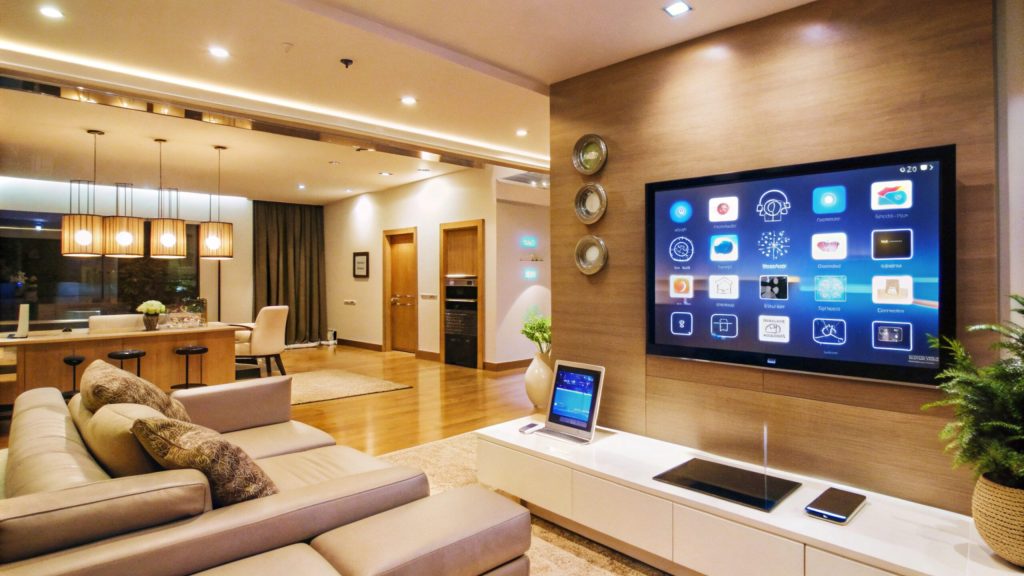
When people imagine a more autonomous home, they usually think about automation first, but the real appeal is broader than that. A well-planned home can combine smart lighting, automated curtains, leak detectors, motion sensors, smart locks, connected AC systems, security cameras, irrigation controls, solar panels, and battery storage. In practice, the goal is a home that responds more smoothly to everyday routines. Lights adjust automatically, cooling works around daily patterns, and owners can monitor power use without constantly thinking about it. In the UAE, that matters because air conditioning, water use, and home security are not small details. They are major parts of daily household management. This is exactly where the best smart home hubs become useful: they allow all of these systems to work together instead of forcing homeowners to manage everything through separate apps and disconnected ecosystems.
Why the UAE is a natural market for smart living
The UAE is a particularly strong environment for this trend because smart living fits both the climate and the direction of the market. People already expect convenience, app-based services, and premium residential features, so connected homes feel like a natural extension of that. There is also a clear sustainability angle. Dubai’s Clean Energy Strategy aims for 75% of the emirate’s energy requirements to come from clean sources by 2050, and the broader UAE Net Zero 2050 Strategy is designed to accelerate the shift toward lower-emission growth and cleaner energy systems. That creates a wider backdrop where energy-aware homes, automation, and smarter consumption are becoming more relevant rather than less.
How solar power connects to the best smart home hubs
One of the biggest reasons this category matters in the UAE is that smart homes are increasingly tied to energy management, not just comfort. DEWA said in June 2025 that clean energy would make up 20% of its energy mix by the end of that year, and it also reported that solar PV systems connected through the Shams Dubai initiative had reached a combined capacity of 725 MW across more than 8,430 buildings. That means solar is already part of real residential and building-level infrastructure in Dubai. As more homes use rooftop solar and energy-monitoring tools, the best smart home hubs become more valuable because they help connect production, storage, cooling, and household consumption in one place. More importantly, they are increasingly becoming part of how homes manage energy, not just convenience.
What the best smart home hubs actually help you do
The practical role of the best smart home hubs is simple: they turn separate devices into one usable system. Instead of controlling lights in one app, cameras in another, speakers somewhere else, and smart plugs in a fourth place, a hub makes it easier to build routines and manage compatibility. Based on the product types in your reference images, different hubs fit different lifestyles. The Aeotec Smart Home Hub works well for people who want broad compatibility and one strong central controller. The Amazon Echo Dot (Gen 5) is a more affordable entry point for Alexa-based setups. The Google Nest Hub (Gen 2) makes sense for people who want a display-based interface and stronger voice interaction inside the Google ecosystem. The Apple HomePod mini fits best in homes built around HomeKit and Siri, especially where design and audio quality matter. And the Aqara Hub M2 is especially useful where infrared control still matters and wider cross-platform compatibility is a priority. Those options show why the phrase best smart home hubs does not refer to one universal winner. It depends on the home, the ecosystem, and the way the owner wants automation to work.
Why this trend is about lifestyle, not just devices
What makes this movement more interesting is that it is increasingly about how people live, not just what they buy. Someone in a Dubai apartment may want a smart hub mainly for AC control, lighting scenes, cameras, and a video doorbell. A family in a larger villa may care more about irrigation, motion-triggered outdoor lighting, multi-room audio, solar monitoring, and layered security. Someone trying to build a more autonomous home may be focused on energy dashboards, battery backups, automated appliance scheduling, and systems that reduce unnecessary usage during peak hours. That is why the best smart home hubs are becoming part of a broader residential conversation. They are starting to play a larger role in shaping what modern, efficient, and better-managed homes look like.
Final outlook: why best smart home hubs matter more now
The bigger picture is clear. In the UAE, smart living is becoming more mainstream, and more autonomous homes are starting to make practical sense, especially as solar adoption, energy awareness, and connected-home products continue to grow. The best smart home hubs matter because they sit right at the center of that shift. They help turn separate smart devices into a home that feels organized, responsive, and easier to live in. Taken together, these changes show that smart home technology is becoming a more established part of modern housing in the UAE, especially for homeowners who care about efficiency, automation, and everyday convenience.
Read later
Share