Diversification Lessons from Japan and the UAE: The Hidden Challenge
 Read later
 Share
Share
From Oil Dependency to Diverging Futures
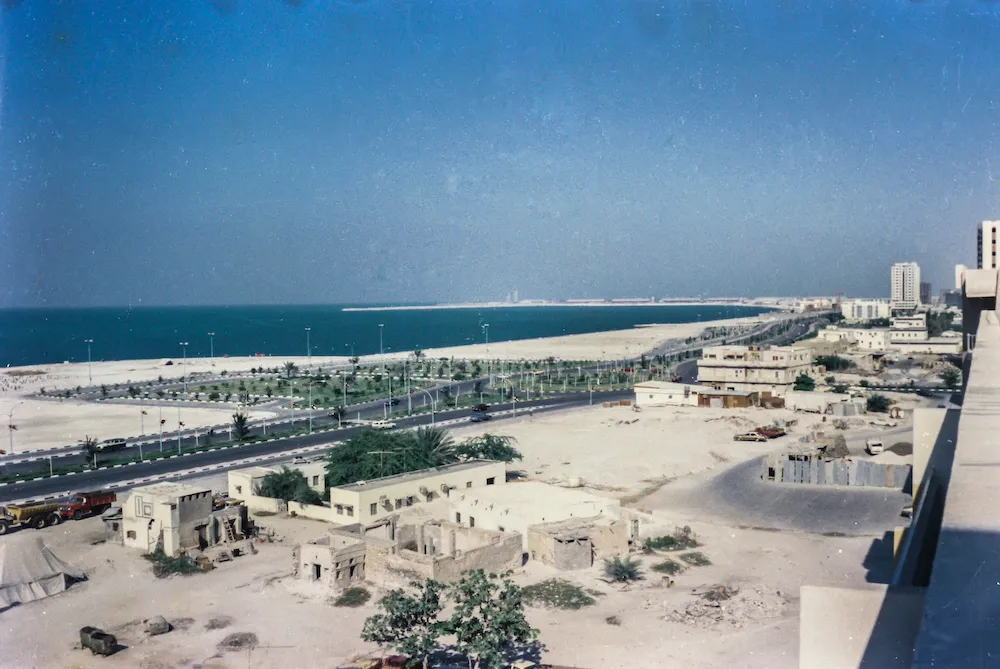
In the early 1970s, a small oil-dependent economy was coming out of the colonial age: the United Arab Emirates. Founded in 1971, the Emirates were still searching for their place in the turbulent geopolitical environment of the Gulf: with 60–65% of its GDP financed by oil activities, it was extremely vulnerable to changes beyond its control. Today’s UAE boasts being one of the richest countries in the world, with high technological development and a GDP per capita that has nothing to envy from the world’s traditional strong economies.
Around the same time, the giant of Africa, Nigeria, entered the 1970s with an extremely promising economy. After a devastating civil war, Nigeria saw its oil-fueled economy grow at an average 12.3% annually from 1970 to 1974, more than doubling the government’s target rate. The Nigerian Naira became even stronger than the US dollar, and many observers saw the country as a new industrial and economic powerhouse, a fulfillment of all Africa’s post-colonial aspirations. Today, those dreams are shattered. A pocket full of Naira will not even pay for a decent meal in Lagos.
So, what happened here? Can it be that the UAE’s oil quality is so much better than Nigeria’s?
Economic Diversification as a Development Strategy
Well, it’s not so simple: South Korea, with no reliance on oil, offers a similar example: from being an economy highly dependent on textiles and agricultural products until the 1990s, South Korea managed to use its revenue to upgrade its economy toward higher-complexity products: chemicals and machinery. The result was a massive increase in GDP and GDP per capita, with the latter rising from $8,281 in 1998 to more than $33,000 in 2023. This “magic” policy actually has a name: it is called Regional Economic Diversification, and it’s a bit more than its name suggests.
In simple terms, diversification means “expanding the range of economic activities, reducing reliance on a single industry or resource sector”. Nigeria offers a textbook example of exactly how NOT to do that. By 1988, petroleum accounted for a staggering 87% of Nigeria’s export earnings and 77% of government revenue, which meant that other factors like agriculture and manufacturing were completely neglected. The UAE, on the other hand, invested oil revenues into other industries; in fact, non-oil GDP grew faster than oil GDP for decades, rising by 15.5% annually between 1972 and 2003, compared to 10% yearly growth in oil GDP.
When Diversification Reshapes the State
But it’s also so much more than that. Diversification is not just an economic decision but a strategic policy shift in the strengths of a whole state. For example, there are the so-called ‘horizontal policies’; their goal is to improve the general environment in which a state operates, not just some small details. Even an organization like the IMF, known for its harsh austerity measures in many cases all around the world, makes it clear that investments in education and health should be considered the core of any effort for diversification. The long-term benefits of such policies are actually quite obvious: they help develop a high-quality labor force that, in turn, leads to what has been called a “knowledge economy.”
So, one might think, things are clear: we should just diversify all economies and things will go great for everyone. But again, this might be talking too soon. While many cases over the last 50 years appear promising, outcomes vary. In fact, they vary so much that we might need to take a look earlier in history to provide us with better insight into the situation. A suitable example for that would be 19th-century Japan.
And why would we have to go all the way then and there?
Japan’s Meiji Transformation: A Historical Warning
You see, in the mid-1850s, Japan was still a pre-modern, isolated, mostly agricultural society. Then, in 1853, a US fleet forced Japan to open itself up to Western trade. The Japanese were extremely alarmed by this threatening development: its much more powerful neighbor, China, had been invaded a decade ago by Britain with devastating results. In order not to share the same fate, in 1868, some of the Japanese elite orchestrated a coup that brought a complete change in the country’s politics: they restored Emperor Meiji to power and abolished almost in a single day the whole structure of the Japanese state, bringing radical economic diversification through rapid modernization.
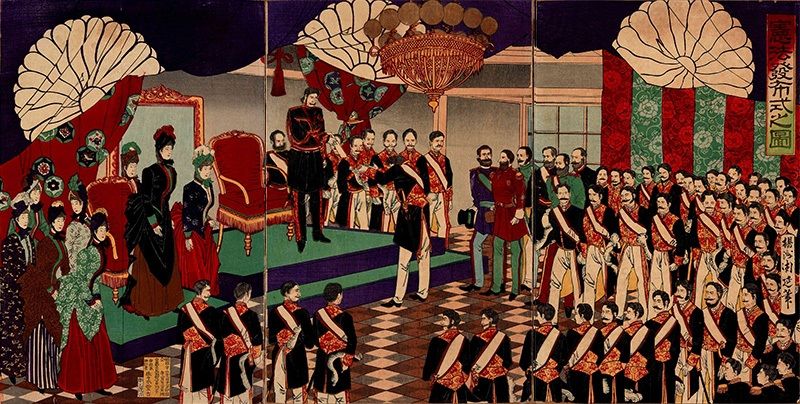
The results were impressive: coal production rose from half a million tons in 1875 to more than 20 million in 1913. Train tracks were just 29 km in 1872, but more than 11,000 km in 1914. Illiteracy, at around 80% in 1868, almost vanished by 1900. And new industries appeared all over the country, producing glass, textiles, cement, and silk, boosting the economy. By World War I, Japan had risen from an almost feudal society to a first-class world power.
But while Japan can be regarded as a classic example of successful economic diversification, there is a catch: the rise of a very aggressive form of nationalism.
Power, Prosperity, and the Risks of National Overreach
The first sign of this nationalism was the conquest of Korea in 1910, which left a deep scar in Korean society that has harmed Korean-Japanese relations until today. The 1937 invasion of China and the consequent atrocities against the Chinese during World War II, as well as the attack on Pearl Harbor, were the apogee of this phenomenon and made Japanese imperial expansion one of the most notorious cases of nationalism in modern history.
This nationalism was not irrelevant to the process of diversification. The Meiji Restoration brought with it a rapid centralization of power, necessary to force all those radical policy changes. As part of that centralization, Tokyo also created a central army force by merging the 270 different decentralized feudal armies that existed all around the country. On the one hand, this army was able to modernize and win multiple regional wars. On the other hand, it created a tradition of brute militarism that proved fatal during the 1930s and 1940s.
Was this militaristic nationalism only because of diversification? Surely not. The threat from the West was crystal clear, and Japanese national pride, ready to oppose it, had been there for centuries. More than that, the Bushido code, which dated back to medieval times, called for absolute faith in the emperor and valorized sacrifice for the nation. And there is something else that’s rarely mentioned: a huge economic crisis that hit Japan during the 1920s — which spiraled out of control after the global crash of 1929 — radicalized both the political right and conservative elements within the army. Two prime ministers and several other powerful figures were coldly assassinated during the decade from 1921 to 1932.
And yet still, without the successful rise of Japanese power over the previous half-century, it’s very likely that all these forces would have simply remained contained within the Japanese islands. It was the real power born of successful diversification that unleashed a monster which, in the end, only the dark shadow of nuclear power could tame.
Therefore, the successes of diversification need time to be adequately evaluated. What seems to be a success in the first decades can prove to have disastrous long-term consequences. To return to the UAE, part of the new state’s agenda in 1971 was a centralization of the armed forces through a unification of the seven different armies of the emirates. While no one can claim that this will lead to the same kind of dangerous nationalism that happened in Japan, it remains important to be mindful of historical analogies and learn from them as much as possible.
More recent examples of diversification, those of Saudi Arabia and India, also point in a similar direction. In the last decade, Saudi Arabia has initiated “Vision 2030”, a strategic framework to reconstruct the Saudi economy and society. “Vision 2030” is a handbook example of regional economic diversification, as it again includes a detachment from a petroleum-based economy and investment in human capital development.
Once more, this huge transformation has come together with the strengthening of the national state and its projected power. It’s hard not to think of Japan’s behavior towards Korea when we see how Saudi Arabia is behaving vis-à-vis its much weaker neighbor, Yemen. Similarly, India, which has diversified impressively over recent decades in technology, pharmaceuticals, and even space, has also seen a parallel, alarming rise in assertive Hindu nationalism accompanied by growing pressures on its huge Muslim population.

If there is a lesson to be learned here, it is this: agents of power running successful diversification attempts should be very careful in not allowing this process to create destabilizing forms of nationalism. Economic diversification can be a worthy endeavor, but it is not just about markets and growth charts; it is a deep reshaping of state power, social contracts, and national identity. Japan’s 19th-century leap into modernity brought prosperity, no doubt, but it also brought militarism and brutal conquest. It can also bring new dangers: rising social inequality when growth is uneven, environmental strain from unchecked industrial expansion, and corruption sparked by the rapid redirection of public funds.
Listening to our global historical heritage, countries hoping to break out of an outdated system of single-resource dependence should not simply diversify. They must do so with foresight, responsibility, and historical awareness. After all, regional economic diversification worthy of its name should be as much about being “economic” as it is about being “regional”: a holistic process of societal improvement that offers prosperity to the whole region, not just to individual states and economies.
 Read later
Share
Read later
Share