Art Basel Qatar 2026 marks a new milestone for MENASA art
 Read later
 Share
Share

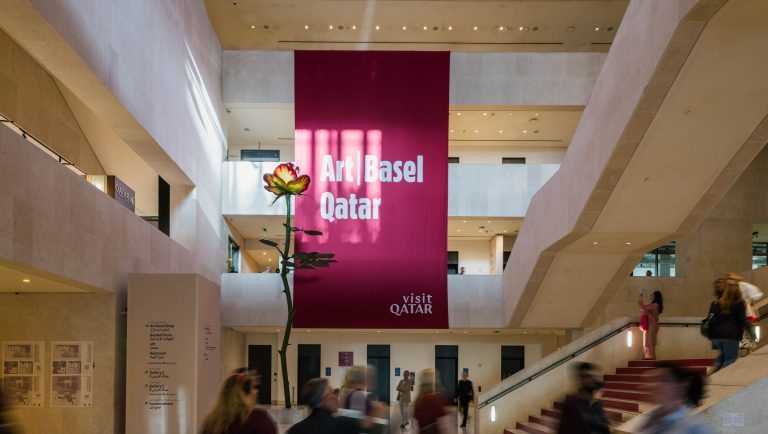
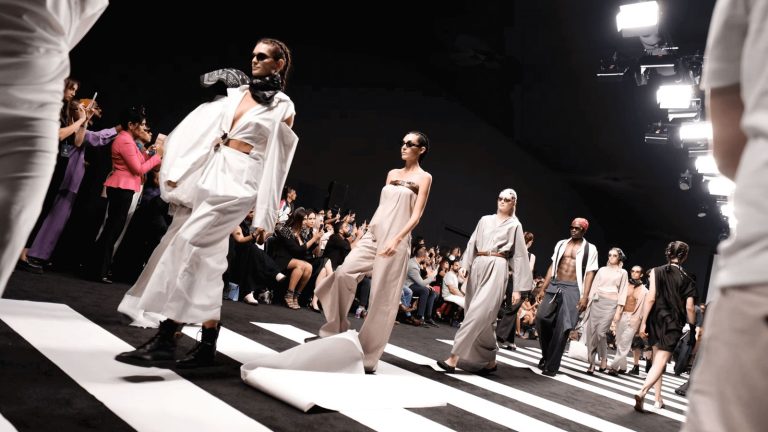
As the first edition of Art Basel Qatar came to a close, Doha reflected on a week that completely changed the region’s contemporary art scene. The fair presented works that ranged from intimate solo presentations to monumental public commissions. Across Msheireb Downtown Doha, it fostered dialogue between regional and international practices, inviting audiences to experience art beyond the confines of traditional exhibition halls. Over the course of the week, these presentations attracted a remarkable audience, underscoring the fair’s growing significance.
The first edition of Art Basel Qatar drew over 17,000 visitors across VIP and public days, with thousands more attending the fair’s Special Projects throughout Msheireb Downtown Doha. Nearly half of private collectors and patrons hailed from the MENASA region, complemented by robust participation from Asia, Africa, Europe, and the Americas.
Eighty-seven galleries from 31 countries and territories presented the work of 84 artists, including 16 exhibitors participating at Art Basel for the first time. Galleries reported significant engagement with both established and emerging collectors, with notable activity from Qatar, Saudi Arabia, the UAE, and European markets, generating sales across a wide range of price points.

More than 85 museums and foundations were represented, establishing Art Basel Qatar as a key platform for institutional discovery. Attending institutions ranged from regional centres, such as Mathaf: Arab Museum of Modern Art and the Museum of Islamic Art, to international institutions including Fondation Louis Vuitton, Tate, the Guggenheim Museum, MoMA PS1, LUMA Foundation, and the Whitney Museum of American Art.
Special Projects and Landmark Commissions
The fair’s Special Projects program, comprising ten large-scale, site-responsive works and performances across the city, brought art into the public realm. Highlights included works by Abraham Cruzvillegas, Nour Jaouda, Hassan Khan, Nalini Malani, Bruce Nauman, Khalil Rabah, Sweat Variant (Okwui Okpokwasili and Peter Born), and Rayyane Tabet.
Jenny Holzer’s SONG, unveiled at the Museum of Islamic Art on February 2, became a central landmark, combining Arabic and English poetry by Mahmoud Darwish and Nujoom Alghanem with projections and a choreographed drone performance. The installation remained on view nightly, reinforcing the fair’s commitment to integrating public spaces into the artistic program.
Conversations and Thought Leadership
Art Basel’s flagship Conversations program debuted in Qatar with nearly 2,500 attendees over three days at M7. Panels featured artists, curators, collectors, and cultural leaders, including Her Excellency Sheikha Al Mayassa Bint Hamad Bin Khalifa Al Thani, Maja Hoffman, Hans Ulrich Obrist, Mohammed Hafiz, Ruba Katrib, Lina Lazaar, Glenn Lowry, and Rachel Whiteread. The discussions highlighted the MENASA region’s evolving arts ecosystem and its intersections with global contemporary practice.

Official Recognition and Dignitaries
High-level attendees included His Highness The Amir Sheikh Tamim bin Hamad Al-Thani, Her Highness Sheikha Moza bint Nasser, His Highness Sheikh Jassim Bin Hamad Al Thani, His Excellency Sheikh Mohammed bin Abdulrahman Al-Thani, and Her Excellency Sheikha Al Mayassa bint Hamad bin Khalifa Al-Thani, among others.
Noah Horowitz, CEO of Art Basel, commented: “The inaugural edition of Art Basel Qatar has affirmed the potential of the MENASA region. The engagement from galleries, artists, and collectors has been exceptional, and we look forward to building on this foundation in the years ahead.”
Vincenzo de Bellis, Chief Artistic Officer and Global Director of Art Basel Fairs, noted: “The fair responded to its context in Doha and the wider region, giving visibility to regional artists within a global framework. The audience response to focused presentations and city-wide projects was remarkable.”
Artistic Director Wael Shawky added: “The artist-led presentation format resonated strongly. By integrating education, market, and cultural dialogue, Art Basel Qatar has demonstrated a new model for long-term artistic engagement.”
Looking Forward
Art Basel Qatar 2026 successfully positioned the fair as a long-term platform for artistic exchange, institutional engagement, and market development in the MENASA region. Dates for the 2027 edition will be announced in due course.
Read later
Share